
The last in a series of public discussions on the Presumpscot River and its importance to the region focused on the positive economic and community impact that can stem from a restored river.
The “river talks” series, organized by the Friends of the Presumpscot River, wrapped up this week with “Rivers Restored: Positive Impacts on the Environment, Economy & Communities,” at Walker Memorial Library. The event was held Wednesday night, after the American Journal’s print deadline.
Scheduled presenters included Ted Ames, a researcher and specialist on the impact of dam removal and the recovery of ground fish; Dwayne Shaw, director of the Down East Salmon Federation; and Rachel Bouvier, an economist, consultant and author of “The Economic Value of a Restored Fishery on the Presumpscot River.”
Bouvier’s work has been heavily cited by the Friends of the Presumpscot River during its negotiations with Sappi North America and other governmental agencies regarding the dam removal and fish passage destined for Saccarappa Falls in Westbrook. The project is seen by the group as essential to the vitality of the river.
Earlier this year, Sappi’s fish passage deadline, set by the Federal Energy Regulatory Commission, was extended by one year, to May 2018, in order for those design negotiations to continue.
Ames, who lives in Stonington, spoke to the American Journal Tuesday prior to the event. Ames said he recently reviewed 14 years of data on fish populations in seven Maine rivers, which, he says, is further evidence of the effects of allowing sea-run species, such as alewife, access to their historical spawning areas again.
“The presence of alewives attracts all kinds of wildlife,” he said.
Ames said restored fisheries also produce economic benefits such as increased recreational fishing and birding. He said he’s seen the effects elsewhere in Maine in places like Damariscotta, and said much of the Penobscot and Kennebec rivers have been opened to sea-run fish. He said the portion of the Kennebec near Old Town, which is in its second year of a restored fishway, already has about 1.5 million alewives.
Ames said restored alewife populations can be beneficial to other marine species like cod and haddock, especially as the effects of climate change play a role in the Gulf of Maine. He said the recent research was “like a smoking gun.”
“We’re already seeing the results,” he said.
He is a founding board member and senior adviser of Penobscot East Resource Center, and has authored several peer-reviewed articles on historical fisheries ecology and related topics. Ames also fished commercially for 28 years.
Prior to the river talk, the Downtown Westbrook Coalition and coordinator Abigail Cioffi were also scheduled to host a “river walk,” aimed at providing a glimpse at the type of business and economic activity that could result from a more widely used river.
Guests were set to speak with Rob Mitchell, a Westbrook business owner and developer of a four-story office building along the riverwalk on Ash Street – seen as an example of a large investment into the future of downtown. Also set to speak during the walk were Friends of the Presumpscot River president Michael Shaughnessy and Cioffi, at the new pedestrian bridge near Saccarappa Falls.
Cioffi said the Downtown Westbrook Coalition and the Friends of the Presumpscot will continue their collaborations on events, including a plan for a longer river walk prior to the Friends of the Presumpscot River’s Chief Polin Awards event on Sept. 22.
“The plan is to do a walk, and possibly have a Wabanaki drumming group performing by the river,” she said.
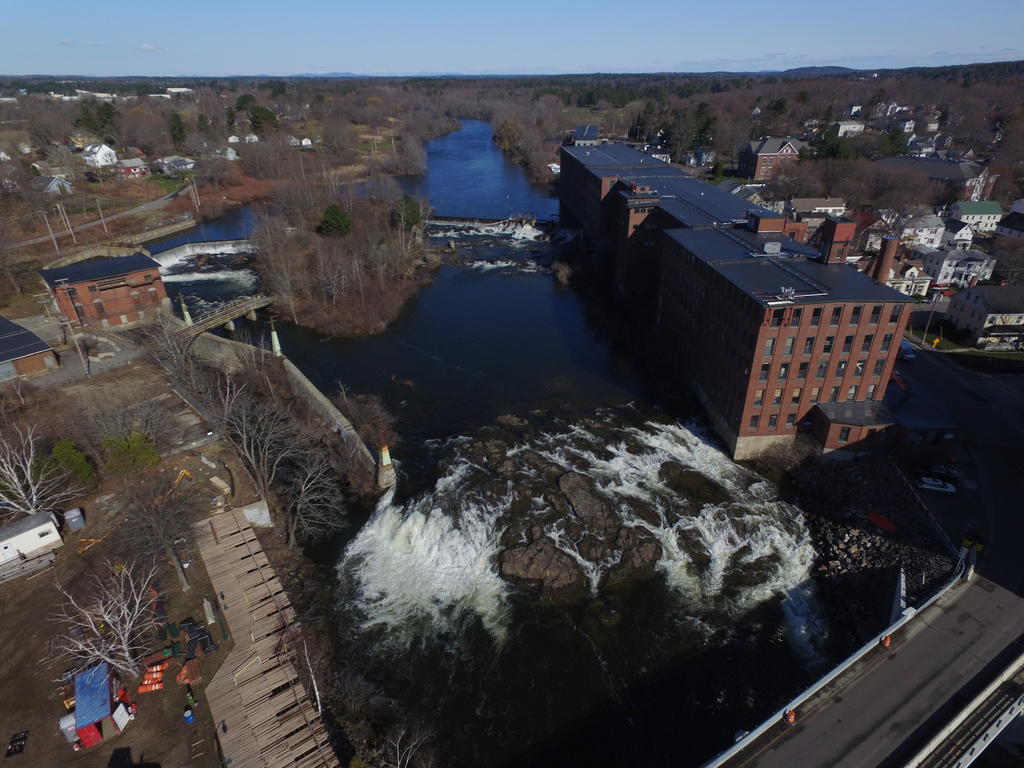
Friends of the Presumpscot River, Sappi North America and other governmental agencies are still negotiating the dam removal and fish passage destined for Saccarappa Falls – considered essential to the vitality of the river.
Comments are no longer available on this story