
Both residents and tourists complain about the infestation this year in the Wolfe’s Neck and Flying Point areas.
The town of Freeport has tried without success through a town-funded spraying program to control the brown tail moth population in coastal areas, where the creatures cause the most damage to humans and to the trees they infest.
Not everyone in the affected coastal areas of town wanted in on tree spraying back in the early 2000s, so pockets of those areas did not get sprayed and the program was ineffective, according to town officials.
This year – as the Maine Department of Agriculture, Conservation and Forestry noted in warnings to mid-coast residents in the spring – has been particularly bad for brown tail moths, whose hairs, which hang around for months, can cause blistery rashes and respiratory distress. Word of a brown tail moth infestation came as no surprise to residents of Wolfe’s Neck and Flying Point, many of whom had to be hospitalized with severe rashes early this summer.
“I was smashing them all over the driveway and all over the building,” said Bob Kinney, who lives at the end of Wolfe’s Neck, where the Harraseeket River meets Casco Bay, with his wife, Denise. “I ended up doing the lawn looking like I had been in a hazmat operation. I had welts in my inner arms. I had a respirator on. I had a lightweight hoodie and long sleeves on, from late May through June.”
According to the state, winter web counts of the brown tail moth showed that infestations were highest in parts of Freeport, Bowdoinham, Bath, Topsham, West Bath, Brunswick and Harpswell.
The Kinneys are members of the Wolfe’s Neck Road Owners Association, many of whom attended a District 2 Town Council workshop last month at Mallett Barn, on Wolfe’s Neck Road. Town Manager Peter Joseph said that many residents who attended that meeting told the council about the bad season for brown tail moths, and they wanted the town to provide a public education piece during a future meeting.
The town obliged, as Charlene Donahue of the Maine Forest Service made a presentation during the Sept. 1 Town Council meeting.
Donahue said that the Maine Forest Service has a list of licensed pesticide applicators that also can use bucket ladders to cut down brown tail moth webs. The state has no plans to conduct spraying, she said.
Sarah Tracy, District 2 councilor, said she developed the rash this year. She asked Donahue what property owners can do, and at what time of the year.
Donahue advised people to check their trees – particularly oak and apple trees – in the winter, when the leaves have fallen off. The tiny caterpillars weave white silk that can be seen in clumps of leaves that remain on the trees, she said. Property owners can clip those clumps out and either burn them or drop them in soapy water, Donahue said.
Donahue reminded the audience that state law limits the use of chemicals in trees near the water line.
She advised people to mow their lawns when it’s wet in the spring or early summer, to avoid spreading the moth hairs into the air.
“Don’t hang clothes, don’t rake dry leaves and don’t sit on the grass,” she advised.
The Maine Forest Service will conduct another survey this winter to assess the problem in coastal areas, Donahue said.
“There will be years when it’s bad, and hopefully years when it’s no so bad,” she said.
In the early 2000s, Freeport attempted a town-wide spraying along its coastal area that was largely unsuccessful. Johanna Hanselman, the town’s public health officer and general assistance administrator, said last week the aerial spraying program didn’t work in part because some residents who were concerned with the effects of spraying chose not to participate, leaving pockets of moth-infested areas.
“It seems like it’s a case-by-case way to deal with it right now,” Joseph said. “It’s a really limited area, which is weird. We have a pocket of it here.”
Joseph said that new methods might allay the concerns of people who worry that spraying will pollute the water and the soil.
“You can inject the tree,” he said, “so that when the caterpillars eat it, they die. It’s a more low-impact way of dealing with it.”
Kinney said he saw brown tail moths trying to get into his house.
“We told a relative who has cystic fibrosis not to visit,” Denise Kinney said. “Some people down here in ‘the neck’ ended up hospitalized, and I had a real hard time with it.”
Kinney, who attended the Sept. 1 Town Council meeting, noted that campers using Recompence Shore Campground on Wolfe’s Neck Farm had big problems with brown tail moth infections this year.
“Can we declare a public health emergency?” he asked. “This is the first year I’ve seen them falling out of the trees and all over the place.”
Kinney said that the Wolfe’s Neck Road Owners Association will pool its money to get a reduced cost for a tree company to head out there in January and treat infested trees. The company will do its work in the still of the night, at around 2 a.m., on the calmest of nights, he said.
“Everybody down at this point has had problems with these things,” he said. “Only one I know of is opposed to spraying. I’m not a fan of pesticides either.”
Kinney worries about more than just Wolfe’s Neck and Flying Point.
“Oh, yeah,” he said. “And the greater Freeport community should be concerned on the impact on tourism.”
David Herring, executive director of Wolfe’s Neck Farm, acknowledged the problem brown tail moths caused early this summer at Recompence Shore Campground.
“It definitely is something that we have heard from campers about,” Herring said. “We will debrief the staff after Labor Day to discuss approaches to reduce the spread. We’ll talk about what our options are.”
Herring noted that, as an organic entity, Wolfe’s Neck Farm must proceed with caution.
“We have to be thoughtful about what the approaches may be,” he said. “We definitely heard from some people that it was a real issue and we want to be sensitive about it.”
Itching for moths to leave
 Bob and Denise Kinney talk about the brown tail moth infestation that struck their home and many others this year at Wolfe’s Neck in Freeport.Staff photos by Larry Grard
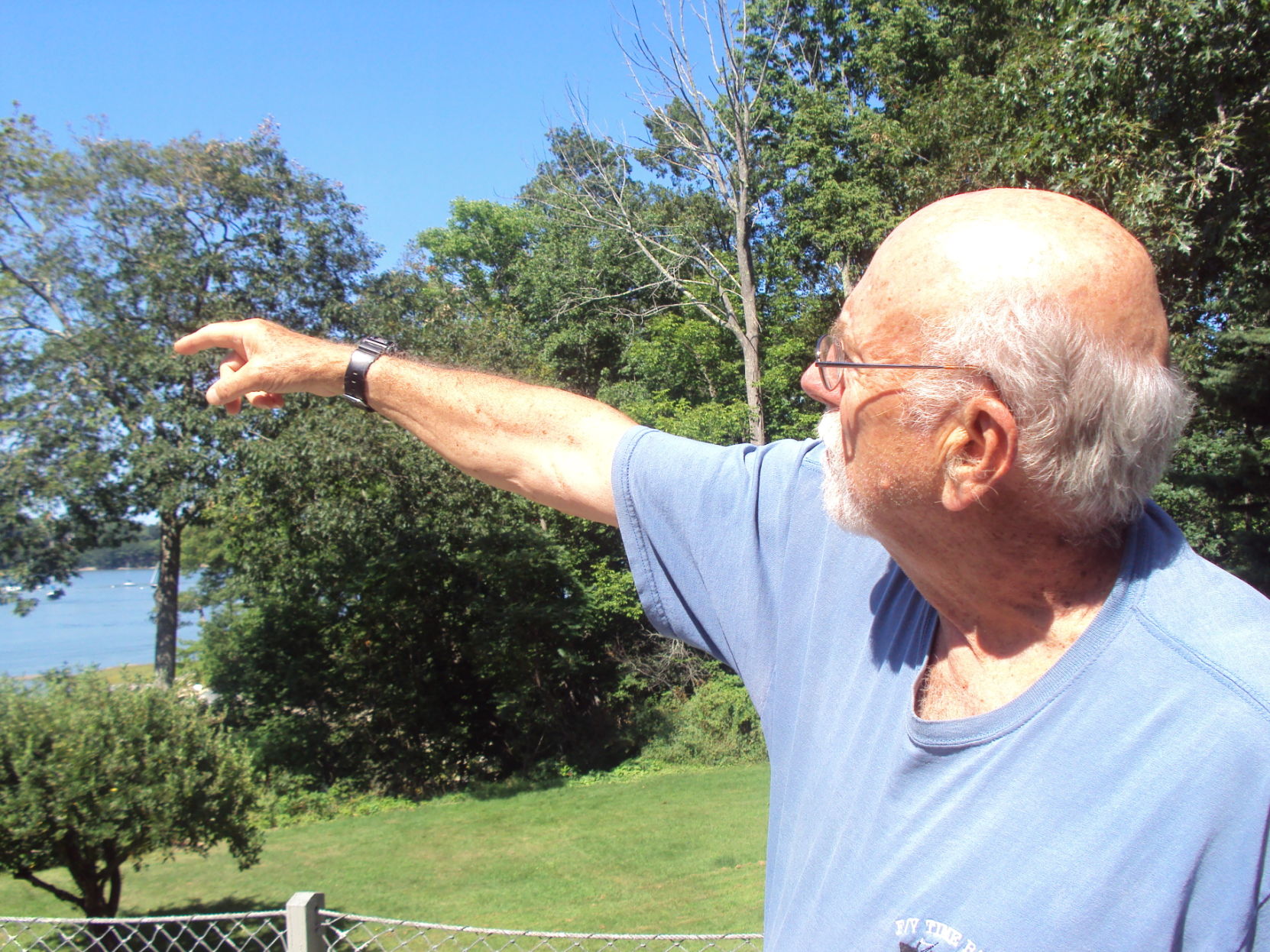 Bob Kinney, who lives at the end of Wolfe’s Neck, points to trees on his property that have been infested by brown tail moths.Staff photo by Larry Grard
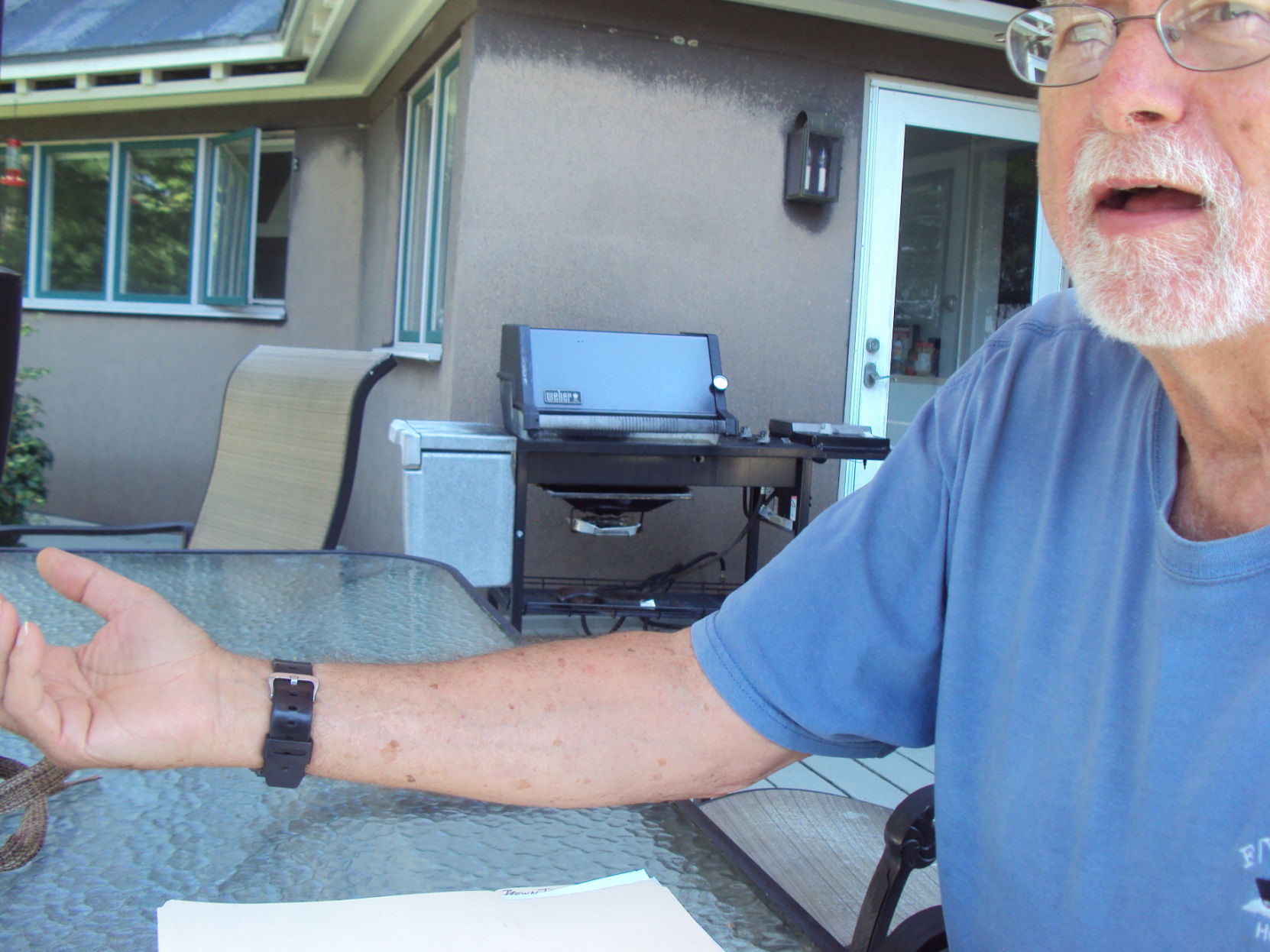 Bob Kinney shows the small scars on his inner arm left by contact with brown tail moth hairs.Staff photo by Larry Grard
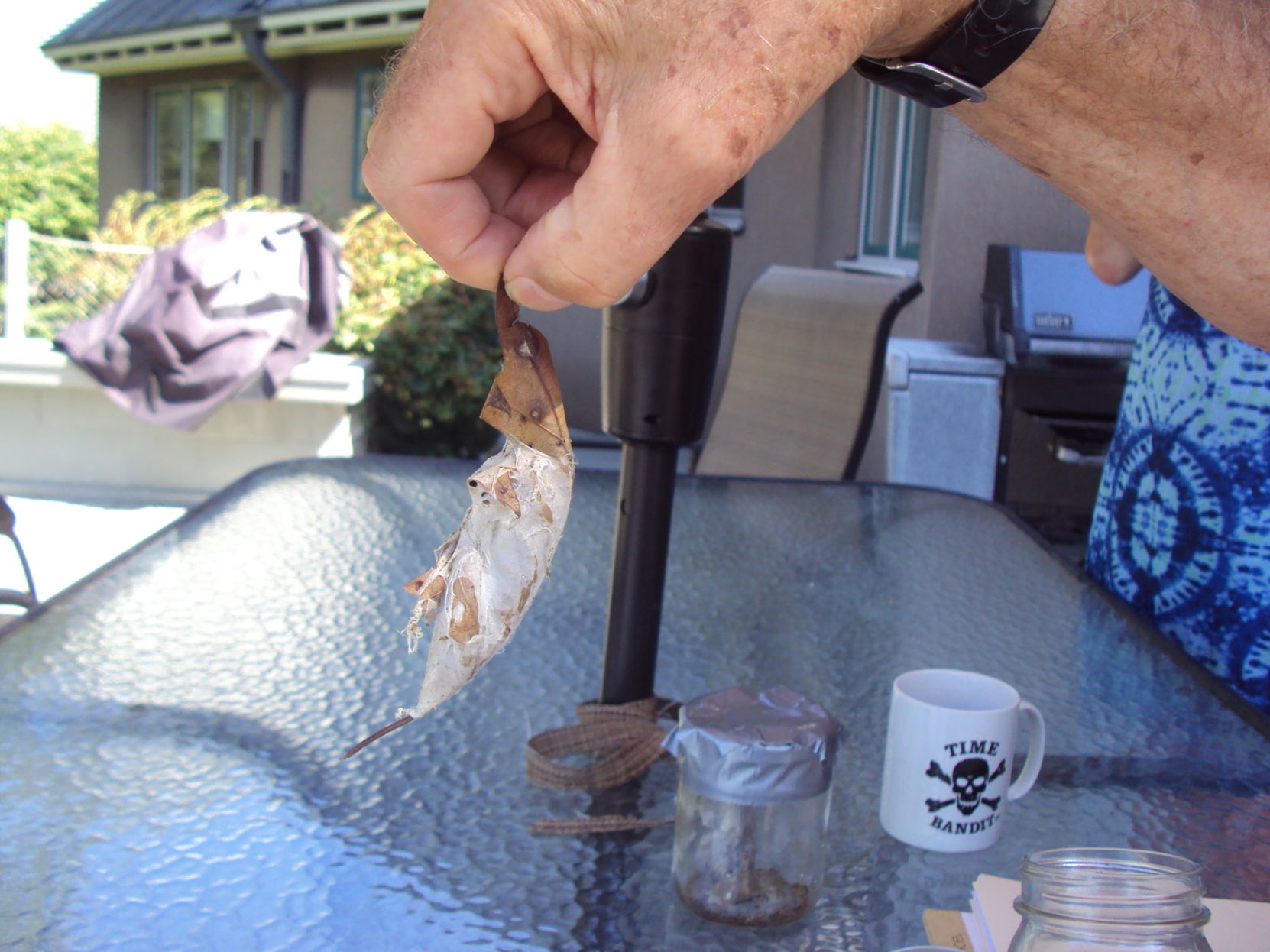 Bob Kinney picks up a nest that a brown tail moth made around an oak tree leaf on his property at the end of Wolfe’s Neck in Freeport. Kinney kept remnants of brown tail moths in two jars.
Comments are no longer available on this story