
NORTH WINDHAM – The fifth annual Backyard Locavore Day, hosted by the University of Maine Cooperative Extension program, will visit gardens in 10 communities in southern Maine, among them Jeanne Christie’s vegetable, fruit and herb gardens in North Windham.
The Backyard Locavore Day is rising in popularity, with 150 tickets sold last year and about 300 people expected to attend this year, said organizer Andrea Herr of UMaine Cooperative Extension, based at Tidewater Farm in Falmouth.
“We’re getting huge interest, because they want to grow things. The eat-local movement, knowing your farmer and what you’re purchasing, is huge. And I think it’s really extended to people wanting to do home gardening because if you’re doing your own gardening you absolutely know what has touched your zucchini plant, for example,” Herr said. “And so many people are rediscovering the joy of gardening. It’s a happy feeling when you have tomatoes on the vine or strawberries to pick. And it always tastes better.”
The self-directed tour allows ticket-holders to visit 14 backyard gardens spanning from Brunswick to Cape Elizabeth. Gardens in Windham and Raymond are also on the tour. At each garden, the homeowner as well as a master gardener will serve as guides. And with home food preservation growing in popularity, as well, a master preserver will also be at each site with a lesson in preserving fruits and vegetables.
Jeanne Christie, who has lived at 2 Basin Road in North Windham since 2002 and only recently got immersed in gardening, is opening her backyard garden for Saturday’s Locavore tour.
Christie, who founded and directs the nonprofit Association of State Wetland Managers in Windham and ran the wildlife habitat incentives for the U.S. Department of Agriculture in Washington, D.C., from 1996-1999, has always been interested in aquatic ecosystems. But until recently, she had little interest in sustainable gardening.
“If you told me in 2000, I’d be doing something like this, I would have been quite surprised because I didn’t have any desire to garden,” she said. “But it just kind of grew over time. I just wanted to see if I could do it.”
A deeper motive for wanting to learn the ins and outs of gardening came from the tumultuous last few years, when global security and financial concerns have made many Americans think twice about how they get their food.
“In the state of Maine, we have 30 days of food,” Christie said. “If for some reason there was a complete breakdown in transportation, we would run out of food in 30 days. And a lot of us worry about disruptions. So knowing plants, both for food and medicine and other things, is a form of being able to take control of your destiny.”
Her backyard garden began quite modestly with some raised garden beds at one edge of her back yard. Through the last few years, the garden has taken over much of her back yard with herbs in one spot, fruit trees and vines in another, and rows of tomatoes and other veggies sprinkled throughout. Everywhere, something is growing.
Her passion has more recently turned to permaculture, which is gardening with the larger environment and community in mind, she said.
“I guess regular gardening wasn’t enough so then I got interested in something called permaculture, which is a very holistic approach to not only gardening but having a house that’s energy-efficient and growing your own food and giving back to the community, so it’s a whole philosophy,” Christie said. “So now I look at my garden more as an ecosystem than merely outputting vegetables and pretty flowers as I did previously. How self-sustaining can I make both my garden and my lifestyle?”
Christie said her work with wetlands is mostly “cerebral.”
“I spend all my time trying to understand ecosystems and interactions and protecting aquatic systems,” she said. “But this is a chance to apply some of those concepts to see if I can make it all work. It’s sort of half-science and half-art. You put something in and see if it works. I want to be able to make things grow, and this isn’t anything you can learn, as far as I can tell, in a year or two.”
She doesn’t use any pesticides or herbicides. Pests are around, but she tries to introduce good bugs to kill the bad ones.
“There are lots of insects; some are good, some are not so good. But my idea is to get enough of the good insects to move in that they eat the bad insects. So I try to get some good balance there,” she said.
Christie introduced a groundwater feature this year beside the herb garden because she didn’t have enough snakes or frogs and toads, which also eat bad insects.
Watering and weeding, the downside of gardening, are minimized at the Christie garden thanks to her use of wood chips as a mulch in all of the gardens.
“We haven’t had to do much watering mainly because of the weather this summer. But that’s why I put chips in. The roots will stay cool and moist no matter the weather,” she said. “It also cuts down on weeding, too. When weeds do come up, the roots are in the wood chips so they’re pretty easy to pull out. And the chips will break down over time, so that’s another plus.”
Christie admits she’s “early in the learning curve” of sustainable gardening, but she knows there are many budding permaculturists in the area that would like a chance to see other techniques in practice.
“I’d really like people to come out and look at the gardens because people are really doing some remarkable things,” she said. “I’m just one stop.”
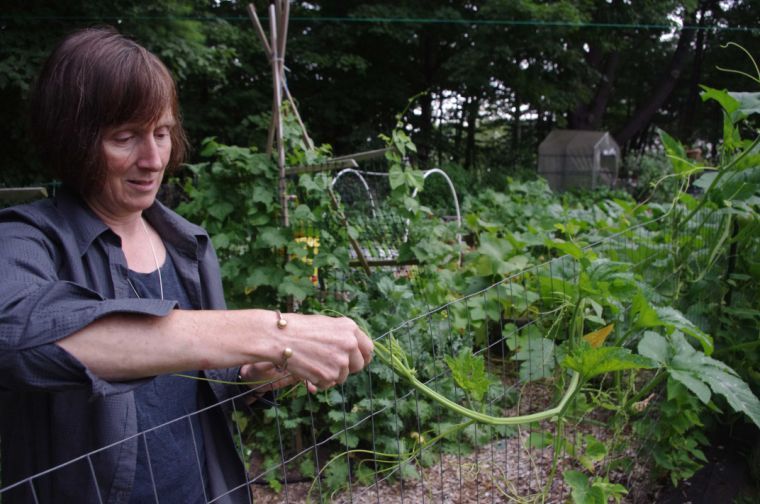 With her house in the background, Jeanne Christie inspects a bean plant in her sprawling garden.
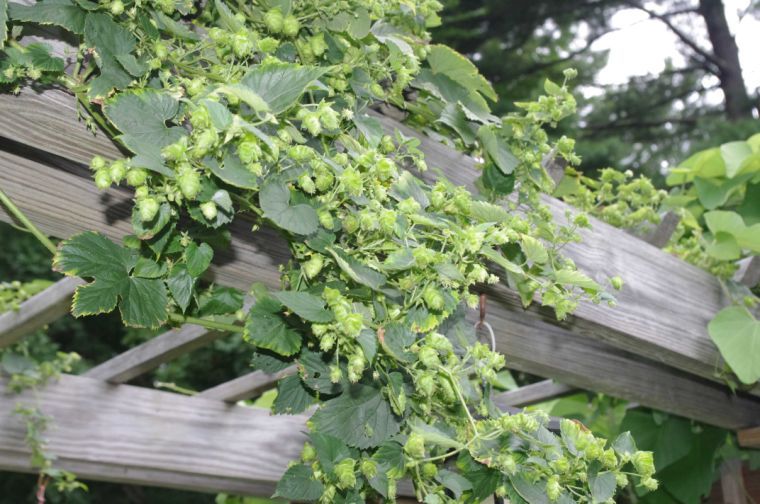 Hops, useful for making homemade beer or as a sleep aid, grows on a trellis in Jeanne Christie’s garden.
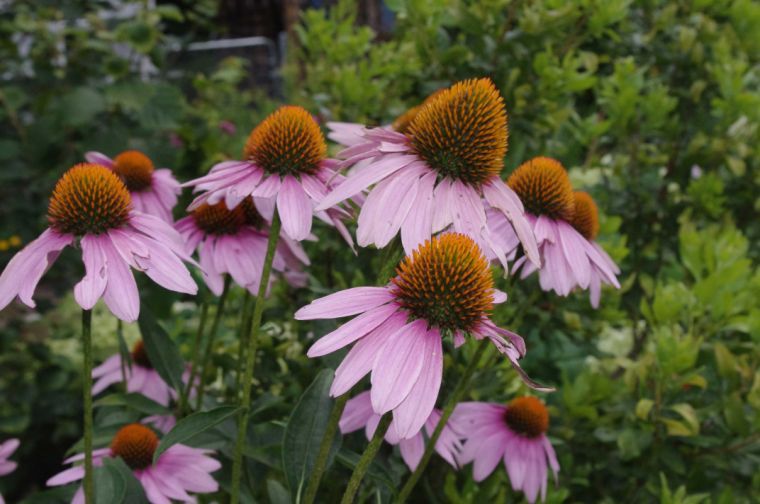 Purple coneflower, also known as echinacea, offers beauty and medicinal usefulness as an immune system enhancer. They are growing in Jeanne Christie’s garden.
Comments are no longer available on this story