
Robert Andrew was a prominent man in the 1600s in Rowley, Mass. He and his wife had 10 children. One of his great-grandsons, John, was born in Salem, Mass., in 1747.
John Andrew became a goldsmith and jeweler. His shop was called “Sign of the Gold Cross,” and at the end of the Revolutionary War, John brought his family to South Windham, where he settled on the River Road near the village. In 1791, he committed suicide and is buried in Brown Cemetery on Chute Road. His widow moved back to Salem with her five youngest children. One daughter, who married John Chute, and another, who was married to Rev. Nathaniel Stone, stayed in Windham.
Back in Salem, the youngest of John Andrew’s children, Jonathan, attended school and as an adult, started a grocery business. About 1802, he returned to his birthplace, Windham. He settled near one of his married sisters and started another grocery store at the corner of what is today Main Street and Depot Street. His house is still standing at the corner of High Street and Depot Street. This had been the home of the town’s second doctor.
Jonathan was a successful businessman. He moved his store to Main Street, right across from the busy tavern. Eventually, this store building became the first post office in the area. In 1828, he was named the first postmaster in South Windham. He and his wife had four children. They taught their children at home, building a “tiny schoolhouse near his house where their four children were instructed” together. One of these children was John Albion Andrew.
About 1832, Jonathan sold his business and property and with his accumulated wealth, moved his family to Boxford, Mass. His son, John Albion, was 14 at the time.
Thirty some years later, Attorney John Albion Andrew, the son of the grocer and grandson of the goldsmith, became governor of Massachusetts. He service coincided with the Civil War, and he became known as the “War Governor.” In 1862 when Windham celebrated its 100th anniversary, Gov. Andrew returned to give a speech – his last visit to his birthplace. He recalled “the old meeting house on the hill (Congregational Church at Webb and Chute Roads) where my parents worshipped and the yellow house on the farm south of ours whence I used to hear the voice of Paul little.”
Today, the birthplace of Gov. John A. Andrew overlooks the old railroad tracks and the J. A. Andrew School on High Street is boarded up and in disrepair, the third of the “John Andrew” schools, this one constructed in 1926.
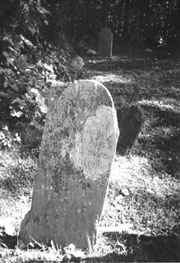 John Andrew came to Windham from Salem, Mass., settling on the River Road near South Windham village. In 1791, at the age of 47, he committed suicide and is buried in Brown Cemetery near his former home. He was the grandfather of John Albion Andrew who became governor of Massachusetts during the Civil War.
Comments are no longer available on this story