

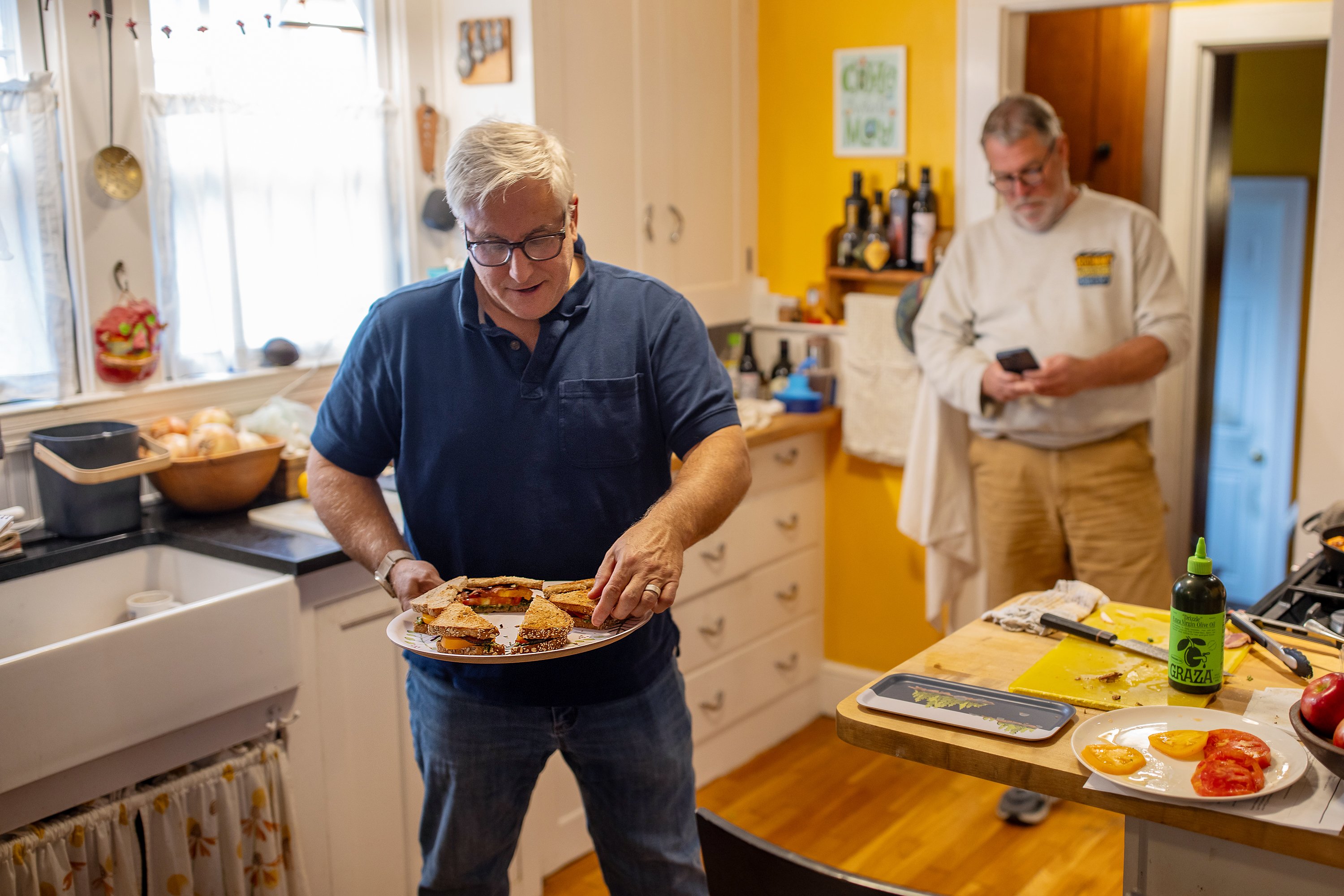
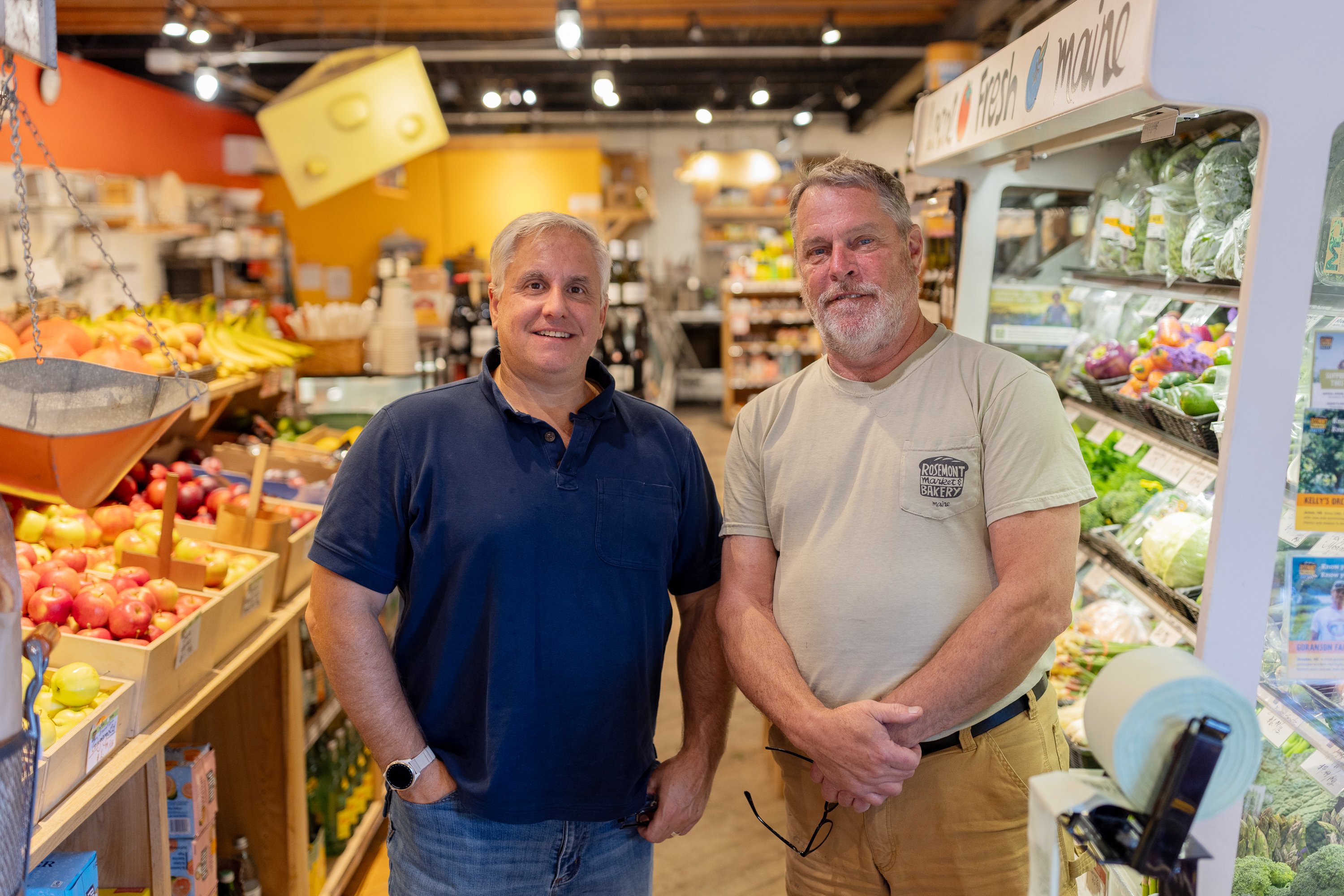
John Naylor and Mark Law are a couple of the luckiest home cooks in Maine. As co-founder and CEO, respectively, of Rosemont Market & Bakery, Naylor and Law can use one of the state’s premier local food markets essentially as their larder and pantry. On a recent weekday, they teamed up to cook a bountiful spread for friends and family.

In Naylor’s kitchen, just around the corner from the original Rosemont location on Brighton Avenue, Law assembled BLT sandwiches using uncured, heritage-breed bacon from Short Creek Farm in Kennebunk, lettuce from Goranson Farm in Dresden, thick slices of Maine heirloom tomatoes so ripe they were practically bursting, and in place of mayo, vibrant pesto from Olivia’s Garden in New Gloucester.
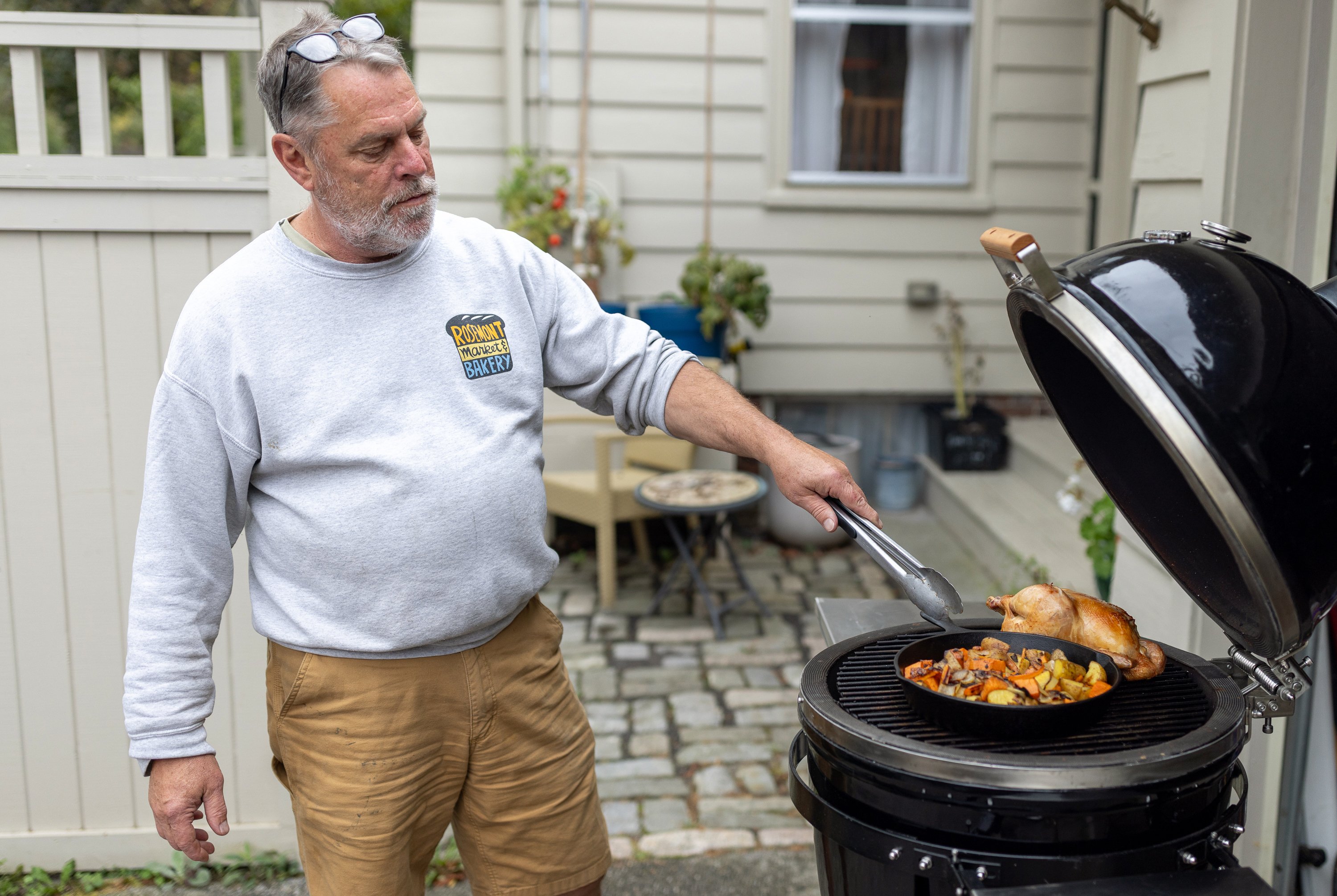
Out back, Naylor was working his Grill Dome, putting the finishing touches on chicken from Tide Mill Organic Farm in Edmunds and an assortment of grill-roasted veggies, including Goranson carrots and sweet potatoes and Yukon gold potatoes from Bondeson Farm in New Sweden, served with creamy labneh from Shovel and Spoon in Limington. Of course, there’s “the oblig” — the Naylor family’s term for the green salads obligatory with John’s meals — this one with briny feta from Winter Hill Farm in Freeport and dressing featuring punchy, malty Black Beer Vinegar from West Maquoit Vinegar Works.
Because the pair do not do these things halfway, they rounded the meal out with breads and pie baked fresh at Rosemont Bakery, and Up the Way IPA, a collaboration between Rosemont and Portland’s Belleflower Brewing.
With the exception of salt (Rosemont is looking for an accessibly priced local sea salt to stock), pepper and the olive oil in the vinaigrette, their feast was 100% Maine-sourced. Cooking meals using only local ingredients is a major point of pride with Naylor and Law, something they often do not just to please themselves and their loved ones, but to test out Rosemont’s products in search of new preparations they can recommend to customers.
Twenty years ago, when Naylor launched Rosemont, gathering the ingredients needed to cook a completely Maine-sourced meal was a much taller order.
“Part of John’s impetus to start Rosemont in the first place was that he couldn’t put together a Maine-made meal, like at all,” Law said. “And he thought that was so crazy with so much agricultural land here. That’s really been the mission of the company, to uplift a lot of Maine food producers.”
Thanks in part to a burgeoning farmers’ marketplace and locally focused co-ops and grocers, access to Maine grown and produced food has come a long way in two decades. “Now you can make a Maine-made meal 365 days a year,” Law said.
A FAIR PRICE FOR FARMERS
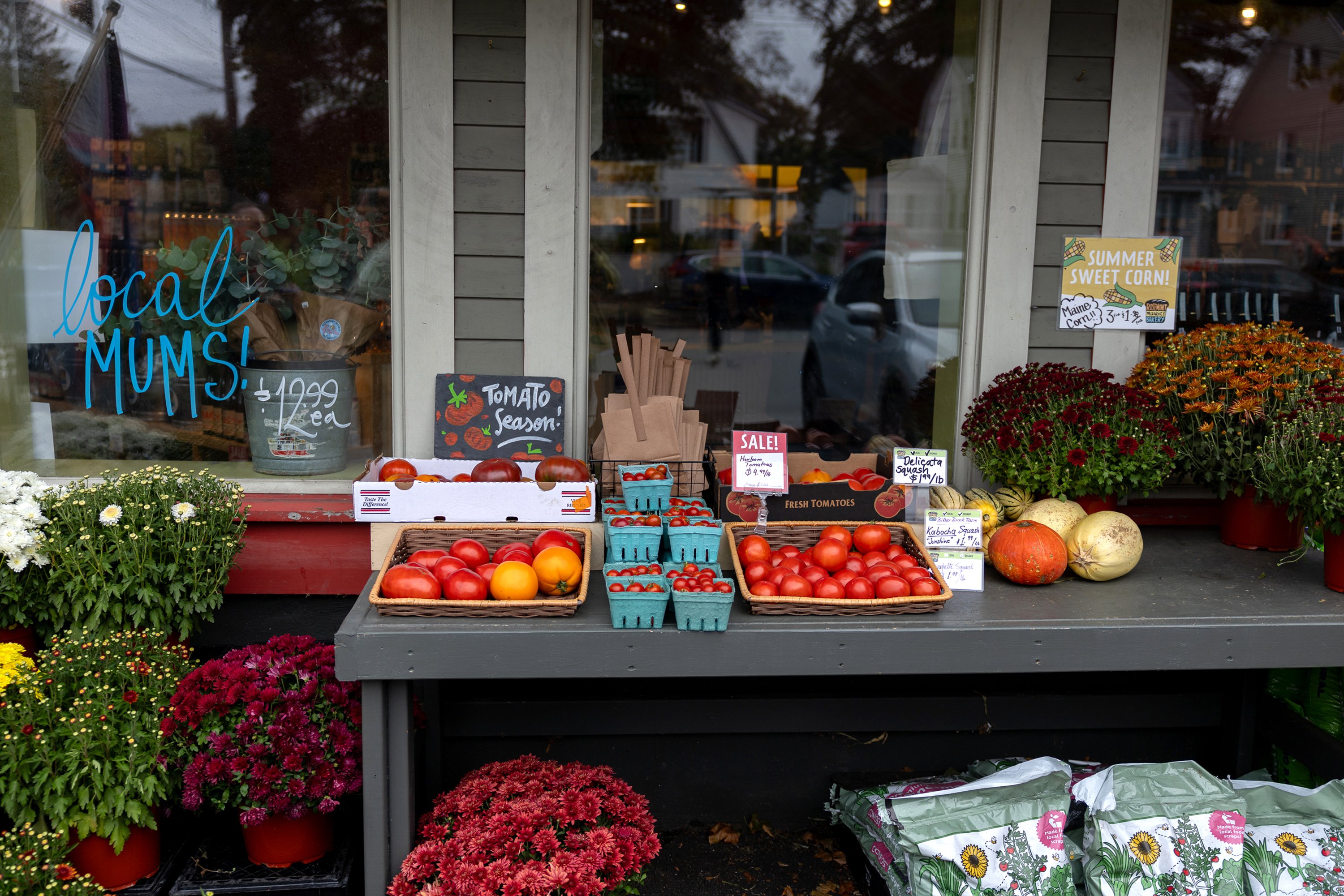
Maine boasts more than 100 farmers markets during the summer growing season, and more than 20 winter farmers markets, according to the Maine Federation of Farmers’ Markets. These venues are crucial to the viability of Maine’s small farms. But the farmers also depend on the stability and exposure that stores like Rosemont offer.
“Rosemont has always been a very significant partner, and one of the larger buyers for our product,” said Steve Burger of Winter Hill Farm, which sells yogurt and cheese at Rosemont’s six locations, where 60% of the inventory on any given day comes from Maine growers and producers.
Ian Jerolmack of Stonecipher Farm in Bowdoinham, who sells produce to high-end restaurants and co-ops around the state, said Rosemont is “fundamental” to his business viability. “Rosemont is probably my single biggest order every week, and very reliable in what I expect them to buy. I don’t know what would happen for me if they disappeared.”
Some might see stores like Rosemont as competition for farmers markets. Kelsey Kobik, communications and marketing specialist for the Maine Federation of Farmers’ Markets, sees a more mutually beneficial dynamic.
“Farmers markets and local grocers have a symbiotic relationship, because they give farmers more avenues to get their food out into the world and get paid a fair price,” she said.
Law points to the exclusive partnership Rosemont has with Bumbleroot Organic Farm in Windham for specialty salad greens blends. “This gives them a consistent place to sell their product,” he said. “They know we’re going to buy it, and it gives us something really special to offer.”
Farmers’ partnerships with local grocers can be much more beneficial than doing business with large supermarket chains. Agricultural experts suggest that supermarket contracts with farmers can be very rigid and are sometimes voided if the farmers miss a delivery day, for instance, even due to inclement weather. Farmers can also wait many months for their invoices to be paid.
Kobik said local markets and co-ops work with farmers “not in an extractive way, so both have more stability and predictability.”
The arrangement works particularly well for smaller farms. “They aren’t going up to Hannaford and saying ‘Take my four cases of lettuce greens,’ because they’re not going to take them. They’re too big,” Naylor said. “We can provide a market where we have enough volume to help their business, but we’re not so big that it’s hard for them to sell to us.”
THE ACTUAL COST OF FOOD
Naylor has worked as a fishmonger, restaurateur and manager of the former Portland Greengrocer. But as he was gearing up to launch Rosemont in 2005, he was still gaining an invaluable education from local farmers about true seasonality and traditional practices that have been the bedrock of small farms for centuries.
He learned about spring-dug parsnips from Martha Putnam of the former Farm Fresh Connection in Freeport. Farmers leave the pale parsnips in the frozen ground over the winter so that their starches convert to sugar, then they harvest the candy-sweet root veggies in the springtime. Legendary organic farmer Eliot Coleman taught Naylor how spinach can resist frost down to about 10 degrees, making it a dependable late winter crop.
He learned from a Maine pig and beef farmer about why, back in the day, they’d wait until after the first frost to butcher a large animal. Turns out, the frost kills the flies, so the farmers wouldn’t have to worry about maggots developing on the meat as it hung from the barn rafters to dry-age.
It’s the kind of generational wisdom that helped make Naylor a local food fanatic. Exposure to pristine, peak-season ingredients can also have that effect.
Kobik’s first farm job was at Goranson. “The quality of the food was so far and above anything I was used to, so I was totally hooked,” she said. “It was super fresh. I remember biting into one of the first summer carrots, right out of the ground, and it’s so vibrant it just makes the cells in your body wake up.”
Eating locally necessarily means eating seasonally, which also means you’re cooking with new ingredients whenever they become available. “You just end up eating so much variety that way,” Kobik said. “It’s just an emotionally and mentally fulfilling way to nourish yourself. It makes me happy every day.”
Of course, local foods, counterintuitively, are often more expensive than their far-flung counterparts from industrial producers.
“I’d say the local product is more of a true reflection of the actual cost of food,” Law said. “A lot of food produced on an industrial scale ignores costs and implications of their work: the environmental cost, the impact on workers and animals, the quality of the product. In regional or local food systems, there’s much more care for all that, because they’re not just trying to produce the cheapest product.”
“The bulk of the food we purchase, there’s no transparency,” Burger said. “You have no idea where it came from or how it was produced. More and more consumers value knowing where their food is coming from and that the practices behind it are ethical and sustainable.”
While eating locally is a virtue, it’s also very much a privilege. Local food proponents are banking on the more privileged Mainers to help their cause.
“People who can afford to are choosing to care a lot more about how many times their dollar benefits the community,” Jerolmack said.
“Maine people really value a sense of a local economy, supporting your neighbors and keeping your dollars within your local community,” agreed Burger.
Jerolmack said he admires the commitment of people like Naylor, who promote local food even though it can be “clunky” coordinating with the roughly 60 farmers and 200 food producers Rosemont handles.
“When I talk with John, I know I’m talking to somebody who could have made a lot more money doing something else,” Jerolmack said. “He is just so dedicated to the principle of local food. He could even make more money within his business if he cut back on handling a lot of the local production.”
Naylor has no regrets. “I’m not looking for a mansion and a yacht,” he said. “I just want to support farms and eat well. And the best food is what’s available in season, locally. It just is.”
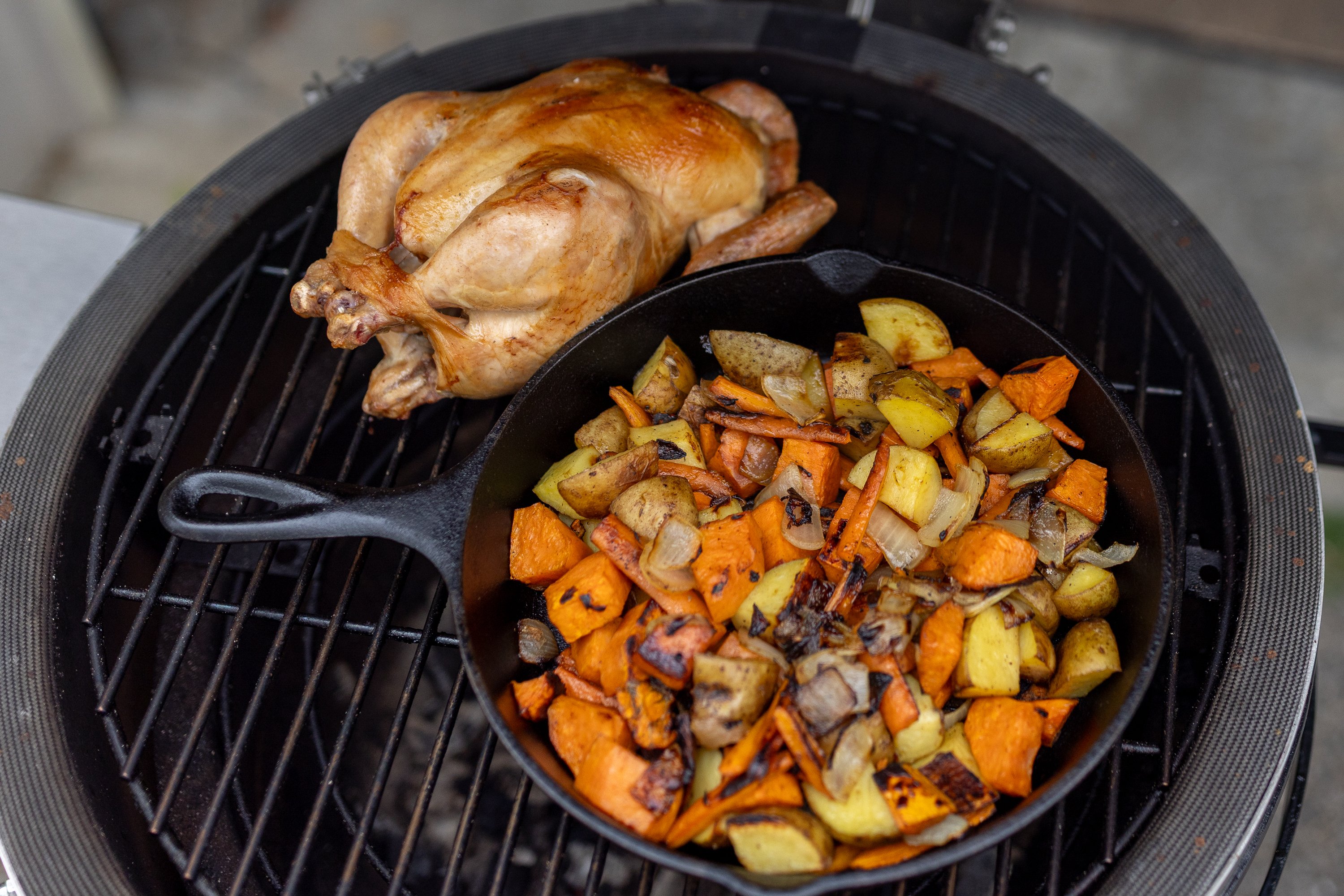
Rosemont’s Grilled Maine Chicken & Vegetables
Most of these ingredients are available locally grown. Depending on the time of year, you can also use vegetables like Brussels sprouts and winter squash. The recipe calls for a grill heated with hardwood charcoal, but you can also use a gas grill or your oven.
1 whole Tide Mill Farm organic chicken (3-4 pounds)
Salt and freshly ground pepper
3 tablespoons good-quality extra-virgin olive oil (for coating chicken and vegetables)
1 large white onion, cut into bite-size wedges
1 pound carrots, large dice
1 large sweet potato, large dice
1 pound potatoes, large dice
Preheat the grill or oven to 375 degrees F.
Rinse the chicken and pat very dry. Drying it will help to achieve a crispy skin. Rub salt, pepper and some of the oil inside and outside of the bird. Toss the vegetables in a large bowl with oil, salt and pepper. Place vegetables in a cast-iron pan or flame-proof casserole dish.
Place the chicken on the grill, breast-side down; cover the grill and cook for 25 minutes. (Place chicken in a cast-iron pan if you are roasting it in oven.) Turn the chicken breast-side up and continue cooking for an additional 25-35 minutes.
About 10 minutes after turning the chicken (so the vegetables will be done at about the same time), set the pan of vegetables on grill; cover grill and roast vegetables for 15-17 minutes or until browned and tender.
The chicken is done when the leg bone comes loose from the joint when gently tugged, and the meat should reach an internal temperature of 165 degrees F. Let chicken rest 10 minutes before carving.

We invite you to add your comments. We encourage a thoughtful exchange of ideas and information on this website. By joining the conversation, you are agreeing to our commenting policy and terms of use. More information is found on our FAQs. You can update your screen name on the member's center.
Comments are managed by our staff during regular business hours Monday through Friday as well as limited hours on Saturday and Sunday. Comments held for moderation outside of those hours may take longer to approve.
Join the Conversation
Please sign into your Press Herald account to participate in conversations below. If you do not have an account, you can subscribe here. Questions? Please see our FAQs.