

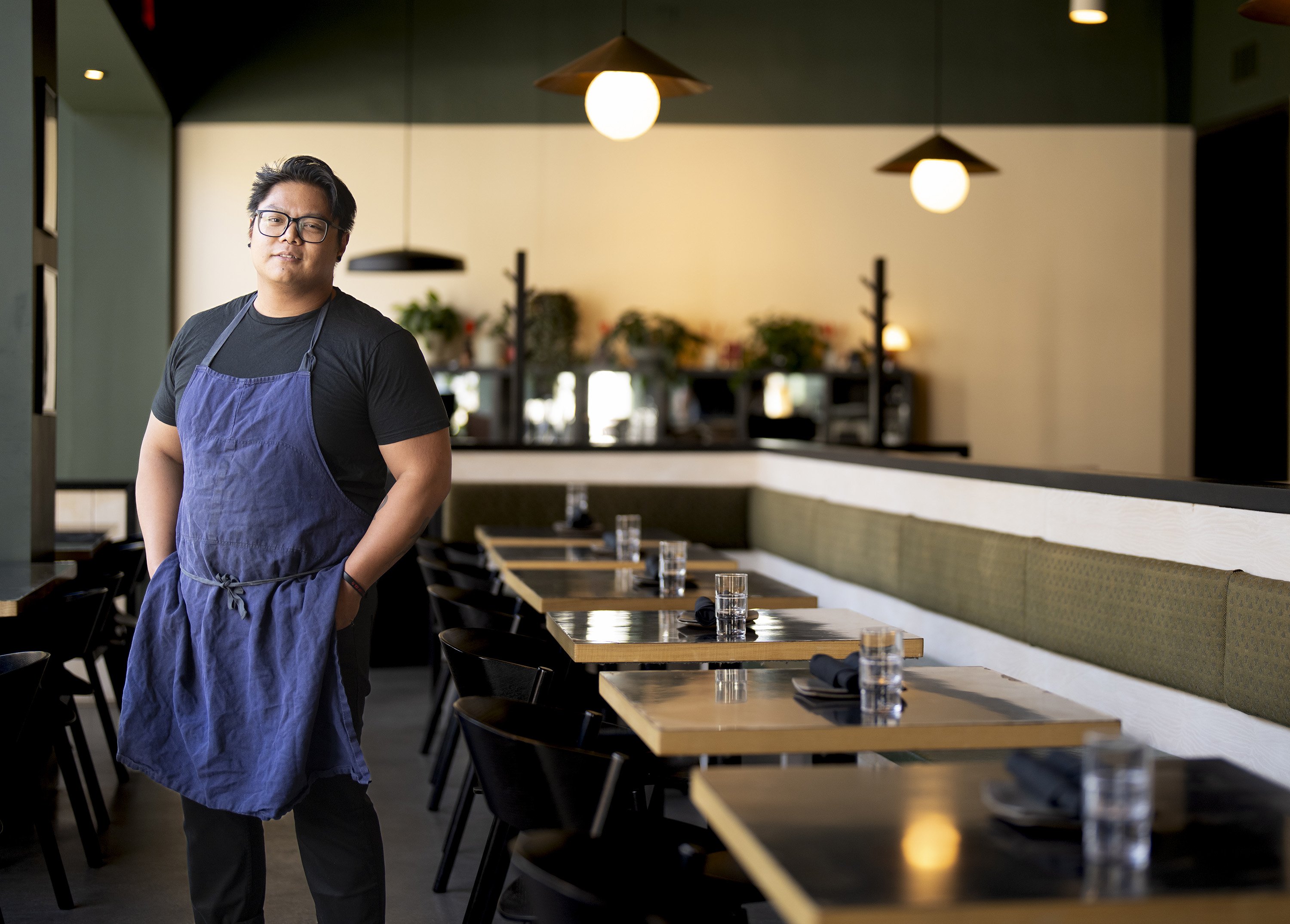
Amadeus Florendo, chef and founder of the local Filipino pop-up dinner series Pulutan, has bittersweet memories of its first event two years ago. Specifically, the delicious but over-complicated garlic fried rice.
The pop-up was set for a Monday in late April. He’d spent two months planning the event, to be held at Crispy Gai, where he was a sous chef. Florendo crafted an 11-dish menu, prepping all the components himself after his regular shift in marathon work binges that would sometimes last until dawn.
He was excited to share his Filipino heritage through Pulutan — a Tagalog word for bar snacks and appetizers, similar to Spanish tapas — including his take on some classic dishes like lumpia, chicken adobo and braised bistek. But in his zeal, he made the classic rookie mistake of trying to do too much.
His menu included three desserts, for instance, each paired with its own special ice cream. And he prepared garlic three different ways for the traditionally humble garlic fried rice: fried garlic, garlic confit, and even an aioli with fermented black garlic. “Garlic fried rice is a very popular dish in the Philippines, but I did my own spin on it because I wanted to be a chef,” Florendo said. “I was overreaching and trying to be someone I wasn’t yet.”
Still, his food sold out that night, and the highly successful event led to six more Pulutan pop-ups in venues including Bar Futo and Room for Improvement. But he’s learned his lesson, and now streamlines his menu to about a half-dozen offerings.
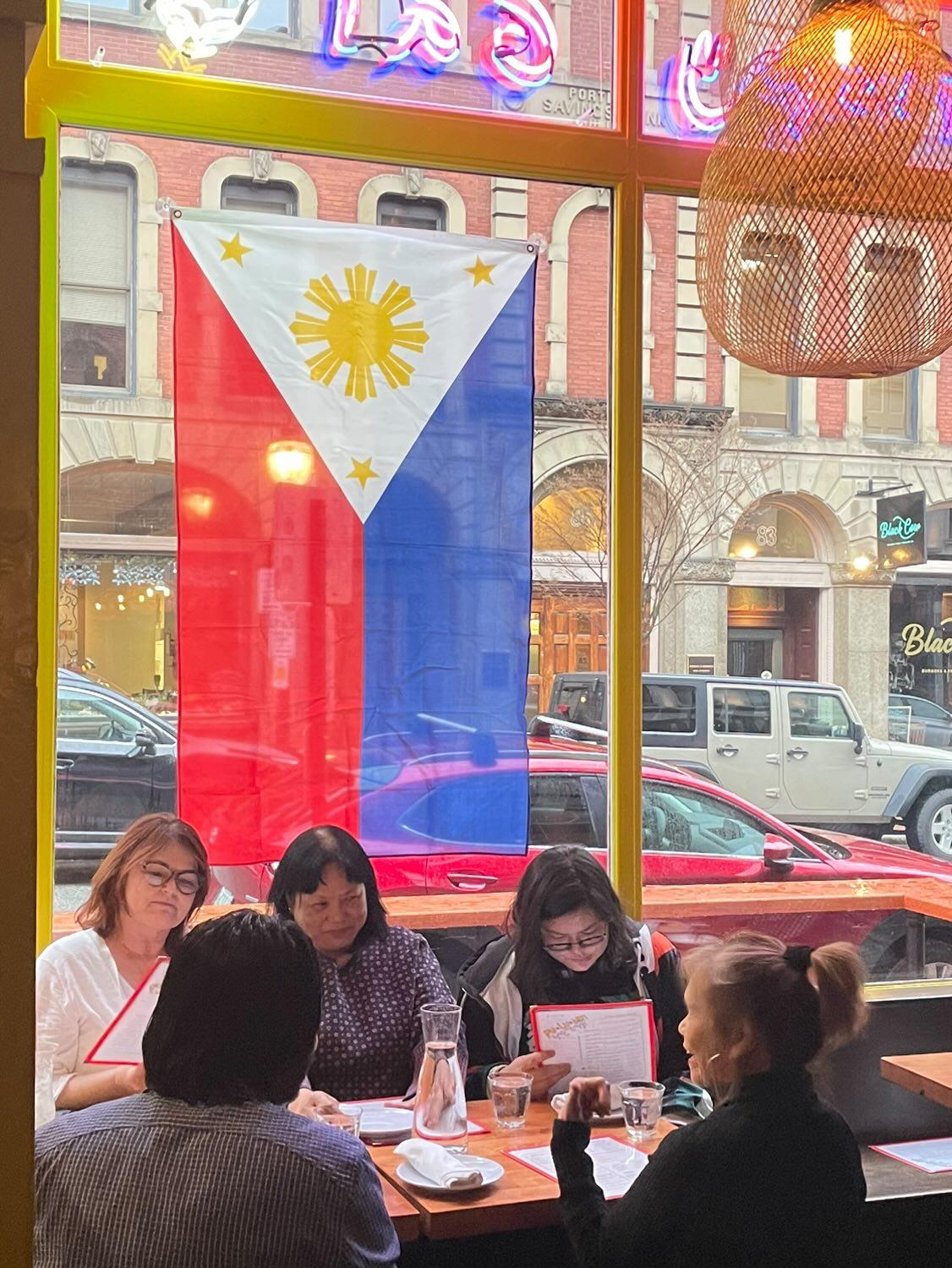
“I’ve matured a lot in the way I cook for my pop-ups,” said Florendo, 33, now the p.m. sous chef at Bar Futo. “Now I just keep it simple and keep it good.”
“Doing pop-ups is kind of the best way for young chefs to make a name for themselves,” said Cyle Reynolds, chef and co-owner of Bar Futo and Crispy Gai, who green-lighted Florendo’s first foray. Reynolds himself has done plenty of pop-up dinners; Crispy Gai actually got its start as a pandemic pop-up.
“I have a really big appreciation for young chefs who do them,” Reynolds said, “and a soft spot for anyone who’s willing to put in that level of work.”
TESTING THE MARKET
Pop-up dinners — one-off or limited-series food events advertised almost exclusively on social media — first became a nationwide trend in the late aughts. They usually take place at restaurants or bars on nights when they’d otherwise be closed or very slow, though they’re sometimes held at event venues or scenic locations like farms. The chefs buy the ingredients they’ll need for the night, then give the host venues a percentage of the profits to cover some overhead costs.
Pop-ups sometimes feature buzzy chefs visiting from out of town, or offer sneak menu previews of soon-to-open restaurants, like the Prentice Hospitality Group’s recent pop-ups of Douro at its sister restaurants, Twelve and Evo. But they’re particularly valuable to up-and-coming local chefs looking to try out their concepts on the dining public without having to make a major financial investment.
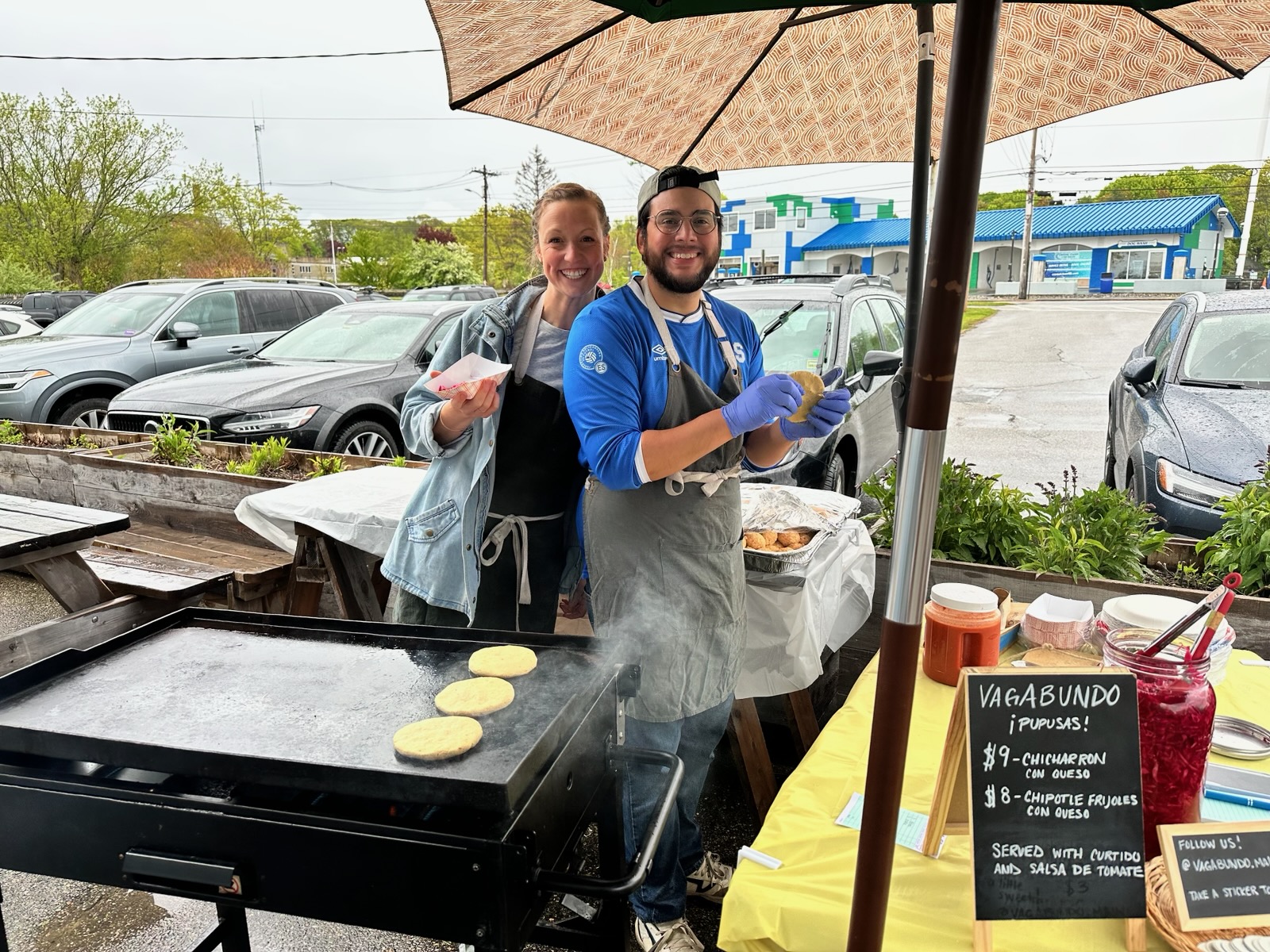
“Pop-ups have been a really good window into the world of restaurant ownership without actually owning one and paying for all the overhead and labor,” said Khristian Martinez of the Salvadoran pupusa and tamale pop-up Vagabundo. “I can test the market and see how viable and sustainable this concept might be.”
“This industry has been so challenging to get a foot in the door in terms of financing,” said Emily Taylor, operations manager at the craft cocktail bar Hunt & Alpine, which regularly hosts pop-up events. “Pop-ups are a beautiful way to expose the community to new chefs and foods without some of the usual startup costs.”
Pop-ups emerged in Southern Maine in the early 2010s. Early in their careers, celebrated local chefs like Damian Sansonetti (Chaval, Ugly Duckling) and Vien Dobui (Cong Tu Bot) made reputations for themselves in part with pop-ups in and around Portland. Reynolds put on his first pop-up in 2014 when he was a sous chef at Nosh. Like Florendo, he learned some lessons the hard way.
He’d planned a 10-course French meal — complete with oysters, escargot, duck a l’orange and a cheese course — to be held at Old Orchard Beach’s former Butcher Burger. Between food costs and renting the tables, tableware and equipment he needed for the soirée, Reynolds spent thousands. But he didn’t market the event adequately, and the small crowd of paying customers didn’t come close to covering costs.
“I lost a ton of money on that first one,” he recalled grimly. “Losing a couple thousand bucks is a big deal when you’re 23. Being a good cook is not enough with pop-ups. But they’re so good for young chefs because it teaches you how slim the profit margins really are.”
From then on, Reynolds teamed up with Sasha Brouillard (Crispy Gai co-owner and founding partner), using her expertise to advertise the events effectively. All their subsequent pop-ups sold out.
While Florendo’s upfront costs for his Pulutan dinners don’t reach beyond three figures, he’s still aware of the risk. But he looks at these events as a necessary “warmup” to opening his own Filipino restaurant someday. “To commit a few hundred dollars out of your own pocket for an event that might not be successful is kind of scary. I’m learning about the logistics and business side of running a restaurant through doing this.”
SHARING CULINARY PASSIONS
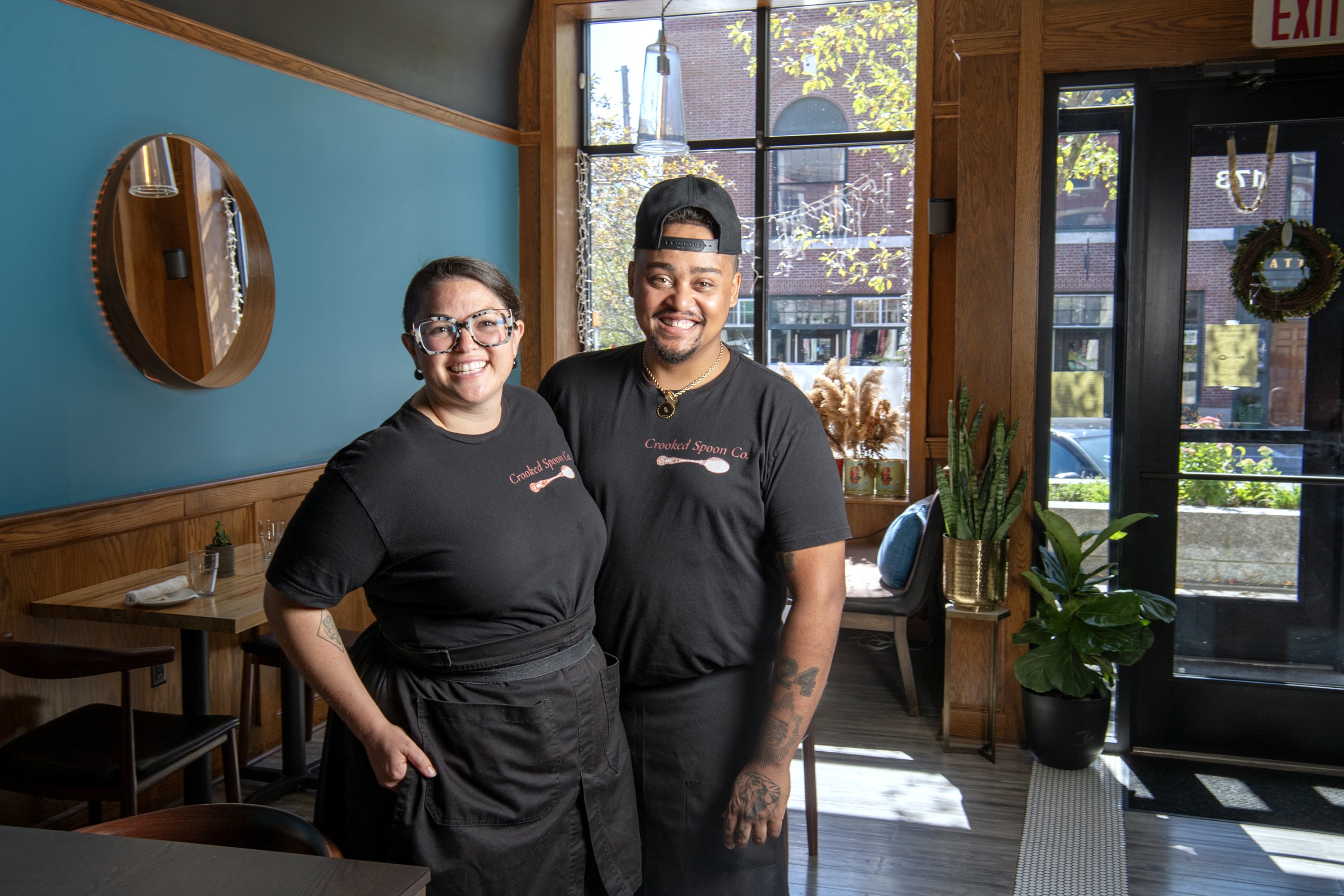
A successful run of pop-ups can be a springboard to greater professional opportunities for young chefs and culinary entrepreneurs. “It’s been life-changing for us,” said Chloe Chalakani of Thomaston’s Crooked Spoon Co. “Pop-ups in general have made food businesses possible at a time when owning a restaurant is a bit of a dangerous game.”
In the fall of 2023, Chalakani and her life-work partner, Chef Samuel Emery, did their first Crooked Spoon pop-up pasta dinner at the Waldoboro Inn. The event was a “smash hit,” Chalakani said, drawing about 50 customers and immediately leading the inn owners to sign them on for a weekly residency.
Chalakani and Emery held Crooked Spoon pop-ups every Monday night at the inn for nearly two years, expanding along the way into catering work, pasta-making classes and farmers market sales. Emery had plenty of restaurant experience, having cooked at Primo in Rockland and the esteemed Osteria in Philadelphia. But it wasn’t part of their plan to open a restaurant.
“I’ll be honest, I think I said out loud at least a dozen times, ‘I do not want a restaurant,'” Chalakani laughed. “It was too large of an undertaking for me to wrap my head around. And the pop-ups were so fun and exciting and intimate. It was just the two of us doing everything, and a restaurant felt like something that wouldn’t be able to be just the two of us.”
But they found a happy medium this summer. The couple came upon a chance to operate Crooked Spoon as a full restaurant (with a full bar) inside The Block Saloon in Thomaston on Mondays and Fridays, and soon on Thursdays also.
“It’s small, a really quaint cozy space, just 27 seats, and we can do it with just the two of us, so I was able to come to terms with that,” Chalakani said.
Sometimes the motivation for a pop-up chef is less business-minded, and more about sharing their culinary passion with an appreciative audience. Rafael Zimmerman, executive chef of Biddeford’s acclaimed Magnus on Water, found his culinary voice through his Peruvian pop-up series, The Lost Llama.
“I thought it would be cool to be known as a Peruvian chef, but I didn’t know what direction the pop-ups would take me,” he said. “My Llama pop-ups haven’t been about making money. It’s a way for me to get my culture out there. It was more rewarding to get people to eat Peruvian food versus making money.”
Martinez works full time at Ready Seafood in Saco, and similarly doesn’t feel pressured to turn a profit with Vagabundo. “I honestly do these pop-ups because they’re a lot of fun for me, and they’re a way to make Salvadoran food visible and share the food I grew up with.”
‘AN EXTRA LAYER OF LOVE’
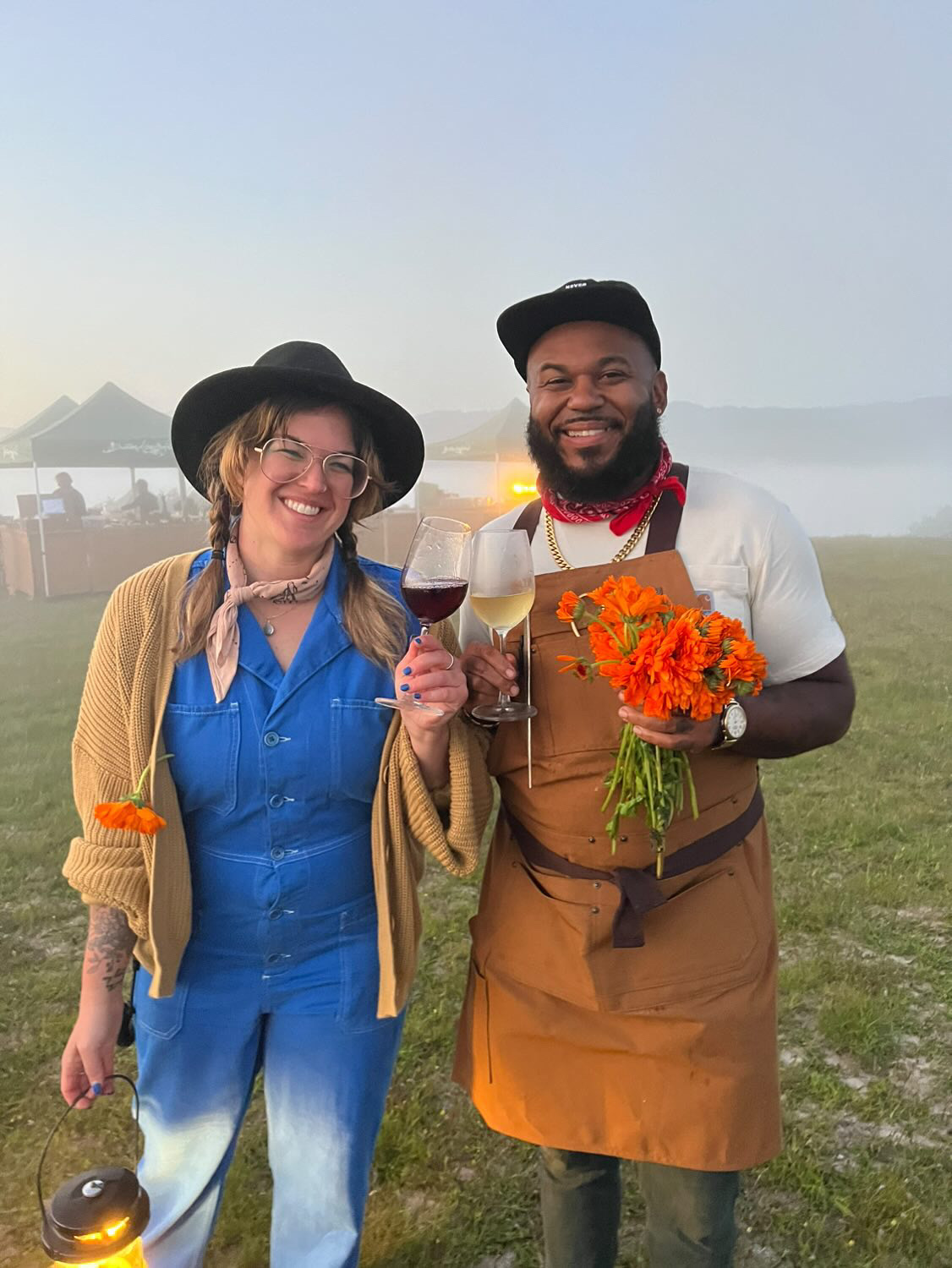
Brent Foster, bar manager at Crispy Gai, runs a pop-up series known as Husky Boi that he started during the pandemic in his native Detroit. Since 2020, he’s put on roughly 30 pop-ups in both Michigan and Maine, at local venues including Friends & Family in Portland and the Nobleboro event space and organic farm, Wanderwood.
Foster’s meals are nostalgia-driven, recalling the foods he loved from his youth in the ’90s. But he adds cheffy flair and classic French technique, like a version of his mom’s stroganoff amped up with farm-fresh local produce, or a riff on french fries dunked in a Wendy’s chocolate Frosty that uses cubes of potato pavé set over a cold purée flavored with dark chocolate and mushrooms.
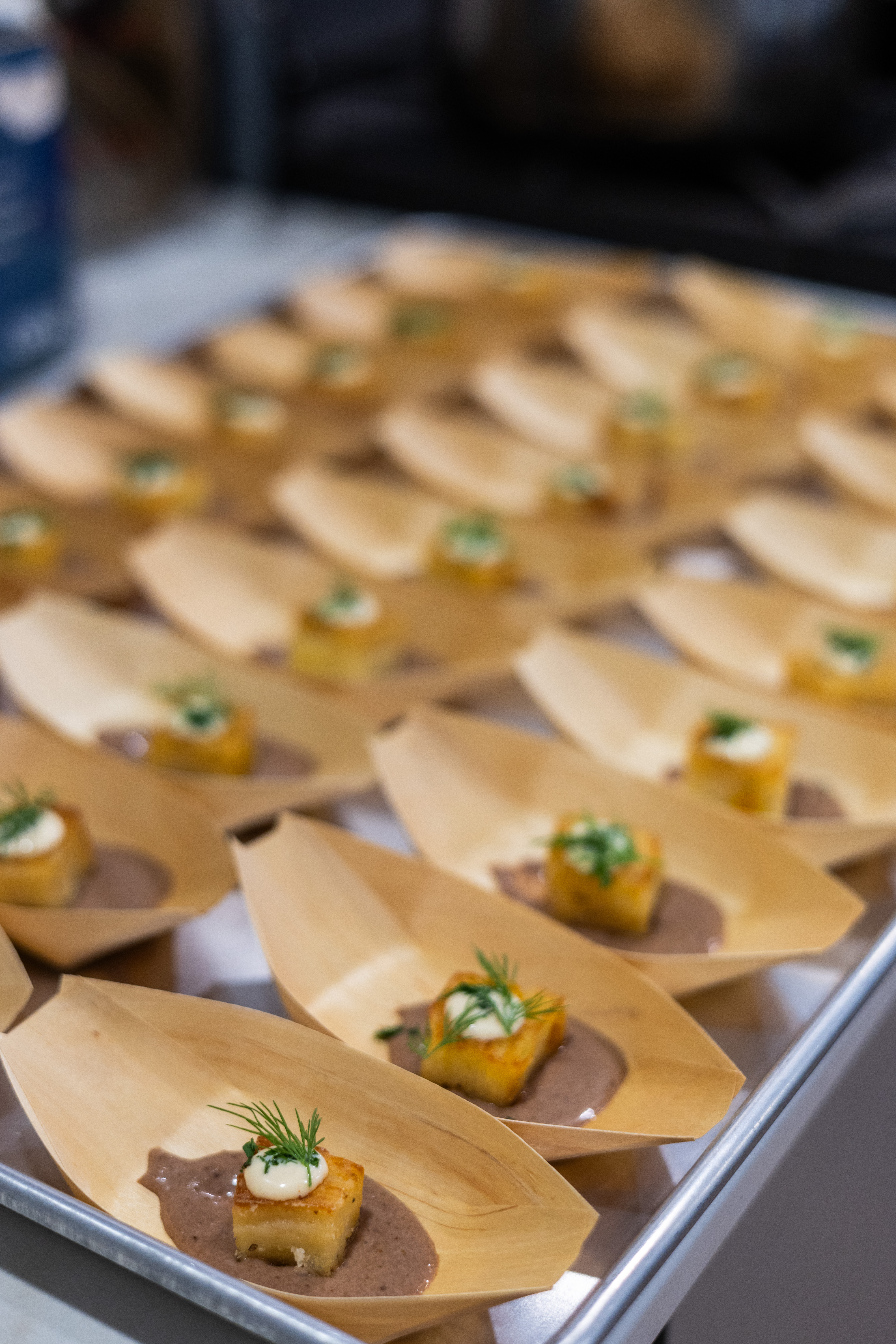
He’s even done a twist on Dunkaroos, the beloved millennial lunchbox dessert, using a ras el hanout-flavored shortbread cookie with a feta glaze and chocolate-tahini ganache.
Underexposed international cuisines and outside-the-box culinary visions like Foster’s can both benefit hugely from pop-up culture. “People who go to pop-ups are looking for something out of the ordinary,” Taylor said. “They tend to be people who want to be on the cutting edge of the restaurant scene.”
Zimmerman said regular pop-up goers tend to want “something new, something limited edition. And they lean more toward the scarcity thing: ‘I have to go there because I don’t know the next time they’ll be doing it.'”
“The pop-ups I’ve seen in Portland give me a chance to try things that are nowhere else around,” said Andrés Kenney of Portland, a Peruvian who was so impressed by Zimmerman’s work at Lost Llama that he hired him to cook the rehearsal dinner for his wedding. “Pop-ups give the chefs a chance to do exactly what they want with as minimal cost as possible. What seems to come out of that, for me, is often the most home-cooked, pure version of that food.
“And when it’s done well, there’s kind of an extra layer of love that makes it really enjoyable,” Kenney added, noting that the intimate affairs often give customers a chance to meet with the chef, making the dinner feel like more like a personal connection than a transaction.
An Eventbrite survey of 2,000 regular pop-up goers — at least half of whom were age 18-34 — found that 75 percent believe it’s worth paying more money for a unique dining experience. Half of the respondents said they’d be willing to pay more for a pop-up dinner with chef interaction than for a meal at a regular restaurant (an average of $58 more per person).
LOGISTICAL NIGHTMARES
It’s certainly important for the chefs to love what they’re doing with the pop-ups, because the events can be massive undertakings.
“You’re basically creating, hosting and then breaking down a full-blown restaurant — often in a non-restaurant space — in a single day,” said Chalakani.
“Logistically, pop-ups are nightmares,” Florendo said.
Foster said it’s important in the planning stages to order the right amount of ingredients in the first place. Buy too much food, and you’ll be stuck with costly leftovers. Too little, and you sell out too quickly, leaving potential customers hangry, frustrated and less inclined to hit your next event.
Like caterers, pop-up chefs often work out of unfamiliar spaces. “It’s hard to get into a flow in someone else’s kitchen, where you don’t know where the large spoons are, for instance, or the tongs,” Zimmerman said. You have to find out-of-the-way places in the venue’s dry storage and cooler to keep your ingredients, and you may need to do prep work off-site.
Martinez remembers four years ago prepping for the first Vagabundo pop-up, which was held at Central Provisions. It was 3 a.m., and he was at the Woodlands Country Club in Falmouth, where he cooked full-time and was fortunate to have access to the kitchen after hours. He was exhausted from making dozens and dozens of pupusas, tamales and chilaquiles, using masa dough he prepared from Fairwinds Farm corn that he nixtamalized and hand-milled himself.
Adding to the stress, his infant child had recently spent a week in the hospital with an infection. Martinez suddenly thought maybe he couldn’t pull it off. He figured he’d have to tell Central to cancel the pop-up.
“Luckily, I called my wife and she talked me out of it,” Martinez said. “She said, ‘You can do it. Our son is OK. He’s home now. You can focus on this.’ So I just put my head down and grinded. I was pretty tired, but the day I did the pop-up, all that tiredness went away. I was just really excited. It was challenging, but very rewarding. Any pop-up after that has been just kind of a cakewalk.”
“I prepped overnight so many times. One time, I was so tired I couldn’t think or move. I could barely stand,” said Florendo, who, as a competitive power-lifter, is no stranger to tests of physical stamina. “But it feels great, after the event, like you just ran a marathon.
“It’s scary to put yourself out there and see how people will receive your food,” Florendo continued. “But I’m showing my kids you can follow your dreams. It’s about the freedom of cooking what I want, and about creating something and being somebody. I always wanted to be a chef, ever since I was a kid. This is how I’m crafting that for myself.”
WHERE TO FIND THEM
Follow the pop-up chefs featured in this story on Instagram, where they give updates of upcoming events.
Crooked Spoon Co.: operates as a full restaurant in The Block Saloon at 173 Main St. in Thomaston on Mondays and Fridays, and soon also on Thursdays. On Instagram, @crookedspoonco
Husky Boi: Husky Boi has a farm dinner scheduled at Wanderwood in Nobleboro on Oct. 11. Tickets are $150, available online. On Instagram, @thisishuskyboi
The Lost Llama: Rafael Zimmerman said one of Lost Llama’s upcoming events will likely be a Peruvian Pachamanca (underground pit cooking) feast. On Instagram, @the.lost.llama
Pulutan: Amadeus Florendo plans at least one more Pulutan pop-up before the end of the year, though the date and venue are not yet finalized. On Instagram, @amadeus.angelo
Vagabundo: Husband-wife team Khristian and Kaelin Martinez often pop-up at Lambs bar in South Portland, though they don’t have any future events scheduled at the moment. On Instagram, @vagabundo.maine

We invite you to add your comments. We encourage a thoughtful exchange of ideas and information on this website. By joining the conversation, you are agreeing to our commenting policy and terms of use. More information is found on our FAQs. You can update your screen name on the member's center.
Comments are managed by our staff during regular business hours Monday through Friday as well as limited hours on Saturday and Sunday. Comments held for moderation outside of those hours may take longer to approve.
Join the Conversation
Please sign into your Press Herald account to participate in conversations below. If you do not have an account, you can register or subscribe. Questions? Please see our FAQs.