
Regional School Unit 14 head chef Samantha Cowens-Gasbarro likes to drop into health classes as part of the schools’ ambitious plan to build adventurous and healthy eaters. She regularly leads a special taste-testing course at the midde and elementary schools.
At Windham Middle School recently she was encouraging sixth-grade students to try a dozen different fruits and vegetables ranging from kiwi to kohlrabi.
This is no typical health class, but RSU 14 doesn’t have a typical health and nutrition program. School lunches and nutrition outreach initiatives have been nationally recognized, most recently as one of “Three Healthy School Food Programs to Watch” by the Scholastic-run blog, Choices Ideabook.
During the taste-test class, Cowens-Gasbarro, known to students as “Chef Sam,” stood in front of the classroom, holding up each food individually while she told the students where it came from and its nutritional value.
The goal of the class, Cowens-Gasbarro told the roomful of 11-year-olds, is for the students to try new foods.
“Whether you like it or not, as long as you try it, that makes me really happy,” she said.
Plus it’s fun, hands-on and the kids eat it up (literally). Throughout the 75-minute class, kids were leaning forward over their desks, their arms stretched out in front of them, hoping to be called on to answer a question or give their opinion on a new food.
For the most part, the 15 students were adventurous, trying all the foods placed in front of them. There were a few wrinkled noses after the students tried fresh, raw ginger, although more of them liked the crystallized version.
Eliza Adams, middle-school health teacher, said Cowens-Gasbarro and Jeanne Reilly, director of nutrition, “have changed the food culture of our school. Kids are eating foods they have probably never experienced before – so much local, healthy food and meals made from scratch.”
Cowens-Gasbarro and Reilly say that’s exactly what their goal is – to change the food culture not only in the school, but also in the community, by introducing kids to new foods, offering cooking classes and serving healthy meals made from scratch in the cafeterias.
So far, it seems to be working. The evidence, Reilly said, is in the calls and emails they get from parents, thanking the school for introducing their child to a new food.
The program “changes how families eat because they’re more willing to change how they purchase food” if their children have already tried the foods and enjoyed them at school, Reilly said.
A lack of education around food can lead to poor nutrition choices among kids and adults, Reilly said, and that negatively impacts physical and mental health.
The school is teaching kids to cook in after-school “cooking clubs” with each class running for two weeks at a time. In some cases, students grow their ingredients in school gardens, and later harvest the bounty for their recipes.
The cooking classes are another way to move the food culture of the community toward healthier options, especially in households where both parents work, Cowens-Gasbarro said.
“If you can teach kids simple recipes, they can help out at home,” she said. “And, you’ll get them invested in making home-cooking a priority in their life as adults.”
The school nutrition program in some ways compensates for the cooking and home economics classes that have been scrapped due to budget cuts. The taste-testing and cooking courses are funded by grants.
School districts around the country and even the White House are taking notice of the efforts in RSU 14. In September, it was one of four districts nationwide invited to attend Chefs Move to Schools, part of the Let’s Move initiative started by first lady Michelle Obama.
Reilly said the district was by far the smallest of the schools invited to the conference. She aims to show that bringing a chef to the school “can be done in a smaller district,” she said.
While other districts have chefs making all of the meals, at RSU 14, Cowens-Gasbarro teaches the rest of the food staff to make meals, freeing her up to lead classes (although she does still spend time in the kitchen).
Reilly said this strategy has received a lot of praise.
“We think it’s the best way to use chefs in schools,” she said.
Cowens-Gasbarro has served as chef and nutrition coordinator for the school district since 2013. A resident of Raymond, she worked previously as a personal chef in the Boston area, serving families, athletes and individuals with special dietary restrictions.
When she moved to Maine, she intended to open her own cooking school for kids and adults.
“I didn’t know I would get everyone in town,” she said with a laugh. “But it worked out better than I could have imagined.”
Reilly has served as director of nutrition since 2009, but has worked in school nutrition for nearly two decades.
At the end of the taste-testing class, Cowens-Gasbarro asked who had tried a new food today. All the students raised their hands.
Whether through cooking classes or taste-testing sessions, “making food fun is how you get kids to eat it,” Cowens-Gasbarro said. And when they try something new and like it, she said, “it blows their minds.”
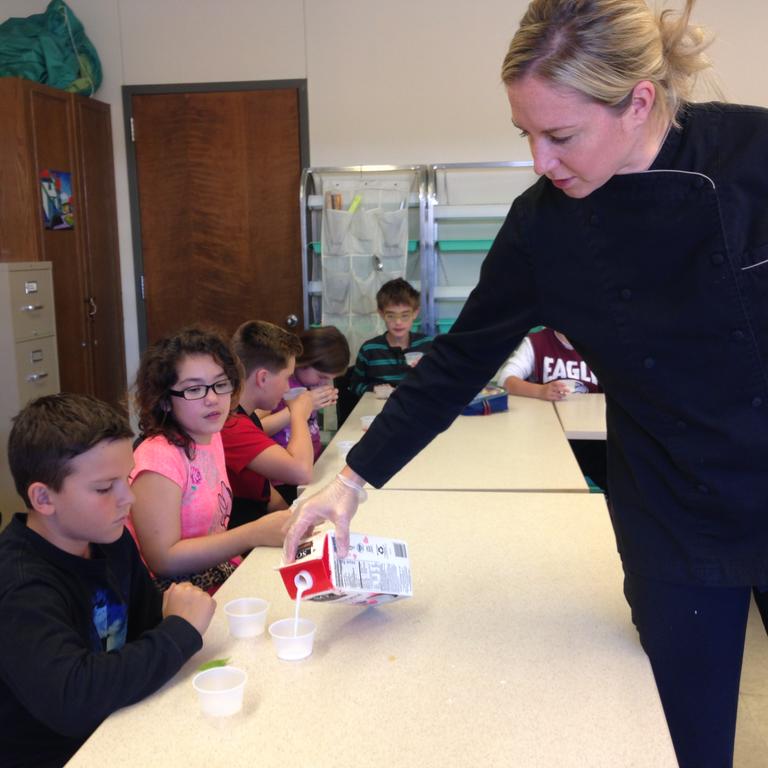
Samantha Cowens-Gasboro pours coconut milk for Jaden Haddock, left, and Kyra-Mae Brawn during a taste-testing class at Windham Middle School.
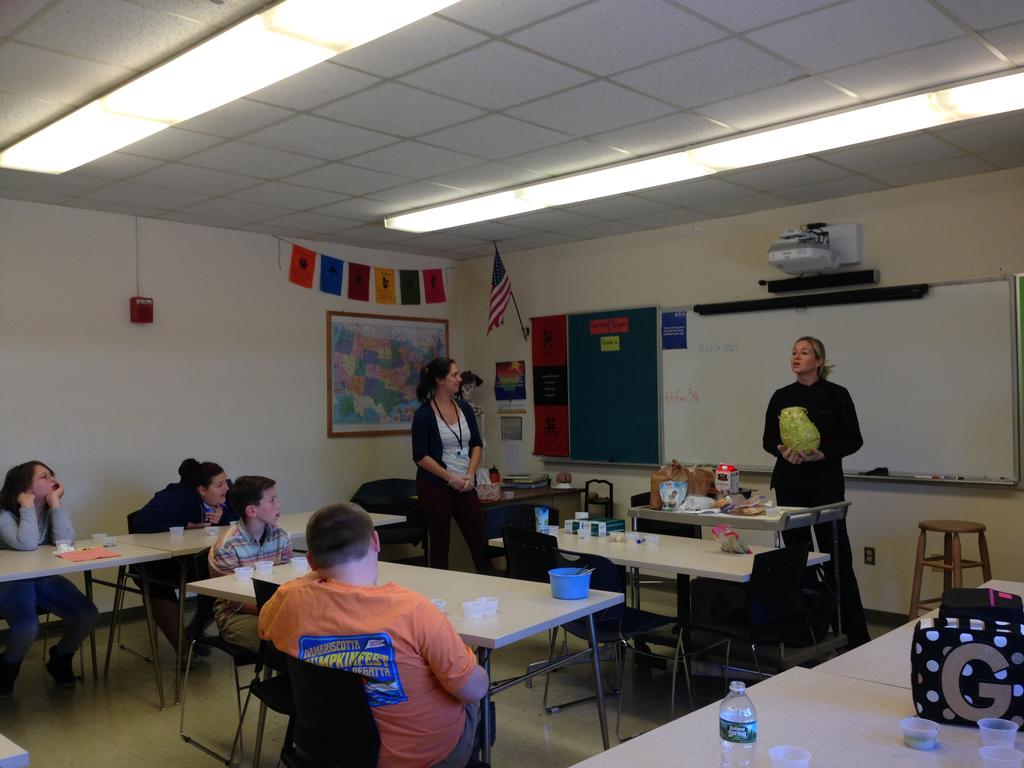
Samantha Cowens-Gasboro displays a kohlrabi from Hancock Family Farms in Casco for sixth-grade students, and encourages them to taste it. Cowens Gasboro, chef and nutrition coordinator at Windham-Raymond schools, leads a taste-testing course to introduce students to healthy foods they may not have tried before.
To learn more about Windham-Raymond’s school nutrition program and to see what’s being served in the cafeterias, find the nutrition program on Facebook or follow Chef Sam (@chefsamRSU14) on Twitter.
Comments are no longer available on this story