
The Maine Lake Science Center, a division of the Lakes Environmental Association in Bridgton, has appointed its first research director.
Benjamin Peierls, a research associate at the University of North Carolina at Chapel Hill, will begin work in January. Peierls told Lakes Region Weekly that his primary goal will be to build a capable field laboratory to support the missions of the Lake Environmental Association and provide high-quality scientific data and analyses necessary for the understanding, management and protection of lakes in the region.
Ultimately, he said, he would “hope to see the science center established as an integral part of statewide efforts to advance lake science and ensure lake sustainability.”
One potential topic of interest for research, Peierls said, is looking at possible connections between events that would affect the watershed, such as rainfall patterns, with changes in water quality.
Peierls is no stranger to the region. His family summered on Sand Pond in Denmark. Peierls and his brother co-own a camp on the pond, originally built by his parents.
He said he is “excited to be joining the lakes association team and being a part of the early development of the science center.”
The center opened in June 2015 with the goal of studying Maine’s lakes and developing policy to protect the lakes. A critical component of its mission, according to association director Peter Lowell,is to develop original research and to collaborate with researchers at the state level and in educational institutions.
“We feel this is really important because our primary responsibility is to make sure we develop the scientific understanding to predict problems with our lakes before they occur and cause irreparable damage,” Lowell said.
Peierls will join Alyson Smith, center and project manager, and Bridie McGreavy, consulting director of the center, as well as lakes association staff. He was chosen from a pool of eight applicants that were “seriously considered” for the position, Lowell said, because of his experience with federal and state governmental agencies, grant writing and science publishing.
Peierls also has experience studying an area of research the center believes is important – identifying the tipping points for when a lake is about to support an algal bloom, Lowell said.
Algal bloom occurs in lakes with higher levels of nutrients, and is considered an indicator of suffering lake health.
“I think it’s fair to say that most scientists in Maine feel that our lakes are facing fairly eminent threats, some lakes more than others, and it’s really important that we identify those that are most vulnerable and begin to design protective strategies,” Lowell said.
Lake health demands collaboration, and the center looks to foster the collaboration necessary to “fill in the gaps” in the scientific community’s understanding of these issues, he said.
In the last year, the science center has held three research-focused retreats to bring together dozens of people in the marine sciences, with the goal of collaborating on research questions.
Now that the center has a full-time staff person dedicated to new research, he said, the center’s work will only progress.
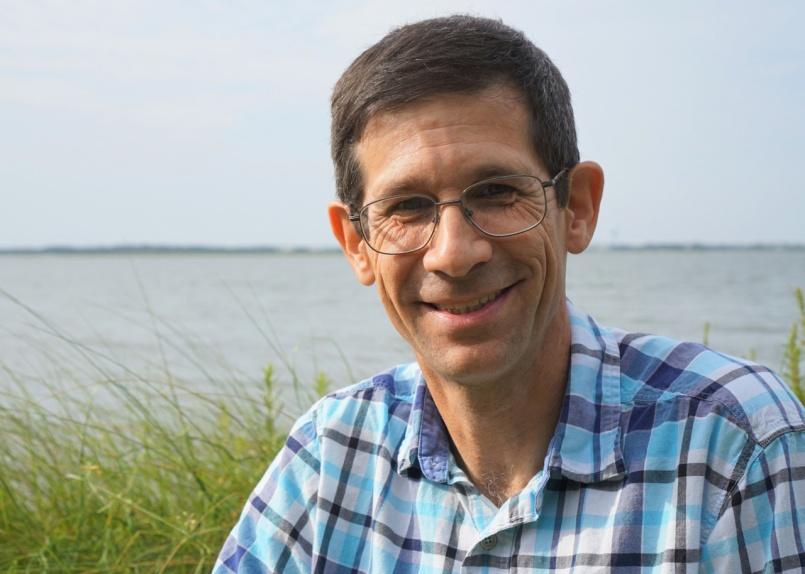
Benjamin Peierls says he is exicited to be “part of the early development of the science center.”
Comments are no longer available on this story