
The Freeport Shellfish Conservation Commission is working on a concept for the leasing of clam flats – the latest plan in a long-evolving process – for the town’s Ordinance Committee to consider.
The commission next meets on Oct. 13, beginning at 6 p.m., at the Freeport Community Center. Members will continue to study a draft proposal sent their way by the Ordinance Committee, a plan by which shellfish harvesters would apply to the state for aquaculture permits. The Town Council first would need to approve of the procedure.
“I think that the goal for the next meeting is to have something that goes to the Ordinance Committee,” said Andrew Wilbur, secretary of the Shellfish Conservation Commission. “More or less the idea is to have a document that creates a format for people who want to go through the state process. (The Ordinance Committee) advocated to moving to the state model.”
Wilbur said that the commission took a first look at the Ordinance Committee document during its last meeting on Sept. 8.
“We’re going to take another look at it during the next meeting,” Wilbur said.
The Town Council decided last October to hand off a now-defunct shellfish commission plan for aquaculture to the Ordinance Committee. At the time, town attorney Phillip Saucier advised the council that the Department of Marine Resources requires permission from the riparian land owner before granting an aquaculture lease under the state’s authority. The commission had passed a proposed amendment to the town’s shellfish ordinance that would have allowed any holder of a Freeport commercial shellfish license to apply for a municipal aquaculture permit in a designated, sub-productive area. The permit would be for five years or less, and subject to renewal for subsequent five-year terms. The clam harvester could seed his designated area with baby clams and maintain the habitat, and try to protect the clams from predatory green crabs.
The commission later identified flats near Recompence Shore Campground for the leasing proposal, but some land owners there objected, and the commission went back to the drawing board.
In July, Doug Leland, Shellfish Conservation Commission chairman, attended an intertidal group informational meeting in Augusta, hosted by the Department of Marine Resources. Clamming stakeholders, municipal marine resource officers and two state officials were present. The agency stipulates that at least 75 percent of any town’s clam flats be open to public harvesting. In addition, one difference between state leasing and town permitting is residency. While 90 percent of the people who harvest clams in Freeport are town residents, by town statute, the state does not have a residency requirement.
Sarah Tracy, Ordinance Committee chairwoman, said that the committee awaits the shellfish commission’s recommendation on “how to structure” leasing permits. Tracy also attended the Department of Marine Resources meeting in July.
“At DMR, it became clear that they already have a state statute in place for leasing flats in the intertidal zone,” Tracy said. “At the last Ordinance Committee meeting, we felt it would be duplicative to put a municipal ordinance in place. It makes more sense to adopt state leasing, which still requires municipal approval.”
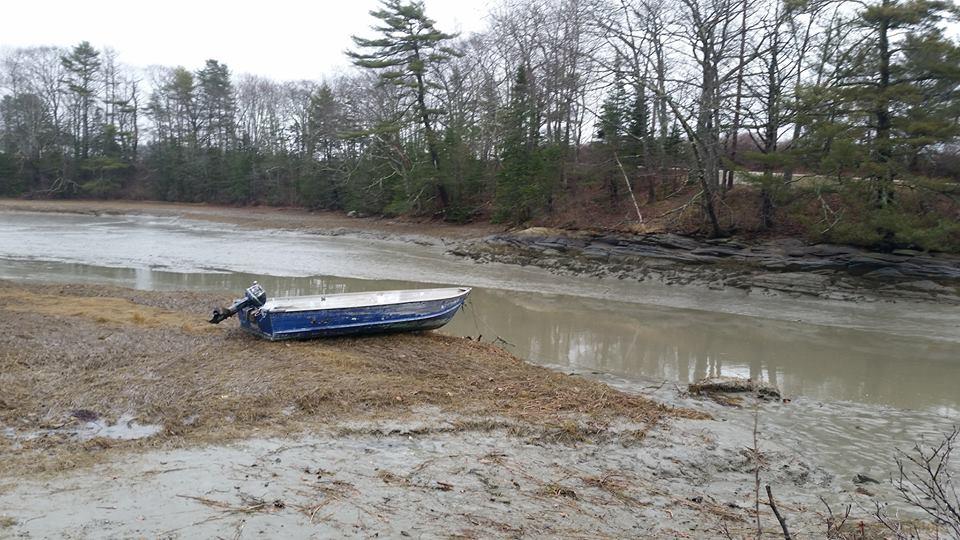
A Freeport clam harvester has left his boat on high ground while he harvests the flats.
Comments are no longer available on this story