
Hiring an out-of-state contractor to operate the Casco Bay Bridge has prompted outrage at both the local and state levels.
Under a new, $3.8 million state contract, FDI Services, also known as Florida Drawbridge, has been hired to operate the state’s busiest and largest drawbridge, which links South Portland and Cape Elizabeth to Portland and communities to the west.
This is also the first and only bridge in Maine that’s been privatized in this way.
In early November, news leaked that the Maine Department of Transportation was putting out a request for proposals in an attempt to privatize operation of the bridge, which opened in 1997.
At the time, Dale Doughty, the director of maintenance and operations for the Department of Transportation, told the Current the goal behind hiring a private contractor was both to save money and to better reallocate resources toward the department’s core duties.
In a prior interview, Doughty said the uniqueness of the Casco Bay Bridge, in terms of the state’s overall transportation system, was one reason why the transportation department hoped to find a contractor willing and qualified to operate it for a reasonable cost.
Doughty said in November that the annual cost for the state to operate the bridge was between $750,000 to just under $1 million, which is significantly less than the five-year contract the Department of Transportation signed with FDI.
Doughty also said the transportation department would carefully “evaluate the benefits and value to the taxpayers” and if “we believe the bid cost is too high, we will not move forward” with privatizing.
Ted Talbot, the press secretary at the transportation department, said this week only two companies sent in bids to operate the Casco Bay Bridge – FDI, at $3.8 million, and Cianbro Inc., which built the bridge, at $7.1 million.
The Current was unable to reach anyone from either FDI or Cianbro prior to the newspaper’s print deadline.
Talbot said that FDI was chosen “based on a number of criteria laid out in the (request for proposals), which included qualifications, experience, references and total bid price.”
Talbot said the plan is for FDI to take on responsibility for operating the bridge in early March.
A thorough inspection of the bridge will be conducted this week, Talbot said, which could slow or stop traffic more often than usual.
Talbot said the transportation department is working with the eight full-time state employees who now operate the bridge to “determine potential placement opportunities within the department, state government or the private sector.”
He also said that FDI Services has expressed an interest in interviewing the bridge operators for potential employment and that some of them have already contacted FDI to explore the possibility of being employed.
Talbot said he expected the transition to be seamless for motorists and to marine traffic. But according to South Portland Mayor Tom Blake and legislators representing the city in the State House, that’s not the point.
Blake said privatizing bridge operations, particularly with a company that’s headquartered 1,500 miles away and that has no experience with New England winters, “makes no sense.”
“Personally, I am very disappointed,” Blake said, particularly since the state signed the contract without holding any public comment or seeking input from those who would be most affected.
At the very least, Blake said, “We should have had the opportunity to talk about it.”
Both Kevin Battle and Scott Hamann, who represent South Portland in the Maine Legislature, agreed.
Neither serve on the Transportation Committee, but Battle, who represents House District 31, said, “I am not a fan of the state contracting out of state.”
He also questioned why bridge operations were being privatized when there are “no savings, no benefit to the state (and no) benefit to residents.”
Hamann, who represents House District 32, added, “I’m concerned that taxpayer-built infrastructure has been privatized, especially since it involves public safety and one of the most important bridges in the state.”
“Businesses and citizens depend on the safety and reliability of the Casco Bay Bridge every day. (And the state) should be responsible for maintaining (its) bridges, rather than outsourcing the job to a Florida company 2,000 miles away that has no accountability to the taxpayers that built this vital public infrastructure,” he said.
State Sen. Rebecca Millett, who represents South Portland and Cape Elizabeth in the Legislature, also expressed her disappointment with the privatization of the bridge, as well as with the failure of David Bernhardt, the commissioner at the Department of Transportation, to appear before the Transportation Committee as requested.
“Unfortunately, in the face of legitimate questions regarding the safety of future operations, the possibility of a toll, and the reason for the contract, Commissioner Bernhardt declined to answer and remains steadfast in moving forward with the new contract,” she said.
Millett added, “I will be certain to follow the transition to the new company closely. The Casco Bay Bridge is a vital piece of infrastructure, particularly for those living in our area.”
Members of the Democratic Caucus in Augusta also released a statement late last seek decrying the privatization of the bridge.
In that press release, Sen. Bill Diamond of Windham, the ranking Senate Democrat on the Transportation Committee, said, “There’s no emergency and no imminent state savings on the line, but there are still many questions about the implications on safety, commerce and taxpayer money. I don’t see why there’s such a rush.
“I’m disappointed that Commissioner Bernhardt wouldn’t even consider delaying this contract until we could get some more clarity about whether this privatization plan is really needed,” he said.
The press release also said, “Lawmakers have questioned why the (transportation) department would make the unprecedented move of privatizing the Casco Bay Bridge, changing course after years of professional operation and a solid track record of safety and efficiency.”
Under the request for proposals, the transportation department called the bridge “a major thoroughfare with heavy vehicular traffic and requirements for frequent openings.”
The documents also said the contractor hired would be responsible for “conducting day-to-day operation of the bridge and using a computer system to regulate passage of oceangoing vessels.”
In a prior interview, South Portland City Manager Jim Gailey told the Current that the Casco Bay Bridge is one of the city’s “most important, primary gateways,” which handles “thousands of vehicles a day.”
Estimates put the traffic count on the bridge at more than 32,000 cars per day.
“We absolutely depend on that bridge to stay open,” he said.
Gailey reiterated this week that his biggest concern with the change is ensuring that the bridge receives the same level of service it does now.
He’s been in contact with the transportation department and said he was assured that “the operation of the bridge will be the same as we know it today.”
Gailey also said that he and other key city staff, such as the police and fire chiefs, would all be meeting with representatives of the Department of Transportation “within the month to talk more about the change in operation.”
On its website, FDI says it has 19 years of experience in providing bridge-tending services. “Since our inception in 1997, we have maintained the lowest incident rate in the industry,” the website says. “Our focus is on protecting the welfare of the motoring, marine and pedestrian public. Our leadership team’s years of combined experience ensures that everything involved in keeping movable bridges safe and operational is expertly managed.”
Within Florida, FDI is responsible for the operation and maintenance of 26 drawbridges. The company also maintains the Woodrow Wilson Bridge across the Potomac River in Washington, D.C., and operates all four drawbridges in Monmouth County, N.J.
Monmouth County spokeswoman Laura Kirkpatrick said there have been no issues with FDI’s operations of any of the bridges “to her knowledge,” since the contract was signed in late 2011.
A press release issued at the time said that contracting with FDI to operate the bridges would save the county more than $572,000 annually, which is not the case with the contract regarding the Casco Bay Bridge.
The release also quoted Monmouth County commissioner John Curley as saying, “Some county services are better handled by the private sector, and this happens to be one of them.”
Talbot, the Maine transportation department spokesman, said that FDI would “be operating and performing light maintenance on the mechanicals of the bridge, under the direction of (transportation department) management.”
He also said that “no other role changes are included in this contract,” which means the South Portland Public Works Department would continue to be responsible for plowing the bridge in the winter.
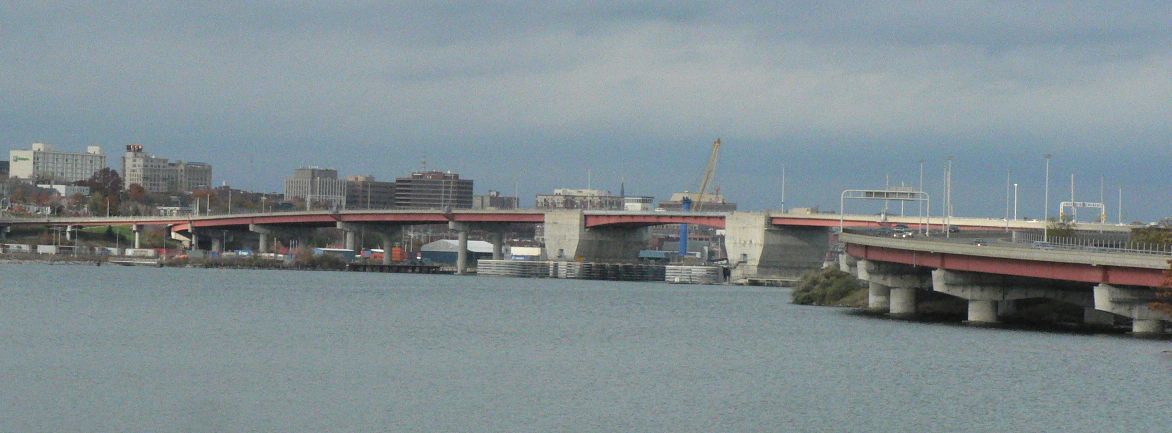 The Maine Department of Transportation has contracted with a Florida firm to privately operate the Casco Bay Bridge at an additional cost of about $2.8 million, prompting local officials to question the process.
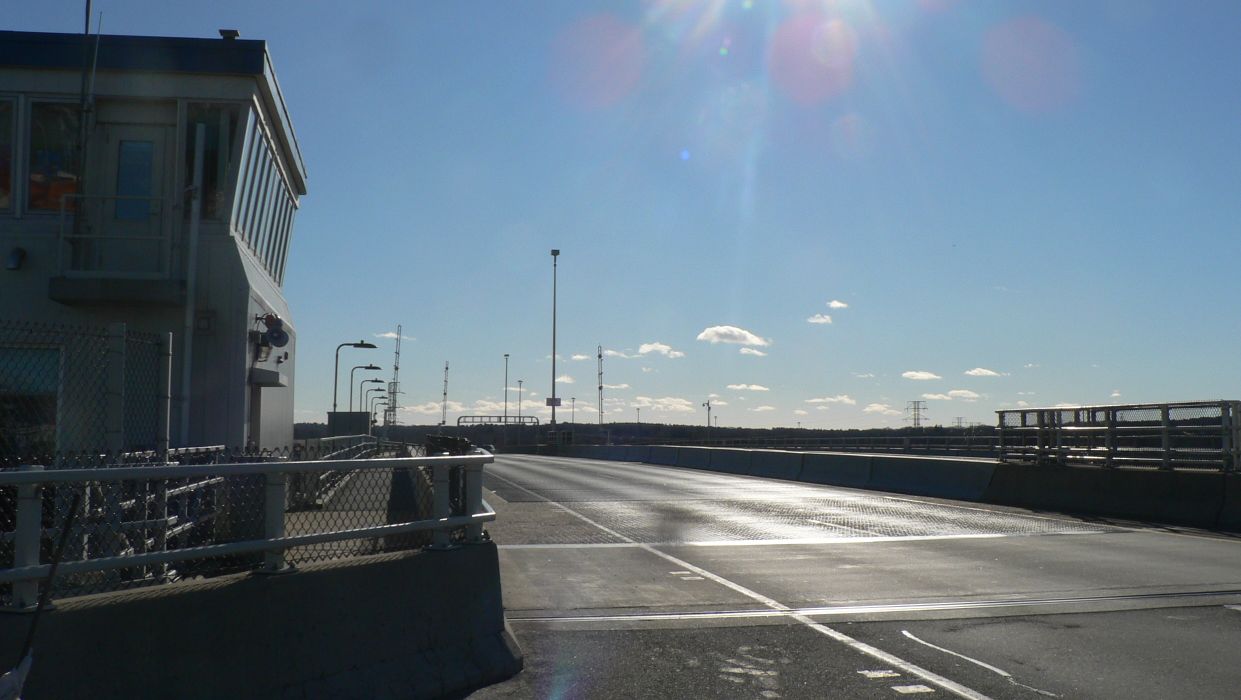 The operations center atop the bridge connecting Portland and South Portland will soon be manned by private contractors, not state employees.
Comments are no longer available on this story