
Since her early gardening days in Down East Maine, Scarborough resident Heather Jamieson has sought out local and fresh produce as part of her regular grocery shopping routine.
While she often finds organic fruits and vegetables at the local farmers markets, this summer Jamieson also plans to purchase her produce as a member of the community supported agriculture program at Broadturn Farm in Scarborough.
“I feel strongly about supporting local farmers and knowing where my food comes from, as well as buying close to home and eating what’s in season,” said Jamieson, who lives two miles from Broadturn Farm and has been a loyal CSA member at the farm for six years. “I love it because it’s organic – and I know what I’m eating.”
According to the U.S. Department of Agriculture, community supported agriculture has been gaining momentum since it was introduced to the United States in the mid-1980s. Typically, members or farm shareholders pledge in advance to cover the anticipated costs of a farm’s operation. In return, members receive shares of a farm’s harvest.
Five farms in Scarborough and Cape Elizabeth are busy gearing up for the 2015 growing season. While more than 180 farms in Maine offer CSA programs, membership has remained fairly steady the past few years. Membership varies for each farm, depending on the amount of fruit, vegetables and other products a farm is able to produce.
Once a week through the harvesting season, Jamieson visits the farm to pick up her weekly allotment of garden veggies. She pays up front, before the season begins, for the privilege. The system plays a key role in supporting the farm’s operation, by providing upfront funding in good growing seasons and bad. If yield is high, Jamieson will receive a bounty of fruit and veggies. In slower growing seasons, her investment will yield less, but the farm will be able to weather the downturn.
Stacy Brenner, one of the operators of Broadturn Farm, which is owned by the Scarborough Land Trust, said it’s her farm’s 14th year offering a CSA program, which typically includes 150 members. As of May 1, about 80 people had signed up.
“The CSA is the bread and butter of our farm. It’s what we built our farm business on,” Brenner said.
In addition, the farm is able to produce less waste “because we are growing specifically for the number of people we sell produce to.”
Any excess fruit and vegetables are sold to local restaurants and food co-ops, she said.
“For the customer, it’s the best value for their money in terms of (getting) an abundance of organic seasonal produce,” Brenner said. “It’s a nice way to be a part of a community of like-minded eaters.”
Before joining Broadturn Farm’s program, Jamieson would shop for her produce at the farmers market in Portland every Wednesday and Saturday morning. At Broadturn Farm, Jamieson buys both the produce and flower CSAs for a combined $785 for the season, which typically runs June through October, depending on the weather.
Jamieson estimated that she would spend $50-$60 every Saturday for her vegetables at the farmers market. Since becoming a CSA member at Broadturn Farm, she spends an average of $30-$40 a week, she said.
According to the Broadturn Farm website, the produce CSA costs $600 and the flower CSA, which runs for 14 weeks beginning in June, costs $185. The harvest season for the produce share runs for 20 weeks from the first week of June through mid-October, and tends to feed a family of four on a weekly basis. The flower CSA offers members a bouquet of fresh-cut seasonal flowers, including peonies, zinnias, snapdragons and more. The farm grows 300 different kinds of flowers, Brenner said, and every year it tries to offer a fresh variety of produce.
“We are doing some fun colorful bunches of carrots this year,” Brenner said.
Each week, subscribers arrive to the farm to retrieve their share, which includes a mix of newly harvested fruits and vegetables. Broadturn Farm also delivers its produce to residents living in Cape Elizabeth, South Portland, Portland and Falmouth.
“It’s well worth it,” Jamieson said. “Now I have a huge repertoire of recipes. If I know I’m getting a ton of kale, I will think of things I can (cook) with kale.”
What Jamieson enjoys most about the program is that she knows where and how her food is grown, which is important to her as a consumer.
“It’s so much more fresh than anything you could buy in the grocery store,” she said.
Frith Farm
Another farm in Scarborough that offers a community supported agriculture program, Frith Farm, not only provides its members fresh produce and flowers from June through October, but also eggs and meat during the winter.
Frith Farm’s CSA members visit the property twice a week to collect their assortment of freshly harvested organic vegetables, or cut their own organic herbs and flowers from the farm’s gardens, according to owner and operator Daniel Mays.
Depending on what’s in season, weekly pickups consist of eight to 12 different vegetables. Members are able to buy a half or full vegetable share, for $405 and $650, respectively, or an egg share for $115 that allows members to pick up a dozen eggs from the farm weekly.
“Picking up at the farm is a great way for members to experience how their food is grown and to ensure they get the absolute freshest produce possible,” Mays said.
According to Mays, community supported agriculture is “an innovative arrangement that allows farmers to benefit from the upfront payment (during an otherwise stark part of the cash flow calendar) while providing customers with discounted access to the full range of the farm’s harvests.”
In addition, he said, “The CSA model also facilitates a more intimate relationship between the consumer and the producer.” Proceeds from the CSA go directly toward growing the produce, including seeds, tools and labor.
This is the fifth year Frith Farm has offered a CSA program.
“We grow over 40 types of vegetables, and new this year, we will be growing more types of melons, as well as experimenting with okra in the greenhouse,” Mays said.
Green Spark Farm
From late April through Thanksgiving, Green Spark Farm in Cape Elizabeth offers a CSA program that sells rare, heirloom and traditional produce for $200-$500 a season.
While there is no deadline to subscribe, those who signed up for the program by April 30 received a 10 percent credit redeemable throughout the summer at its farm stand, located at 316 Fowler Road.
Green Spark Farm also provides a market share for members to redeem their credit at the Portland farmers market on Wednesdays and Saturdays from Memorial Day to Thanksgiving. Members also receive herb and flower seedlings to stock their own gardens as part of the program.
Mary Ellen Chadd, co-owner of Green Spark Farm, said she and her husband, Austin Chadd, are looking forward to a longer harvest season, since the couple got an early start on planting this year. They have also installed a fence and taken other measures to prevent deer, groundhogs and porcupines from destroying their crops.
“We are hoping to have earlier harvest dates on cucumbers, (and) even though it was a cold spring and there was a long snowpack, our tomato crops are already in the ground,” Mary Ellen Chadd said. “We are hoping to see the first fruits in mid-July.”
Last year the farm had 146 CSA members, said Austin Chadd. Joining the program, he said, is a great way for people to “invest” in their local farm and help support its operation in return for fresh food.
The farm grows a variety of salad greens, vegetables, melons and watermelons, flowers and more.
Mary Ellen Chadd said CSA programs are “the next best thing” to home-based gardens. It also creates a relationship between the consumers and producers, and gives members the option to eat fresh, organic produce.
Every year the CSA proceeds go toward a different need, such as constructing a farm stand, purchasing compost or building new hoop houses.
“The financial impact on our farm is huge in the spring,” said Mary Ellen Chadd. “We couldn’t farm without the CSA.”
Alewive’s Brook Farm
At Alewive’s Brook Farm in Cape Elizabeth, CSA members also have the option to sign up for a CSL – or community supporting lobstermen – as part of the program.
The lobster program, which began six years ago, is similar to a produce CSA in that members purchase a seafood share before the peak of Maine’s lobster season, said farm manager Caitlin Jordan. Members are able to combine the produce and lobster shares and choose anything in the farm stand, from vegetables and fruit, to fresh lobster and other types of seafood, throughout the growing season.
“When you get to the checkout, you say (your name) and we record how much you spent toward your limit,” Jordan said.
In the first year, the Alewive’s farm sold 12 shares, said Jordan. Last year it sold more than 100.
The deadline to register is June 1. The shares, which range in cost from $100 to $450 and offer members a 10 percent discount, last for 22 weeks. All shares must be used by Oct. 31, and any unused shares are non-refundable. Produce can be picked up at the farm on Old Ocean House Road or farmers markets in Portland, South Portland and Scarborough.
Like last year, proceeds will support various ongoing expansion projects at the farm, including rebuilding the current farm stand or creating a new herb greenhouse, said Jordan.
For the first time this year, the farm will offer fennel and three different varieties of kohlrabi (a cross between a cabbage and turnip).
“The farm is 80 acres and we only farm 20 acres. We are hoping to put more acres into production,” Jordan added.
Jordan Farm
As of last week, 25 slots were available for the six-year-old CSA program at Jordan’s Farm in Cape Elizabeth, which serves about 75-100 people. The deadline to sign up is May 20.
CSA shares range in cost from $186-$450 and can only be used at the farm stand on Wells Road in Cape Elizabeth. Jordan’s Farm opened a storefront in the Knightville neighborhood of South Portland in August 2014.
In 2014, farm owner Penny Jordan said her farm started giving members a chance to re-up their CSA accounts at a discounted rate during the growing season as a way to thank them for their commitment to the farm.
“We have several CSA members who have been with us year after year after year,” said Jordan. “We want to reward people for sticking with us.”
At Jordan’s Farm, CSAs can be used to purchase vegetables, flowers, compost and other farm products. According to Jordan, CSA programs are important to the success of family farms and are necessary for creating a viable local food system. They are essentially “about the community helping to sustain the farms,” she said.
Any remaining credits after Oct. 31 can be donated to the farm’s food pantry program to be used for distributing food to the local pantries during the holidays, Jordan said.
She added that CSA programs help people in the community feel more connected to their farms.
“It’s a wonderful program because people feel a part of the whole farm season and a part of the farm,” Jordan said. “It creates that customer loyalty and we get to know our CSA members and their likes and dislikes.”
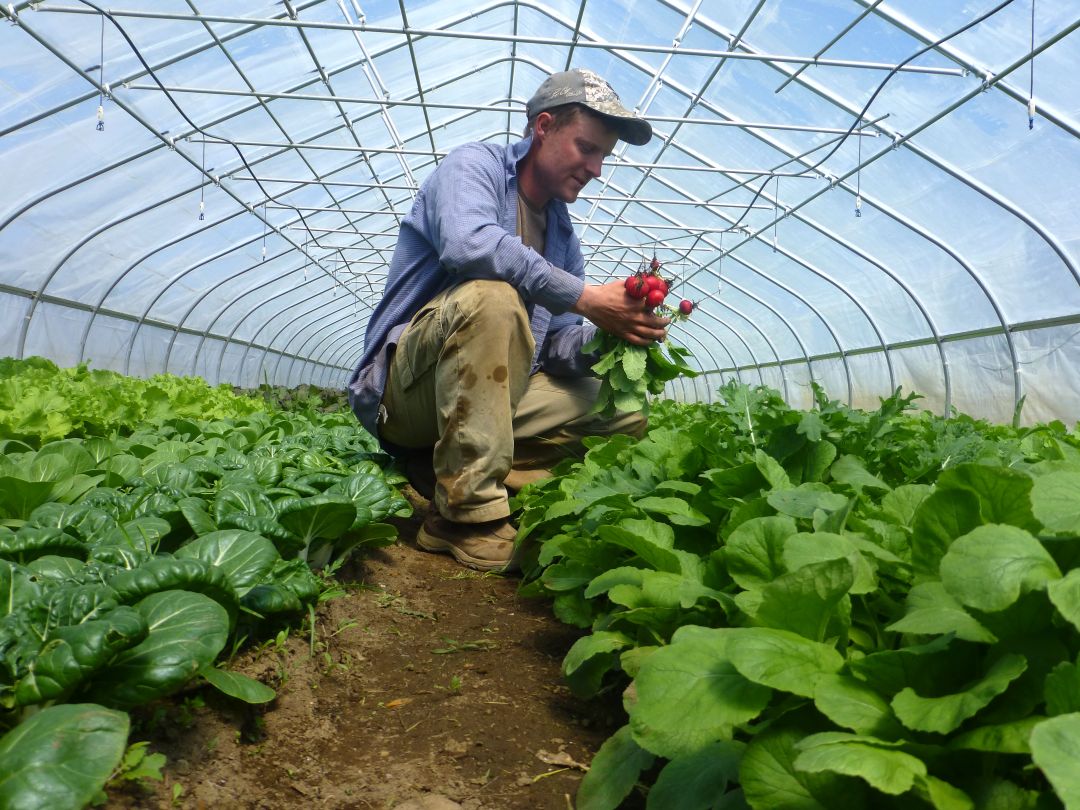 Austin Chadd, co-owner of Green Spark Farm in Cape Elizabeth, picks a handful of radishes in one of his greenhouses on Fowler Road. The farm offers a community supported agriculture program from late April through Thanksgiving.Staff photo by Kayla J. Collins
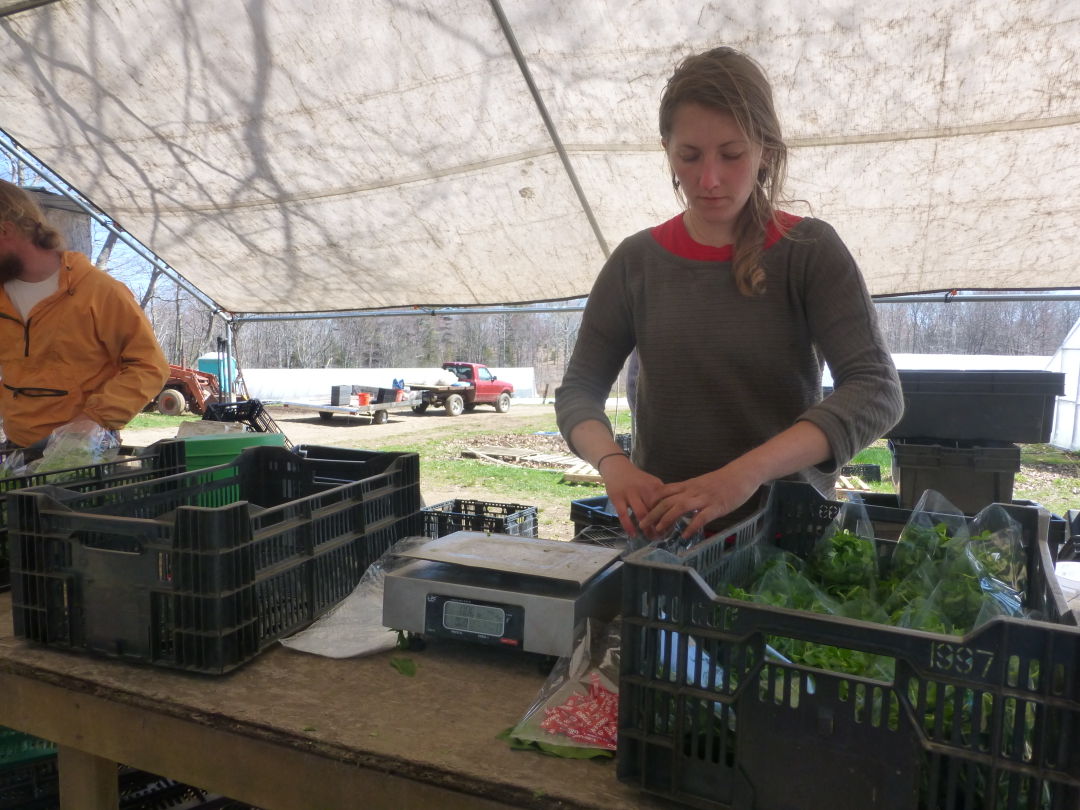 Stephanie Hudon, a crew member of Green Spark Farm in Cape Elizabeth, fills plastic bags with fresh spinach to be sold at the Portland Farmers Market. Staff photos by Kayla J. Collins
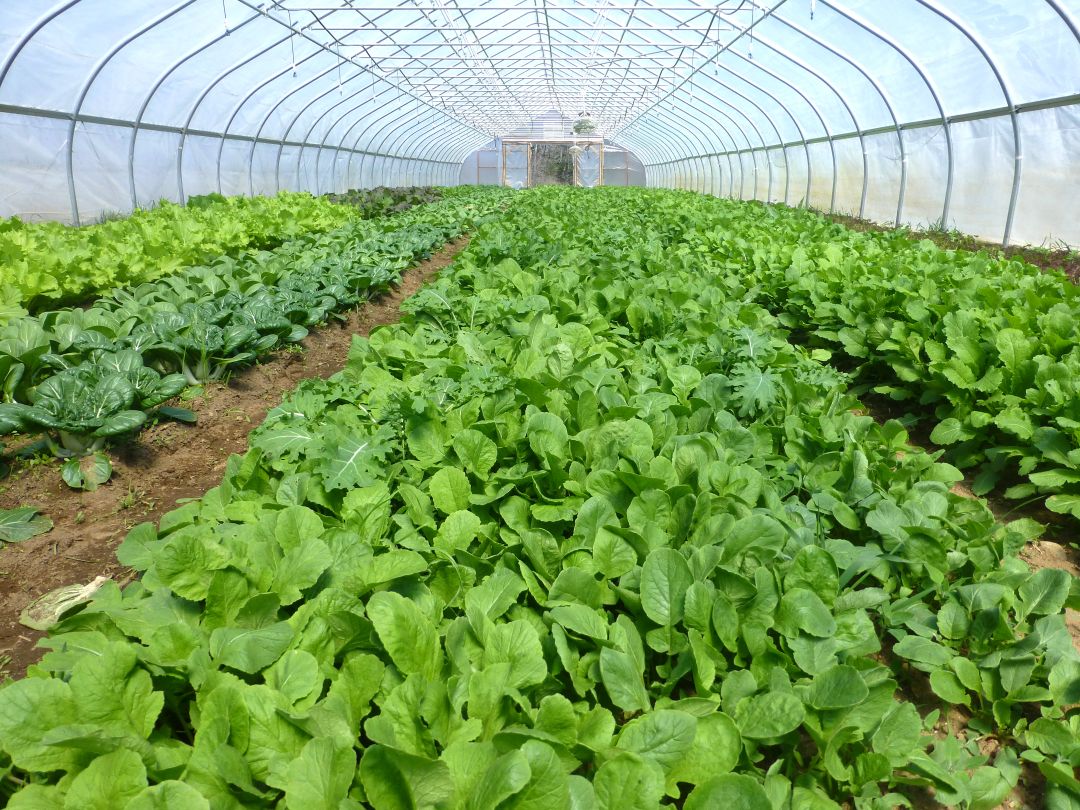 A greenhouse at Green Spark Farm in Cape Elizabeth is filled with turnips and radishes. Farm owner Austin Chadd says he hopes to have 13 greenhouses on his property filled with various kinds of produce by the end of May.
Comments are no longer available on this story