
FREEPORT – Doug Hitchcox, a naturalist with Maine Audubon, will be the featured speaker at the Freeport Woman’s Club’s monthly meeting on Friday, Nov. 21. The meeting at the Freeport Community Library begins at 1 p.m. Hitchcox’s program is entitled, “State of the Birds.” In addition to his presentation, he will explain some of the major shifts in Maine’s the bird population.
Hitchcox, 25, lives in Hollis, where he grew up. He has an older sister and, he says, “two of the most supportive parents anyone could ask for.” He graduated from the University of Maine in 2011, then traveled the state to observe as many bird species as he could find. Hitchcox ended the year having seen 314 species, a state record.
“It takes a very understanding family to be OK with you dropping everything and changing last-minute plans to run off and see a rare bird,” he said.
Hitchcox is one of Maine’s eBird reviewers, owner and moderator of the Maine-birds’ listserv, a York County Audubon board member, and secretary of the Maine Bird Records Committee. Hitchcox answered questions on the state of birds for the Tri-Town Weekly.
Q: Freeport is a noted center of interest in wild birds, through Derek and Jeanette Lovitch, at Freeport Wild Bird Supply. Can you speak to their efforts?
A: Derek and Jeanette have done a great job advancing birding in Maine and are a valuable addition to that community. They bring a wealth of knowledge to our area and share it through their store and programs.
Q: How did you come to join Maine Audubon, and why?
A: I’ve been a part of Maine Audubon as long as I can remember. I went to their summer camps when I was growing up, volunteered on a few of their citizen science projects, worked seasonally for them throughout college, and landed my dream job as their staff naturalist in 2013. Maine Audubon’s mission to conserve Maine’s wildlife and wildlife habitats has always resonated with me, which made being a member, volunteer, and now employee seem like the right thing to do.
Q: Without giving away too much of your presentation, what is the state of the birds?
A: My “State of the Birds” program is meant to show how bird populations have changed over time in the state, which can seem dismal. Birds are facing a variety of challenges from climate change to habitat loss, and increasing obstacles throughout their lives. After a broad look at the state’s history, we end with a closer look at the past year and what interesting sightings and trends we have seen.
Q: What can people do to improve that state?
A: People should remember to think of how their choices will impact our birds. This can range from only planting native species and reducing pesticide usage in your yards to changing the coffee you drink to certified shade-grown coffee. Just those two changes can have great impacts both here and in the tropics, where many of our nesting birds spend the winter.
Q: What’s the importance of the focus on wild birds?
A: Birds contribute everything from environmental to economic and even psychological benefits to Maine. They are great indicators of the health of our ecosystems. I always like to remind people that birds are a natural control of insect populations. Most people don’t like all the mosquitoes and black flies we experience in the summer, but can you imagine how much worse it would be without birds. Their economic impact is large and growing: Tourists come to Maine specifically to see certain species, especially puffins, and in turn contributing a lot of money to our state’s economy. And I mentioned the psychological benefits, could you imagine a spring day without birds signing?
Q: Where in Maine can people find the most unusual, and the most beautiful birds?
A: There are a few hot spots in Maine that attract some really remarkable birds, typically based on their geography. Birders on Monhegan Island have recorded Magnificent Frigatebird (from the tropics), Northern Wheatear (from the Arctic), Hermit Warbler (from the West), and a probable Common Chaffinch (from Europe). That said, most people would probably be amazed by the diversity of migrants passing through their yards in the spring and fall: warblers, tanagers and vireos pass through in amazing numbers. I highly recommend anyone reading this to join myself, anyone at Maine Audubon, or the Lovitchs on a bird walk in their area. There are some amazing birds out there.
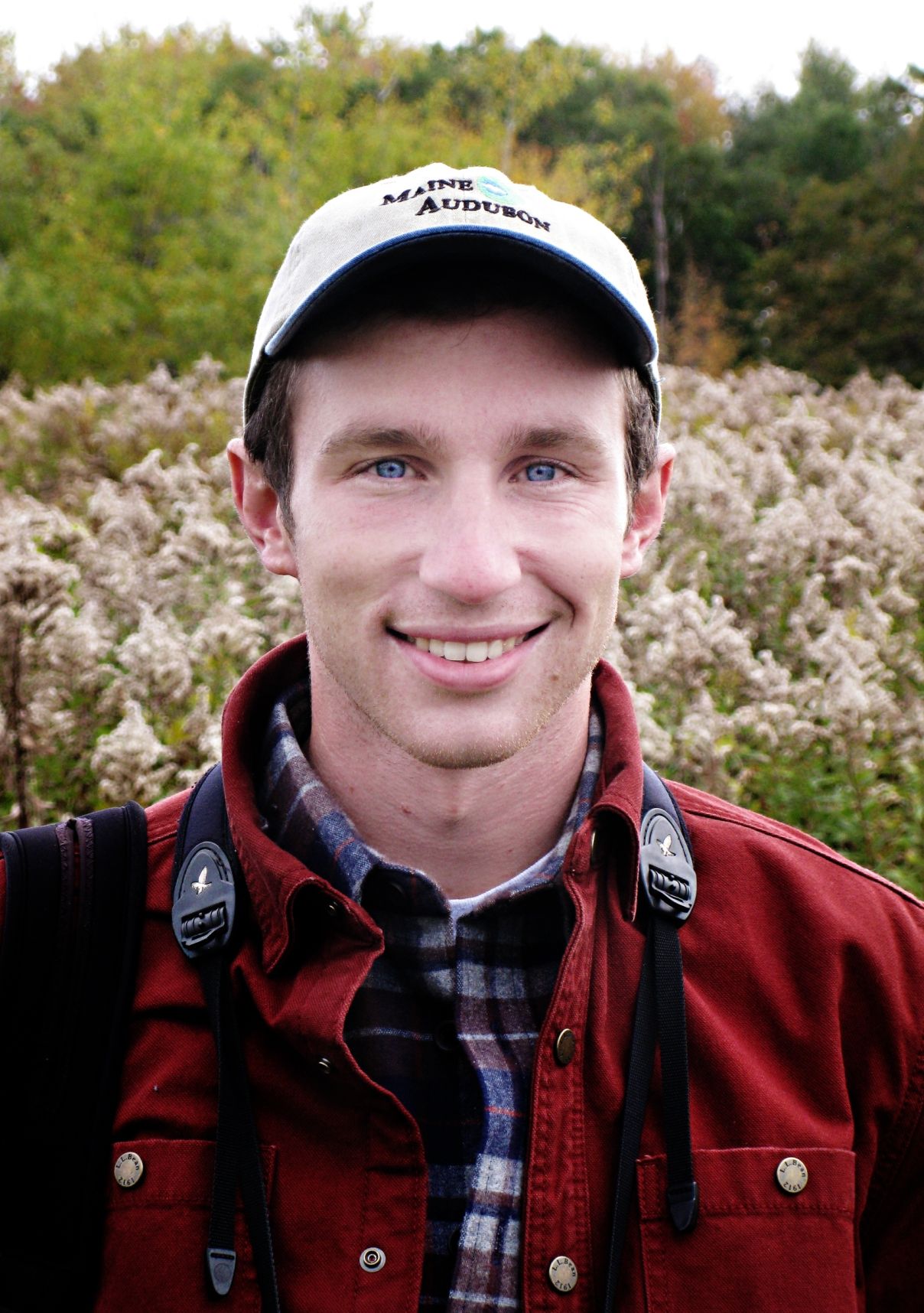 Doug Hitchcox
Comments are no longer available on this story