
SCARBOROUGH – The Battle of Leyte Gulf was fought 70 years ago, but Scarborough veteran Henry Bellavance can remember it all as clearly as if it just happened.
With Veterans Day on Tuesday, Bellavance is one of many local veterans who have served in defense of the country with many stories to share of their honorable service. Bellavance’s service, however, is rare in that it spanned three major wars, including World War II.
Bellavance was one of the survivors of the USS Princeton, an aircraft carrier that was sunk after being hit by a 500-pound bomb on Oct. 24, 1944.
He remembers being down below when the bomb exploded on the flight deck. He remembers trying to fight the ensuing fires, including flooding the magazine, before hearing the order to abandon ship.
To get off the ship, though, Bellavance had to climb up through several damaged decks and jump about 70 feet into the seething waters below.
He remembers losing his helmet on the way down and his life vest when he hit the water with concussive force. Bellavance also remembers sinking so far beneath the water that he was afraid he would not be able to surface.
Bellavance and many of his fellow crewmen were rescued by the USS Gatling and after being patched up, Bellavance was transferred to the USS Birmingham, which was brought alongside to try to fight the fires still raging on the Princeton.
Unfortunately, hundreds more sailors were killed on the Birmingham when bombs stored on the Princeton exploded in the fierce heat.
After about three hours of trying to save the Princeton, Bellavance said the ship was declared a loss and was scuttled. He was then sent back to Pearl Harbor on the Birmingham, which though severely damaged was able to limp back to Hawaii.
Bellavance earned the Purple Heart for his actions during the Battle of Leyte Gulf, as well as the Silver Star and a battle commendation.
While the engagement with the Japanese at Leyte Gulf was unexpected, it was one of the turning points in the war in the Pacific, with the U.S. winning the battle against a superior Japanese force.
After being assigned to the Naval Air Station in Jacksonville, Fla., for about eight months, Bellavance finished his World War II service on board the USS Larch, a small ship that had the vital task of laying anti-torpedo and anti-submarine nets.
Bellavance, now 89, also served in the Navy during the Korean War and the early years of the Vietnam War, which ran from the mid-1950s to 1975.
Bellavance was 17 in November of 1942 when he finally got parental permission to sign up with the Navy.
He originally wanted to enlist in the Army but the recruiter in his hometown of Nashua, N.H., told him he was too small and suggested he try the Navy recruiting office across the street.
Following his basic training, Bellavance was assigned to the Princeton, the ship he served on for 19 months before it was sunk in the Leyte Gulf action.
He remembers arriving in Pearl Harbor after the battle and receiving a memo from his commanding officer before going ashore. The memo was given to all the sailors and reminded them not to discuss anything to do with fleet movements while on land.
The memo warned about “unauthorized ears,” including “dockworkers, boat tenders and females.” Bellavance said the warning not to talk was taken seriously by most of the sailors who believed the maxim that “loose lips sink ships.”
“I never talked about anything, the Navy was very strict about that,” Bellavance recalled. He remembers being approached by many people following the battle, including newspaper reporters, but he never said a word to anyone.
Bellavance left the Navy in January 1946, married his first wife in 1947 and re-enlisted in 1948 when his marriage began falling apart. The Korean War broke out two years later.
During the Korean War, Bellavance was assigned to the USS Whitehurst, a destroyer used to provide power to seaside Army bases and even a prisoner of war camp. The most exciting thing that happened during his service in Korea, Bellavance said, was being fired upon by North Korean artillery.
Following the Korean War, Bellavance was assigned to various ships and had the opportunity to cruise the Mediterranean Sea and visit other ports around the world.
The most important event during this time was when Bellavance was assigned to a ship taking part in naval operations in Norway in 1955. Fortunately for him the boat hit something that destroyed the prop.
To get the ship fixed, it was sent to a naval base near Edinburgh, Scotland. The sailors were in Scotland for two weeks, which allowed Bellavance a chance to get on land and go dancing.
One night he met a beautiful girl who later became his wife and the love of his life for the 54 years of their marriage. The two had five children and seven grandchildren, one of whom is now in the Navy serving on the submarine the U.S.S. Springfield, which is based in New London, Conn.
In 1963, Bellavance was assigned to the Military Advisory Group, which was operating in Cambodia and Vietnam. He was assigned to a gunboat and remembers hearing about the assassination of President Kennedy while on duty.
Despite his service in three wars, Bellavance said some of his hardest times were hearing about the deaths of President Roosevelt in April of 1945 and of Kennedy in November of 1963.
When he retired from the Navy for good in 1966, Bellavance had earned the rank of petty officer first class. Following the Navy, he worked at the B&M beans company in Portland for 22 years, where he helped to automate the plant.
Bellavance moved his family to Scarborough in 1962 when he was assigned to the naval reserve force in South Portland. These days Bellavance can often be found at the Libby Mitchell American Legion Post playing cards or talking with other veterans.
“I’m not a hero,” he said. “I did what I did for all of us.”
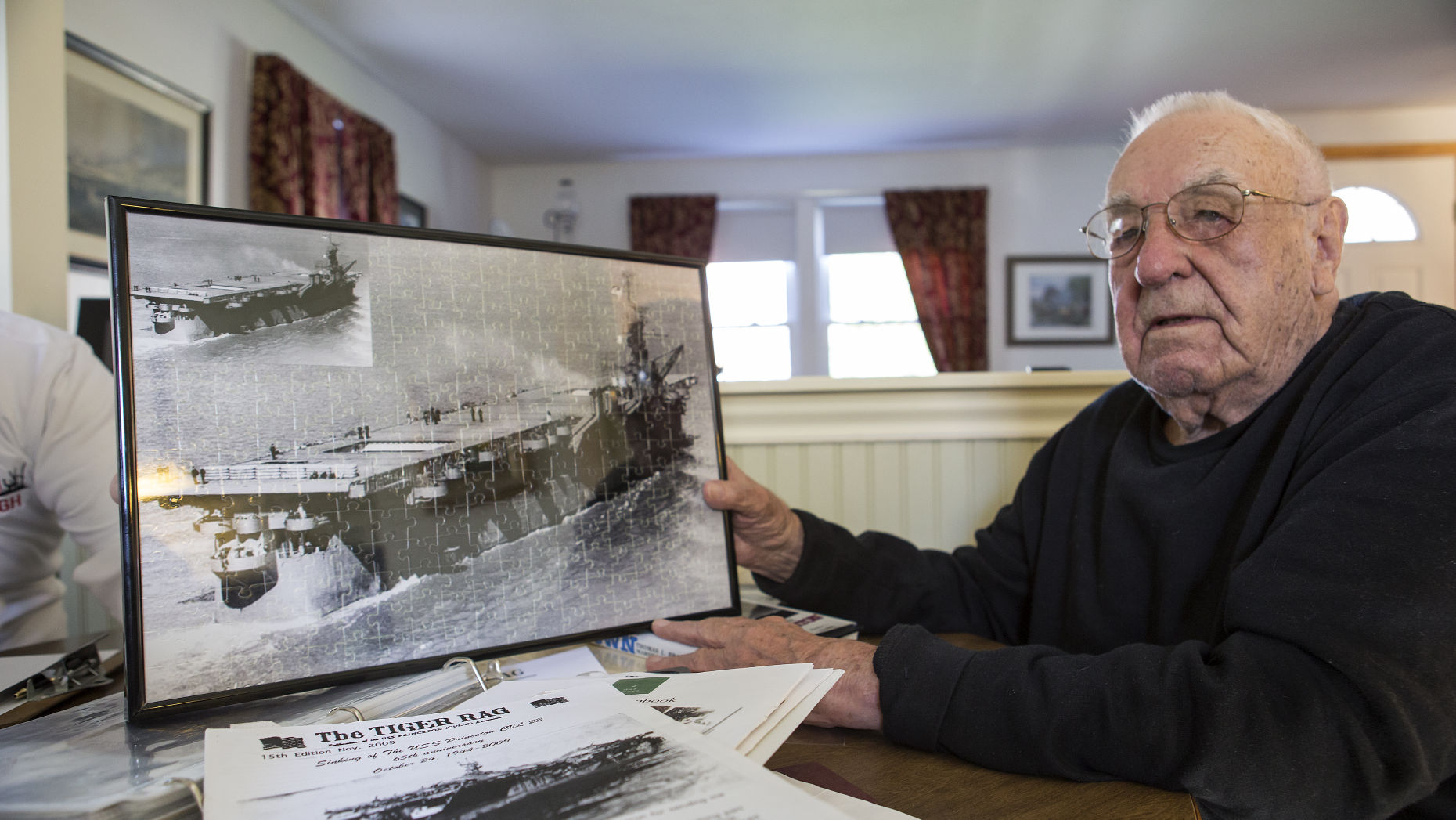 Using a photo turned into a jigsaw puzzle, Henry Bellavance describes his experiences the day his ship, the USS Princeton, was bombed by the Japanese and sunk during the pivotal Battle of Leyte Gulf during World War II.
 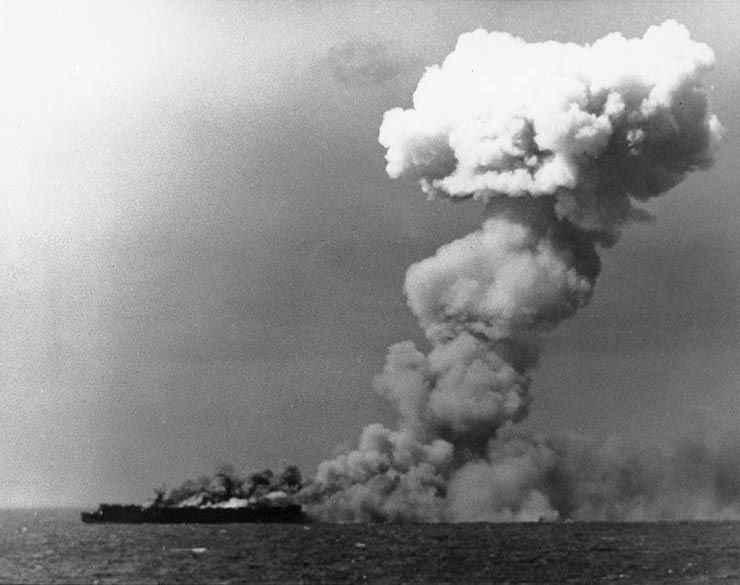 The aircraft carrier the USS Princeton was lost in the Battle of Leyte Gulf on Oct. 24, 1944, when a 500-pound bomb exploded on the flight deck.
 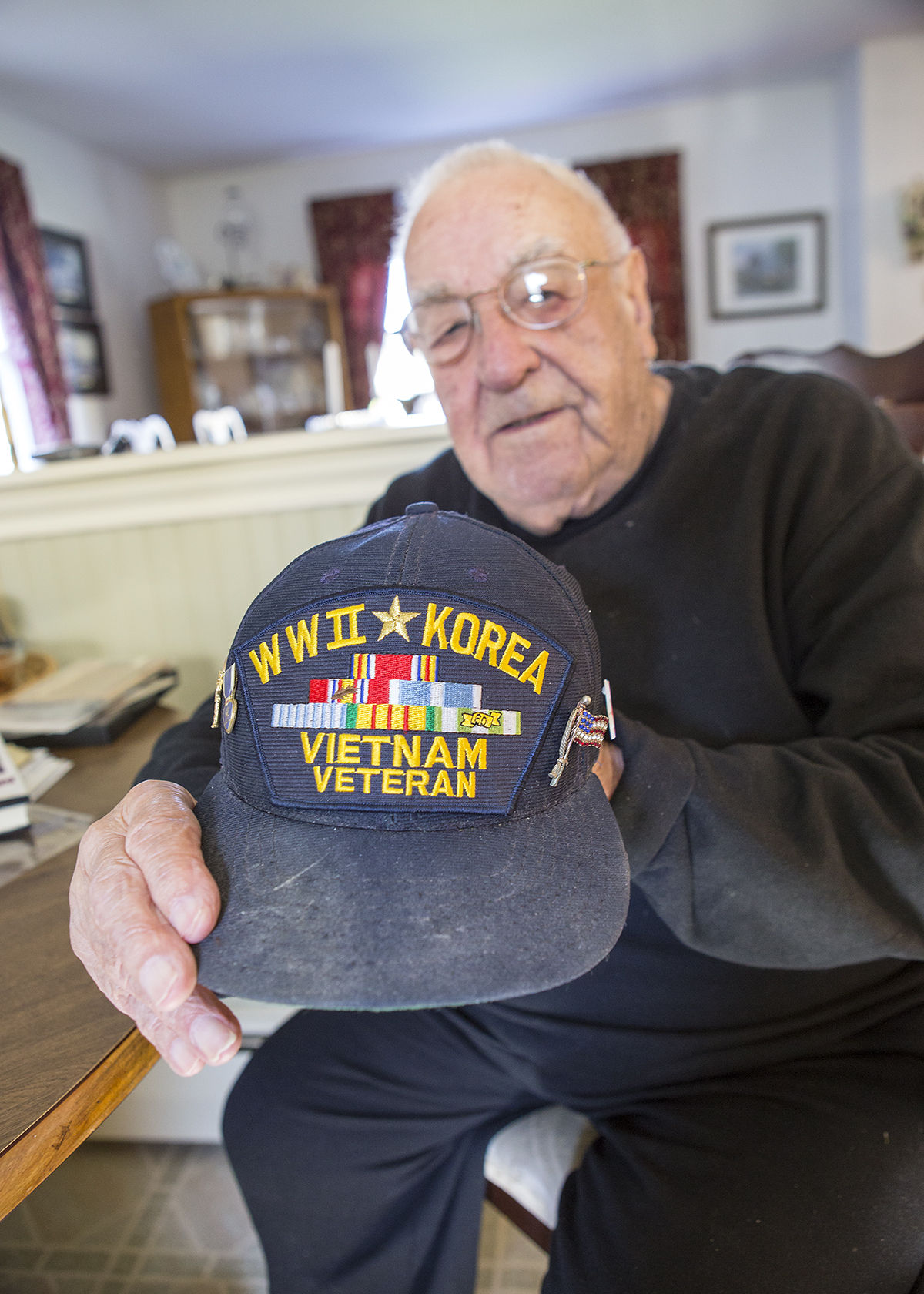 Bellavance is a proud veteran of three major conflicts.
Comments are no longer available on this story