
CAPE ELIZABETH – Anne Carney, a lawyer and volunteer with the Cape Elizabeth Land Trust, is also known in the Cape Elizabeth Community as a “master food preserver.”
Carney began canning foods with her father when she was a child, she said, and now, as an adult, she teaches others about how to preserve foods through various workshops and presentations.
A workshop led by Carney on preserving berry jam is scheduled for Friday, Sept. 26 from 8:45-11:15 a.m. in the kitchen of the Community Services building at 343 Ocean House Road.
“Many people enjoy making products that are not available in the grocery store,” said Carney, when asked why others should learn how to preserve foods. “Gingered pears, pear jelly, herb jelly and cranberry ketchup are unique foods that you can serve on special occasions like Thanksgiving dinner or give as holiday gifts.”
Carney has lived in Cape Elizabeth for about 25 years. She recently spoke with the Current about why she became a master food preserver and how she educates others in the community about safe food preservation.
Q: When did you first start canning foods?
A: I started canning as a child, helping my dad can a family recipe called “Pepper Hash.” It’s a delicious pickled mixture of red and green peppers, and onions, seasoned with celery seed.
Q: People refer to you as a “master food preserver.” How long have you been doing this? Where did you learn?
A: The Master Food Preserver program is run by the University of Maine Cooperative Extension. Master Food Preservers attend a 10-part, 35-hour course that includes hands-on kitchen lab sessions, tests and a final project, and we perform a certain number of hours of volunteer work each year. By offering workshops and presentations, master food preservers serve as a resource in the community to provide the public with research-based information about safe food preservation from the University of Maine Cooperative Extension and U.S. Department of Agriculture.
Q: Where and when are your workshops normally held? Where have you held workshops in the past, and what do you enjoy about teaching others about canning foods?
A: I have held workshops and demonstrations at the Cape Elizabeth Land Trust, Cape Elizabeth Community Services, Gilsland Farm Audubon Center, and the Midcoast Winter Farmers’ Market at the Topsham Fair Grounds. I like teaching Mainers how to preserve locally grown foods so they can be enjoyed all year around.
Q: Tell me about your upcoming workshop. What can people expect to learn about berry jam? Whom do the workshops benefit?
A: The jam workshop begins with a brief introduction to safe techniques for preserving acidic foods like fruits. Then we will make three-berry jam using the boiling water bath preservation method. We will use blueberries from Down East Maine, strawberries from a Cape Elizabeth farm and raspberries from a berry patch I started in my yard last year. The workshops benefit the public, to help people enjoy all the delicious preserved products we can make from locally grown ingredients.
Q: Why did you get into canning foods?
A: I became a master food preserver because I love the taste of fresh, locally grown fruits and vegetables. The preservation techniques I learned from the University of Maine Cooperative Extension help me enjoy that fresh taste all winter long.
One of my favorite projects is pressure-canning tomato sauce. Once you add peppers and onions to tomatoes, the sauce is a low-acid food that needs to be processed in a pressure canner to ensure safety. Clostridium botulinum, the bacterium that causes botulism food poisoning, is destroyed in low-acid foods when they are processed at the correct time and temperature in pressure canners. Over Labor Day weekend my mother-in-law, Emma Ottolenghi and I processed 60 pounds of tomatoes. We had fun working together and produced over 30 beautiful and tasty pints of sauce that we will enjoy this winter.
Q: Where do you get your food and materials?
A: I use fruits and vegetables from local farms and the Portland farmers market. I do not have a farm, but I grow herbs that I use to make herb jelly, and I have a raspberry patch so I can make raspberry jam, a family favorite.
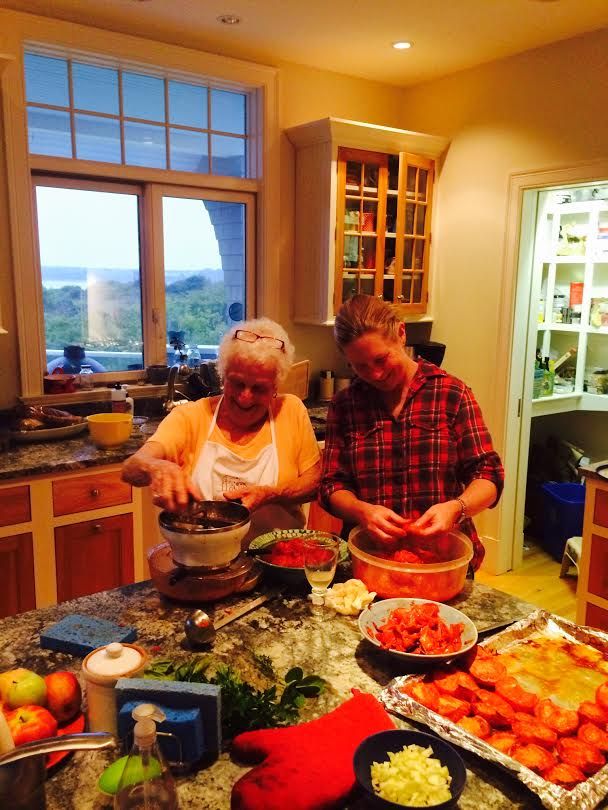 Anne Carney, right, and her mother-in-law, Emma Ottolenghi, process 60 pounds of tomatoes over Labor Day weekend.
Comments are no longer available on this story