
In 1773, two brothers and their families came from Marblehead, Mass. to Windham and settled down to farming over on the North East Road (Route 202) where they built a house, near today’s William Knight Road.
Elias Legrow was 32 and his brother, Joseph, was 34. Soon after arriving here, they joined the military to serve in the Revolutionary War – each in a different regiment, and each served for three years, wintering at Valley Forge. Joseph Legrow died in 1778.
Elias returned to Windham and continued to run his farm and take care of his family.
In the late 1800s, local historian Isaac Jordan, wrote about this area and the early settlers. Jordan recalled that “tradition” said that after Legrow had returned home, he was out in his yard one day, feeding his cow, and a constable appeared, saying he came to collect the priest tax for Parson Smith, another early settler, who was the pastor from 1762-1790.
Legrow looked up at the constable and said he’d never heard Parson Smith preach and neither had he ever seen him and he wasn’t going to pay any “priest” tax. The constable threatened to take the cow in payment.
The former soldier was angry and exclaimed, “There is the cow! Take her if you dare!”
When the constable started for the cow, Legrow started for the officer, informing him that if he didn’t leave the cow, he’d get a pitchfork through his “bread basket” and the constable left quickly, never to return.
Descendants of the two Legrow brothers continued to live, build houses, and farm in this “North East Road” area of Windham for generations to come. In 1971 local historian Charles Legrow recorded the history of the families and houses. These records were edited and published in booklet form, in 2013 by Kay Soldier.
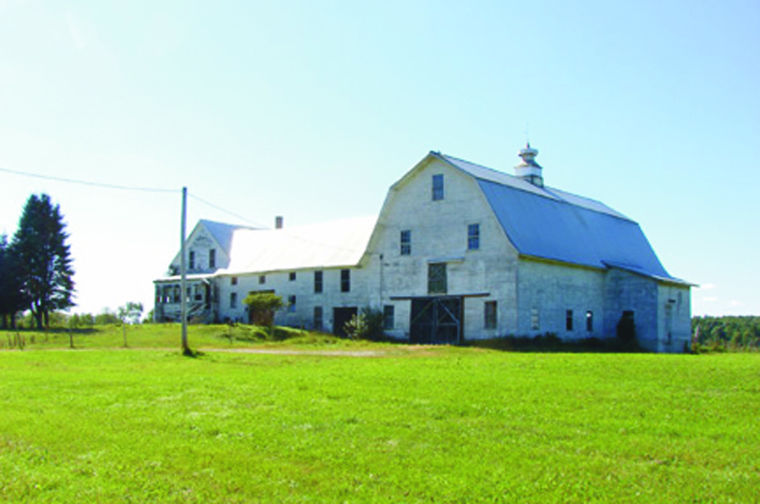 A typical farmhouse and barn from the days of Windham’s past is this one, originally a Legrow property, on Route 202 near Baker’s Corner (Falmouth Road and Route 202 intersection). This is one of several structures built by the Legrow family.
Comments are no longer available on this story