
SCARBOROUGH – The Maine House of Representatives could vote this week on a bill that would allow Scarborough Downs to once again seek local voter approval to add slot machines to its harness racing track off Route 1.
This is the fourth time in the last 10 years that the track, owned and operated by Sharon Terry, has attempted to add gaming to its facility in order to save the track and the harness racing industry in southern Maine.
Last week, the Legislature’s Veterans and Legal Affairs Committee voted “ought not to pass” on L.D. 1111, which is entitled, “An Act to Allow Maine’s Harness Racing Industry to Compete with Casino Gambling.”
Even so, Ed MacColl, the attorney representing Scarborough Downs, said he’s more hopeful than in the past that the full Legislature will recognize the plight of the harness racing industry and allow the proposal to go to a local-only vote.
This week, MacColl told the Current that the 5-7 defeat by the Veterans and Legal Affairs Committee on Feb. 26 “was actually much better for the Downs’ project than committee votes in earlier years.”
In addition, he said, “Some local legislators who voted against earlier proposals voted for [the slots bill] this time. The bill heads to the House next and the harness racing community is cautiously optimistic” of getting a positive vote on the floor.
The clerk for the Veterans and Legal Affairs Committee said this week that the House could vote on L.D. 1111 as early as Wednesday or Thursday, March 5 or 6, depending on the calendar.
In written testimony provided to the committee, Terry said without the ability to offer slots gaming at Scarborough Downs, it “sets Maine up to lose our harness racing industry and see much of our tourism diverted to Massachusetts.”
Terry said, as she has many times before, that Scarborough Downs simply cannot survive under the current gaming structure in the state, which includes the Hollywood Casino Hotel & Raceway in Bangor and the relatively new Oxford Casino.
She said allowing slots at Scarborough Downs would simply act to “level the playing field” and allow a Maine-owned and operated business to compete with the two gaming facilities owned by out-of-state interests.
In her testimony, Terry said allowing the slots proposal to move forward would “enhance Maine tourism, position Maine to compete with expanded gaming coming to Massachusetts [and] generate millions of dollars in annual tax revenues.”
She added, “Live racing is increasingly expensive and labor intensive. Regulations increase most years. Expenses increase every year. At the same time we are losing our fans and our revenues to the casinos.”
In fact, Terry said that since the Oxford Casino opened, Scarborough Downs has lost 25 percent of its revenue and she is selling off land to “cover operating losses and keep [harness racing] alive.”
MacColl said this week that “the out-of-state-owned casinos are draining the life blood, i.e. fans and revenues, from the track. The Downs in fact is the last small-market harness track in America that has no gaming and competes with casinos.”
And, he said, “The reason harness racing does not already have gaming is that moneyed interests have spent hundreds of thousands of dollars to create gaming monopolies without being required to bring fans to Maine’s race tracks.”
In fact, MacColl said much of that money was spent defeating the Downs’ most recent referendum.
That was a proposal to build a fully integrated racino – a slots and harness racing facility – resort hotel and entertainment complex in Biddeford, known as Biddeford Downs. That project, which included Ocean Properties as a partner, was defeated in a statewide vote in 2011.
Since the defeat of the Biddeford Downs project, Scarborough Downs has continued its efforts on the legislative level, to either bring back the Biddeford project or allow slots in Scarborough.
This week, MacColl said the reason Terry continues to fight to add slots to Scarborough Downs is because “the harness racing community is not ready to give up. L.D. 1111 is all about creating a fair deal for the people of the state of Maine and the families of Maine harness racing.”
However, the bill pending before the Legislature this session is being strongly opposed, not only by such groups as Mainers Against A Rotten Deal, but also by the Bangor City Manager Catherine Conlow and the other casinos currently operating.
They all argued before the Veterans and Legal Affairs Committee that allowing Scarborough Downs to have slot machines would dilute the gaming revenue now being generated.
In written testimony provided to the committee, Jack Sours, vice president and general manager of the Oxford Casino, said that any expansion of gaming in Maine right now “would put an end to the success” the industry has seen so far.
“In short,” he said, “new casinos in Maine will merely move dollars from one casino to another with little or no benefit to the state. We see this happening throughout the country as the saturation point is reached quickly.”
And in his written testimony, John Osborne, general manager of the Hollywood Casino, said, “Our opposition stems from the negative impact that expanded gaming would have on the Hollywood [casino] and Bangor economy, as well as the lack of any meaningful economic analysis indicating that the state could handle this much expansion” of gaming.
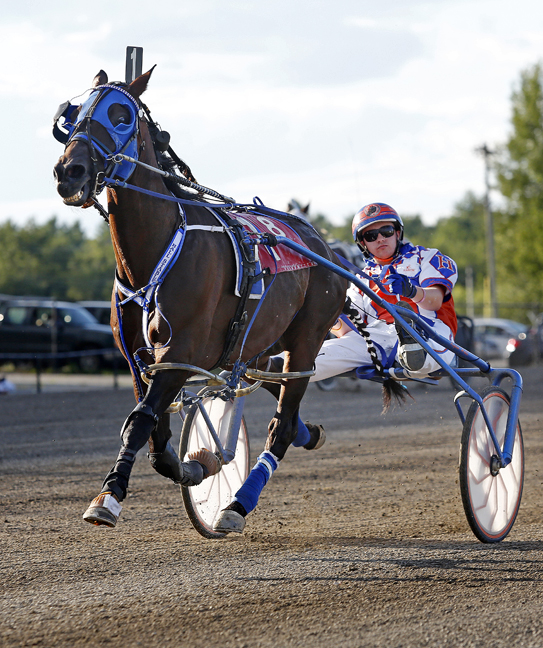 Courtesy photo
Comments are no longer available on this story