
DURHAM – While their fruit trees are dormant and the vegetable garden lies barren in winter, Richard Hodges and his wife, Moriah Salter, remain occupied.
In addition to the part-time jobs they work to keep the bills paid, Hodges and Salter, both 30, are busy in their Durham home writing grants. If successful, the grants could allow them to work full time in a business that provides orchards for schools, and provides food for the public from the 2-acre organic community garden they own on Route 136.
ReTreeUS is a nonprofit organization that Hodges and Salter organized under the United Charitable Program. Based in Virginia, it helps charitable projects to affect what its website calls “constructive social change at a grassroots level.”
“We’re dedicated to promoting an environmentally sustainable system,” Hodges said.
Hodges defines a “socially just food system” as one in which people make healthy food choices available to those who might not be able to afford it otherwise.
“We plant orchards with local schools and provide educational programs that empower young people and their families to grow their own home gardens,” Hodges said. “We connect households of all income levels with the resources they need to grow and buy local, organic produce, making nutrition accessible to those for whom good food is otherwise out of reach.”
In a couple of months, Hodges and Salter will head out to schools, planting fruit trees and pruning trees already planted. They maintain small orchards at seven schools, including Freeport High School and Mast Landing School in Freeport, and have another orchard at Wolfe’s Neck Farm in Freeport through a partnership there.
As they strive to make ReTreeUS a full-time occupation, Salter works as an administrative assistant at a preschool in Freeport, and Hodges works at seasonal jobs, including boat tours.
“I had seven jobs in 2013,” Hodges said. “Right now, all of the funds we have go to running our programs. We’re building our farm, and hopefully our farm is going to help build the programs, as well. In the winter, we work on grants and fundraising.”
Tom McKibben, a teacher at Mast Landing School, has been working with Hodges and Salter for years.
“They are great to work with,” McKibben said. “Together we have planned and planted an orchard at the school, which includes several types of apples and some pear trees, as well. They also put in a fence to protect the orchard from the deer and also encloses our raised-bed school gardens.”
McKibben said that the orchard has provided many experiences and learning opportunities for the students at Mast Landing. Each year, the third-graders participate in a unit on Life Cycles.
“For years we have raised salmon eggs and released them, but the orchard provides a different opportunity to study the life cycle of plants,” he said. “We learn about the different stages of a tree and also about pollination. Having the orchard the school provides many hands-on opportunities for the students.”
The third-graders also spend a week at Wolfe’s Neck Farm each spring. Having the orchard and gardens is invaluable in preparing the students for that experience, McKibben said.
Students in third grade also study the economy, and can point to the orchard as an example of agricultural resources that are important to the state, he said.
McKibben recalled what he said was a highlight of the students’ orchard experience.
“It was a few springs ago when we first planted the trees,” he said. “Students had to do a lot of the digging and moving of dirt. It was a great opportunity for some of my students who don’t always feel as successful with all the academic aspects of school to contribute in a positive and meaningful way.
“Richard and Moriah have been very supportive and generous in their expertise, hard work and knowledge. Having a community partner such as ReTreeUs makes the learning all the more genuine.”
Hodges, who grew up in Durham, was working as a gardener in outdoor education programs in California when he met Salter, a New Mexico native, in 2009. Both had been studying fruit tree science at the University of California at Santa Cruz, and he also had begun studies to become a master gardener – a passion Hodges has had since he was a child.
They moved back to his family’s Durham farm in 2011, and married a year later.
Hodges worked at New Leaf Farm, an organic vegetable farm in Durham, when he was in high school, and did odd jobs at other local farms.
“It wasn’t really until I met Moriah that we got this going,” he said. “We put our heads together back here in Durham, and started making this farm our headquarters.”
They are hoping, he said, “to do a big project for all of Androscoggin County” at Edward Little High School in Auburn.
They are also involved in Community-Supported Agriculture, or CSA, in which people pledge support to a farm operation. The growers and consumers provide mutual support and share the risks and benefits of food production. Members, or “share-holders” of the farm or garden, pledge an amount of money in advance. In return, they receive shares in the farm’s bounty throughout the growing season.
Hodges said that people in the CSA get weekly produce at the Durham community garden. Salter’s father, Bob, is a big help in the garden during the season, Hodges said.
Students, as well as adults, are encouraged to participate in the community garden that Hodges and Salter own.
“We help students realize the benefits of home gardening,” he said. “We think that the more students do that, that creates an environmental benefit and helps kids be independent, as well. We’re creating environmental stewards through our orchards and gardens.”
Until now, Hodges and Salter have been spending most of their time planting and pruning trees at the school orchards. They’re trying to secure grants that will allow schools to conduct their own programs. A teacher who coordinates the school orchards with ReTreeUS will water the trees and guard against pests during the summer.
Hodges and Salter are hoping their efforts will provide a new direction for young people.
“The younger generation is involved in the cyber world,” he said, “but they lack grounding in what makes life possible. Experiential education is the best way to impact how kids think about the world.”
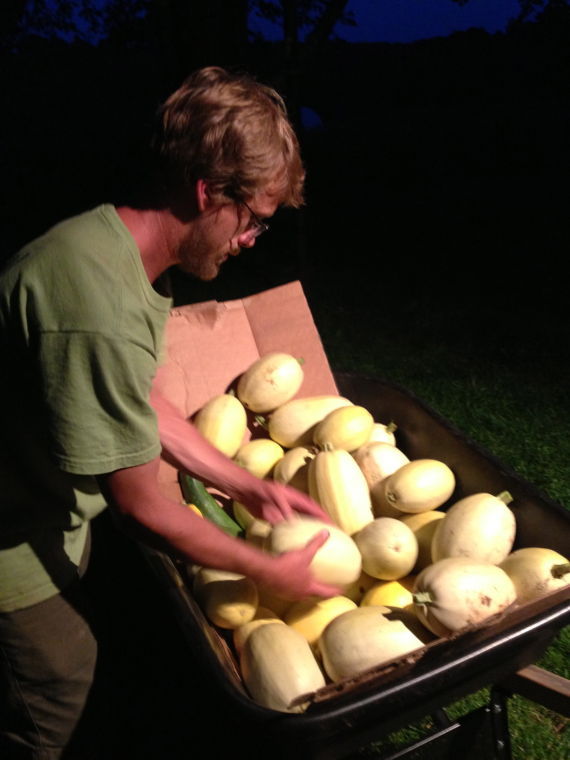 Richard Hodges sorts squash picked from his organic garden in Durham.
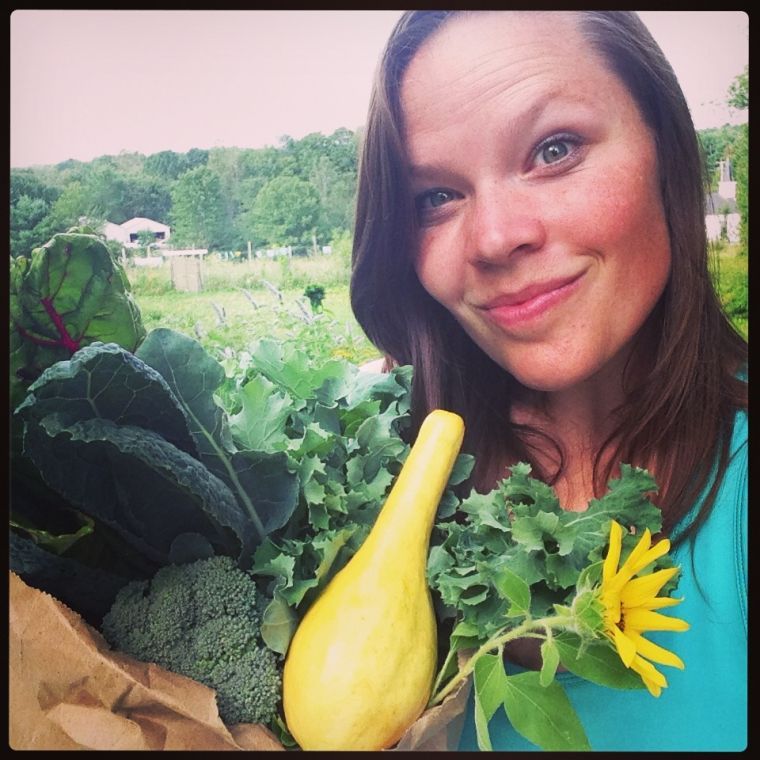 Moriah Salter proudly holds up produce picked from her organic garden in Durham.
Comments are no longer available on this story