
WINDHAM – The Environmental Protection Agency has formally proposed that the Keddy Mill complex in South Windham be placed on the National Priorities List, also known as the Superfund list, pushing the contaminated site one step closer toward a possible federally funded cleanup effort.
In May, Meghan Cassidy, the agency’s chief of Superfund technical and enforcement support for the New England Region, discussed the site’s possible eligibility for Superfund status at a Windham Town Council meeting.
On Dec. 11, the agency’s New England office announced that it would formally seek to place the Keddy Mill complex on the National Priorities List. According to Kate Renahan, a community involvement coordinator at the agency’s New England office, the site could be added to the list as early as next spring, following a period of public comment.
“What that does is it opens a 60-day public comment period,” Renahan said. “Then we have to respond to all the significant comments. It would be officially added to the (National Priorities List) next spring.”
But Renahan said that even if the Keddy Mill property is placed on the list in April, the ultimate cleanup could be as much as a decade away, if not longer.
The former mill, located at the corner of Main and Depot streets in South Windham, served as a paper and steel mill during its 100-plus year history. The large concrete building, which town officials say is starting to disintegrate rapidly, has been unused since 1997.
The 6.9-acre site contains extensive contamination from PCB, or polychlorinated biphenyl, a toxic substance once used to lubricate mechanical parts that was banned by Congress in 1979. The federal Superfund program addresses properties where remediation of toxic soil or water can cost millions, and where previous owners cannot be expected to cover the entire cleanup cost.
According to a November 2000 public health statement from the Agency for Toxic Substances and Disease Registry, an agency of the U.S. Department of Health and Human Services, federal and international medical organizations operate under the assumption that PCBs are carcinogenic.
“Studies of workers provide evidence that PCBs were associated with certain types of cancer in humans, such as cancer of the liver and biliary tract,” the statement reads. “Rats that ate commercial PCB mixtures throughout their lives developed liver cancer. Based on the evidence for cancer in animals, the Department of Health and Human Services (DHHS) has stated that PCBs may reasonably be anticipated to be carcinogens. Both EPA and the International Agency for Research on Cancer (IARC) have determined that PCBs are probably carcinogenic to humans.”
According to the Keddy Mill narrative posted on the National Priority list website, PCB contamination is “widespread throughout the site and inside the abandoned mill building.” The narrative states that the two main sources of contamination are a pile of slag material north of the vacant mill and an area of contaminated soil that extends from the north of the building southwest to the Presumpscot River. Also, according to the narrative, samples show that storm runoff has released PCBs into the Presumpscot River, potentially contaminating nearby wetlands.
In the narrative, the agency also notes that the site has been vandalized.
“Potential contact with PCBs in surface soil and within the mill poses a health threat,” the narrative reads.
The Maine Department of Environmental Protection has been studying the site intensively in recent years. The department determined the scale of the cleanup exceeded the ability of the state-administered Brownfields program to pay. Due to lack of funding, the state asked the federal government to investigate the site for possible inclusion on its list of Superfund sites. The sprawling property achieved a score between 50 and 54 on a scale of 100 based on preliminary soil samples by the federal agency. A score of at least 28 is needed to be considered for the Superfund list.
Several rounds of testing have found significant PCB contamination in and around the dilapidated structure, which was fenced off in 2011 after investigators discovered the high PCB concentrations in the soil.
According to Windham’s town manager, Tony Plante, the Keddy Mill property owner, Portland-based real estate development firm Lumas, Inc., failed to pay property taxes on the Keddy Mill as of last August and the town has placed a lien on the property. Cassidy said Windham is not considered an owner of the property simply because it has placed a lien. Lumas, Plante added, is maintaining a fence around the property.
In October 2011, Lumas obtained the property at no cost from the previous owner, a New York City investment firm that planned to install condominiums on the property before discovering toxic waste during construction. A Lumas official said the firm used to own the Keddy Mill from 2000-2004 but didn’t use the property during that time.
Asked in 2011 why the Portland-based firm would purchase a heavily contaminated site that state and federal environmental officials expect will take years and millions of dollars to rectify, the Lumas spokesman said the company was already in the chain of title and wanted to be directly involved in negotiations with the government.
If federal dollars are secured, Lumas could benefit by regaining use of the property after cleanup is complete.
Scott Lalumiere, Lumas’ property manager for the Keddy Mill site, said that the firm continues to cooperate with the government.
“We’re continuing to cooperate and work with the EPA on the cleanup,” Lalumiere said this week.
If the site finally makes it to actual cleanup, according to the EPA website, costs are “paid for either by the parties responsible for contamination or by money appropriated by Congress for cleanups.” The EPA website goes on to explain that according to Superfund law if responsible parties “cannot be found or cannot perform or pay for the cleanup work, the Federal Government funds the cleanup.”
Determining who the responsible parties are is part of the Superfund process.
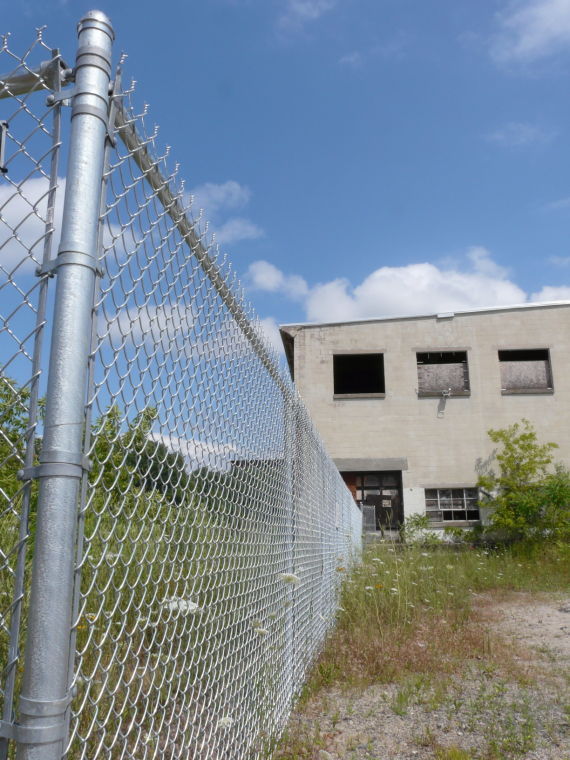 After extensive testing conducted by federal and state officials in 2011, the federal government required the owner of the Keddy Mill to erect a fence to prevent trespassers from entering the PCB-contaminated site in South Windham.
Comments are no longer available on this story