
Up until now, you’ve been more likely to weed supermarket aisles than your own back yard.
Still, with the rising cost of food, the organic movement – or perhaps just the desire for a new hobby – you’re intrigued by vegetable gardening.
But you haven’t a clue where to start.
Well, first off, think small.
Also: Consider your first year of a trial period. Don’t get over-ambitious.
“Work up, scale up, get a successful harvest or two behind you,” advised Roger Doiron, founding director of the Scarborough-based Kitchen Gardeners International.
And small is simple. Plot out a manageable garden – say, 10 feet by 10 feet – or even start with plants in containers on your deck, explained Tom Estabrook of Estabrook’s Farm and Greenhouse in Yarmouth, Scarborough and Kennebunk.
As far as location, begin by looking up. Find an area that gets full sun. That doesn’t mean it has to be illuminated from the moment the sun peeps over the horizon to the instant it winks down again – but it should get at least six hours of sunlight a day, Doiron explained.
Drainage is also key. As Doiron urged, don’t settle on a spot in your yard that puddles up or gets particularly soggy with every bit of rain. You want a well-drained plot.
Most importantly, though, is fertile soil.
The University of Maine Cooperative Extension’s “Grow Maine Grow!” Web site recommends a soil test for first-time gardeners. Dirtying up your hands can give you an idea, too – you want “Non-compacted, crumbly, fertile soil full of earthworms,” the site advises.
Once the location is settled, now comes the tricky part. As any horticulturalist with dirt-stained fingernails will tell you, gardening is a science, requiring study of conditions, soils and temperatures.
What’s crucial for every beginner to know is there are cold-season crops and warm-season crops – the difference being that the latter isn’t able to tolerate light frosts.
The ones that can, though, can go in the ground in early-to-mid May, and they include things like beets, broccoli, cabbage, carrots, cauliflower, lettuce, peas, potatoes, scallions and spinach, according to “Grow Maine Grow!”
Meanwhile, warm-season crops, like squash, beans, tomatoes, cucumbers and peppers, will “shiver through the cool nights,” Doiron noted.
So hold off until late May or early June, experts urge.
But you’ll probably want to get some started indoors. Seeds can be planted in any clean container that is at least 2 inches deep and has adequate drainage, according to Marjorie Peronto and Theresa Guethler with the Cooperative Extension. The mix should be fine-textured without any fertilizer.
Seeds can take anywhere from 4 to 12 weeks to reach maturity (the timing of which is indicated on the seeds’ packets). To figure out when to start them, identify the last spring frost from the previous year, and count back from there, Peronto and Guethler instruct.
Again, refer to the packets to determine how deep in the soil they should go, and cover them with plastic out of the sun until they sprout. Once green peeks out, give them plenty of sun, but not too much water. The hardier ones should eventually be thinned to 1 inch apart and transplanted into individual pots, according to Peronto and Guethler. Then, before they go in the garden, they’ll need to be “hardened off,” which means acclimating them to the outdoors in increasing intervals.
And once they’re in the ground, that’s only the beginning.
Now comes the maintenance. Typical gardens require an annual application of fertilizer, and a soil test can determine what kind and how much, according to “Grow Maine Grow!”
Meanwhile, keep weeds from taking over, and get suggestions on creative fencing to deter curious nibblers like deer and bunnies.
As far as pests, there are many different options, so seek out assistance at your local garden center, experts advise.
Sometimes, Doiron explained, prevention can be as simple as observation. Once you’ve got a well-cultivated green thumb, you’ll learn to identify pests’ cycles, what plants they target, and warning signs for outbreaks.
Feeling overwhelmed by all this? Immerse yourself in the thriving (pun intended) online culture, or seek out other gardeners in your area.
“They’ve experienced the victories and challenges,” Doiron said.
And, if you get started now, you can, too.
A CLOSER LOOK
There’s a lot to know about cultivating a garden, so educate yourself by visiting http://kitchengardeners.org or
http://extension.umaine.edu/gardening/grow-maine-grow
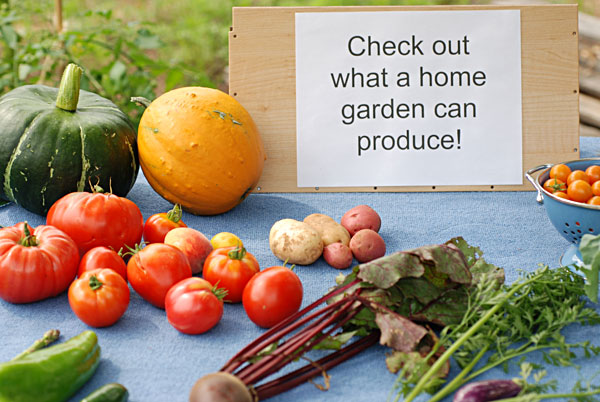 Growing your own veggies can not only save you money but is also a great way to relax.
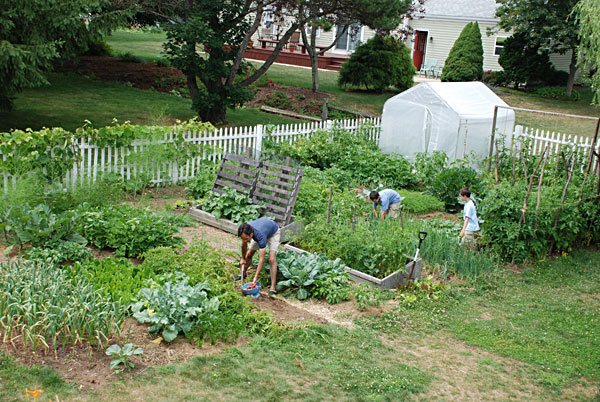 Roger Doiron with his sons Maxim, 12, and Sebastian,10, in the family’s kitchen garden.
Comments are no longer available on this story