
Springtime in Maine is quite beautiful. For the first time in months, the weather is finally warm enough to shed those jackets and gloves, and Mainers can finally get outside without worrying about frostbite.
But there is a downside to all this nice weather. While the warmth allows people to get out and get more active, it also is prime time for those household pests like carpenter ants, mosquitoes, ticks and bedbugs that have lain dormant all winter to wake up and start causing problems for homeowners.
Fortunately, there are some relatively simple ways to check for any problems and begin to treat your home and yard to get free from those pesky pests.
One of the most common pests that start to cause problems at the beginning of spring are carpenter ants.
These large, black ants can cause serious damage to homes by excavating out cavities in the structural wood. One popular misconception about carpenter ants is that they are actually eating the wood, but according to Terry Shoemaker, the owner of Sterling Insect Control in Gorham, that isn’t true.
“They’re not eating the wood, they’re using it for nesting,” he said, adding that carpenter ants don’t typically attack new or undamaged wood, instead preferring to look for older or decaying pieces of wood for their nests, making an existing problem worse. “They can do quite a bit of damage.”
True to their name, carpenter ants generally leave a telltale sign of an infestation, Shoemaker said. “You’ll actually see piles of sawdust just like there is construction being done (in the home),” he said.
It’s important to treat the exterior of the home as soon as you see signs of the infestation to try and reduce the amount of chemicals used inside the house. Typically, a pest management technician will treat the outside of the home with a insecticide to help reduce any further infestation, while the inside of the home is treated with a less-toxic bait that is left in areas that the ants are likely to travel through.
One other important thing to remember when dealing with carpenter ants is to keep the treatment going until all signs of the infestation are gone. Sometimes the obvious signs like the piles of sawdust disappear, leading to the incorrect conclusion that the ants are gone. That isn’t always the case, said Mike Peaslee, technical manager at Modern Pest Services.
“The common misconception occurs when people see carpenter ants in their house around this time of year for just a few weeks and then they seem to disappear,” he said. “However, as it gets warmer the carpenter ants’ feeding patterns change and they start to forage outside. People don’t think it’s a problem anymore but actually the ants are still nesting in their house.”
Another common pest that starts to become a problem as the weather gets warmer is the tick. “You start to see a lot of tick activity as we get into the month of April,” Shoemaker said.
Causing a problem for both people and pets, ticks can spread Lyme disease, but fortunately there are some simple ways to help control the tick population around your yard.
Shoemaker said ticks generally prefer areas that aren’t maintained, such as leaf piles left over from last autumn, fields and high grass. Simply cleaning up those areas will go a long way to helping get rid of ticks, Shoemaker said.
Anyone who has spent any time outside in Maine knows about the scourge that is mosquitoes. These flying, biting pests have ruined their share of barbeques, and while early spring isn’t prime mosquito time, it is the time to start working to get rid of them.
The best way to control the mosquito population is to head them off before they hatch, said Shoemaker. As mosquitoes breed in standing water, the solution to the problem is a simple one. Getting rid of water collectors such as old tires, puddles and frequently changing the water in birdbaths will get rid of mosquitoes before they can even hatch. “(Getting rid of standing water) doesn’t allow them to breed,” Shoemaker said.
One last bug that has caused a great deal of problems not just in Maine, but also all over the country, is the bedbug. While the furor over bedbug infestations has calmed down somewhat over the level of last year, these little bloodsuckers are still a problem. “Bedbugs are still an ongoing issue,” Shoemaker said, adding that the problem seemed to be reduced over the winter, but with the warmer weather, the bedbug problem “seems to be increasing.”
And bedbugs are a problem that know no bounds. They can be found just about anywhere.
“At this point I don’t know of any place that they’re not,” said Jeff Haines of Atlantic Pest Control, which has offices in Arundel, Biddeford and Brunswick. “Anywhere in the state you go you’re going to find bedbugs.”
Haines said that bedbugs could be found in places that range from Presque Isle to Portland. In fact, Portland was one of the top five cities in the nation most infected with bedbugs, Haines told a state panel.
According to the Maine Center for Disease Control and Prevention, adult bedbugs are about the size of an apple seed with flat, oval bodies colored rusty red. After feeding on blood, their bodies swell and become a brighter red. Bedbugs are active at night when people are asleep.
Bedbugs don’t carry disease, according to the Maine CDC, but their bites are annoying and can cause itchy welts on some people.
Eliminating a bedbug infestation should be left to a professional. Haines said that his company uses dogs to sniff out where bedbugs are hiding and then uses heaters set at 135 degrees for four hours to kill them as the bugs can’t stand extreme heat.
Heat alone can be effective, but in some case chemicals are needed too, Haines said. However, he said, bedbugs are developing resistance to the chemicals currently being used. Treating a two-bedroom apartment can cost about $700, but because bedbugs can travel to other apartments, typically the units contiguous to the infected one must be treated also, Haines said. He said that could cost a landlord thousands of dollars.
“They can be quite challenging (to eliminate),” said Shoemaker.
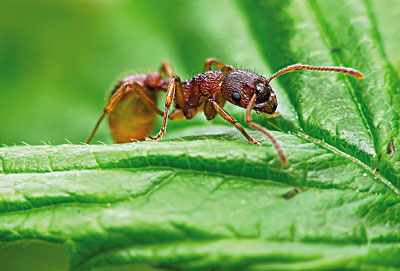 … there’s usually more. Or so goes the old saying. And ants can ruin an otherwise excellent day, here in Vacationland. Some ants can even ruin your home.
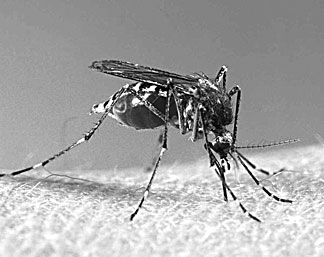 The mosquito may not really be the official State Bird of Maine, but anyone who’s been bitten by a few dozen of the little blood suckers knows how annoying they can be, and how important it is to keep them under control around your home.
 There’s a reason for the old saying “Good night. Sleep tight. Don’t let the bed bugs bite.” You really don’t want bed bugs. They’re nasty and can make you miserable. Fortunately, preventing them from infesting your bedding isn’t too hard, nor is getting rid of them if they’ve already taken up residence in your home.
Comments are no longer available on this story