
SCARBOROUGH – Scarborough Marsh is the state’s largest salt marsh. It is also, well, pretty marshy.
But it became a little less so this year, with the addition of an old Scarborough farm to the Scarborough Marsh Wildlife Management Area. The 46-acre Gervais family farm adds more dry land to the marsh, rivers, streams and uplands that make up what is known to the public simply as Scarborough Marsh.
An event to celebrate the protection of the Gervais farm, hosted by the Scarborough Land Conservation Trust and the Friends of Scarborough Marsh, will take place Wednesday, Oct. 21, at 2 p.m. at the farm at 53 Manson Libby Road. The public is invited to tour the property and learn how it fits into the Scarborough Marsh ecosystem.
One of the reasons the purchase of the Gervais farm is so important is that it adds to the upland acreage of the marsh, according to C.D. Armstrong, board chairman of the Friends of Scarborough Marsh.
Upland is another name for the dry land on the edge of a marsh. Of the 3,200 acres that make up the state-owned Scarborough Marsh Wildlife Management Area, only about 6 percent is upland.
Yet Armstrong said that the upland around a marsh is so important for the marsh’s wildlife that it has a special name: “the critical edge.” Creatures that thrive in the marsh use that critical edge to do such things as hide from predators or make nests, he said.
But most of the critical upland around Scarborough Marsh is in private hands. The Scarborough Marsh Wildlife Management area includes about 2,700 acres of salt marsh, five tidal rivers, small streams, some freshwater marsh, and tidal flats ¬- but has had only about 200 acres of upland.
But now – ever since the purchase of the Gervais family farm for about $800,000 this summer – the public upland around the marsh just increased about 25 percent, Armstrong said. The farm has some wetland and salt marsh but much of it is upland, he said.
“It will provide significant public access to upland,” Armstrong said. “Of the 46 acres, roughly half will be walkable by people like you and I.”
The farmland is expected to enhance public recreational activities at the marsh such as hunting, fishing, trapping, wildlife observation and bird watching, said Linda Woodard, director of the Scarborough Marsh Audubon Center, which runs programs ranging from self-guided walks to canoe tours that help the public explore the marsh.
The Gervais farm will also allow the center to add new learning opportunities, Woodard said. For example, she said, schoolchildren can contrast and compare the marsh habitat with an upland habitat.
“I envision that we could do some programs there,” Woodard said. “It sort of expands what we can do. There are some uplands and some fields and woods. It gives us some other habitat.”
The Gervais farm is actually located in the Scarborough Industrial Park. Its potential for commercial development was one reason why those interested in preserving open space in Scarborough had made it a high priority to save the farm.
Jack Anderson, president of the local land trust, said that at one point a lot fronting the road was carved out of the farm land and was on the market for commercial use.
If the lot had been sold for that purpose, he said, “it would have been difficult to get public access to anything behind it … It would not have been nearly as meaningful for public use.”
Anderson credits the Friends of Scarborough Marsh and Armstrong with spearheading the effort to acquire the farm. “They had been looking at the property for some time. It was high on their list,” Anderson said.
According to Anderson and Armstrong, the old farm was important to protect because it is relatively large, is adjacent to the wildlife management area and has both wetland and upland habitat.
Dennis Gervais, who lives in Buxton but works for the Scarborough Public Works Department, said his mother, Cora, decided to sell the land for conservation purposes. She couldn’t keep up with the property after his father died a few years ago.
The farms date back at least to the 1800s, according to Roger Delaware, a longtime neighbor of the Gervais family.
Dennis Gervais said it had been in the Gervais family since 1941 when his grandfather bought it after moving to Scarborough from Frenchville.
Gervais said his immediate family moved to the farm in 1950, when he was 2, and then his father, also called Dennis Gervais, bought it in 1958. Gervais said his father worked in construction so the farm was a hobby. But it was one he was devoted to.
“He raised most of our food,” Gervais recalled. In addition to a big vegetable garden, his father kept animals such as pigs, chicken and cows. “He tried sheep at one time but that didn’t work out,” Gervais said.
In addition to the farm animals, Gervais recalled the wildlife that would frequent the farm. “There were plenty of deer, and an occasional moose,” he said.
The family also saw wild turkeys, hawks, fox and coyotes, as well as waterfowl, such as ducks. He said he will miss not being able to see the wildlife from the windows of his boyhood home.
“For me, that’s going to be the hard part,” Gervais said. “We’d go over there for dinner and someone would say, ‘Oh, look at the deer.'”
But Delaware, the neighbor, is grateful to the Gervais family for deciding to preserve the land as Scarborough becomes increasingly built up.
“I like what they’ve done,” said Delaware, who said he sold part of his land to the state back in the 1960s because he wanted it to remain wild. “I don’t want to see any more land developed … I’m not against development but I think it should be done prudently.”
The state owns the property now and it is managed by the Maine Department of Inland Fisheries & Wildlife.
But the money to buy it came from a variety of sources, including $250,000 from the town of Scarborough. The Scarborough Town Council authorized that expenditure last year from some bond money that town voters has previously approved to protect open space in town.
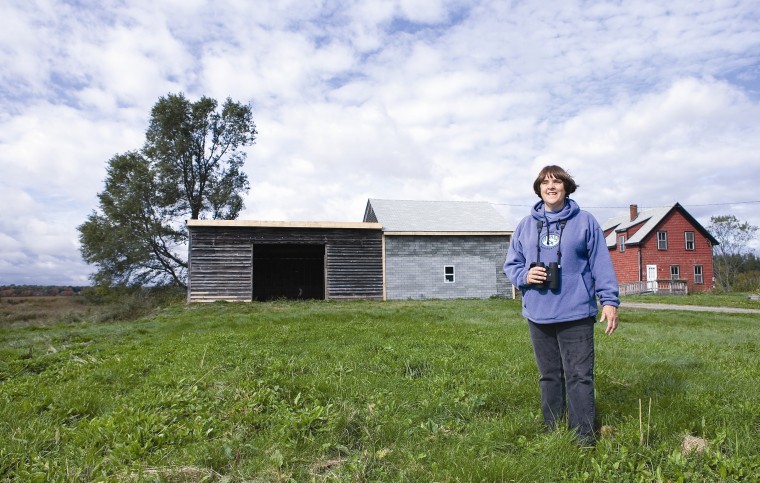 Gervais Farm
Comments are no longer available on this story