
A Sebago man who lost an arm after being shot by Cumberland County Sheriff’s Deputies last fall is claiming the deputies unlawfully surrounded his house and did not identify themselves.
Thomas Hallett, who is representing Douglas Tenczar, 41, has filed a notice of claim with the county indicating his intention to file a lawsuit over the incident.
Hallett said the deputies surrounded Tenczar’s house on Oct. 22, did not identify themselves as officers and banged on his doors while yelling. When Tenczar got a gun to protect himself, two of the deputies shot him three or four times, Hallett said. Tenczar lost his right arm after being shot, Hallett said, and would likely need a hip replacement.
“They were unlawfully on his property. They didn’t have the right to go to the back door of his house,” Hallett said.
Though Sheriff Mark Dion was hesitant to divulge many details about the incident because of a pending review by the Maine Attorney General’s Office, he did say he was confident in the decisions made by the deputies.
“I was confident and supportive of the deputies’ decision that night,” Dion said at a press conference Wednesday. “My confidence has not wavered.”
Deputy Stephen Welsh, Sgt. David Hall and Deputy Peter Anderson went to Tenczar’s house at 31 Ledge Road in Sebago after three young women reported that a man had waved a handgun in their direction during a road-rage incident on Route 114, according to police.
Welsh, Hall and Anderson were outside Tenczar’s house when they saw him run to another room and come back with a gun. When Welsh saw Tenczar level a shotgun at one of the doors, outside of which stood Hall, he and Hall fired on Tenczar, who did not shoot his gun.
Tenczar was taken by helicopter to Central Maine Medical Center in Lewiston, where he remained for at least a month, Hallett said. His right arm had to be amputated and, due to a bullet lodged in his left hip, he will likely need a hip replacement, Hallett added.
Tenczar has not been able to return to his job installing and repairing satellite dishes. On top of more than $200,000 in medical bills, Hallett said Tenczar could sue for loss of income, emotional distress and psychological trauma.
Hallett said his doubts with the sheriff’s office’s version of the incident were sparked by the audio from a videotape recorded by deputies during the incident. In the tape, deputies can be heard telling Tenczar to open the door, but they are not heard identifying themselves as law enforcement agents.
“The tape doesn’t lie,” Hallett said. “Clearly the deputy sheriffs do not identify themselves.”
Dion stressed that the tape Hallett refers to isn’t the only evidence in the case.
“The video tape doesn’t tell the whole truth,” Dion said. “Any one piece of evidence tells a limited part of the story. You have to look at all the facts to come to a conclusion.”
Dion said there were other recordings taken that night, but not during the same time period.
As with all cases in which an officer shoots someone, it is up to the Attorney General’s Office to determine whether the officers were justified in using deadly force. The office has not yet made a determination in this case.
Though Hall and Welsh were initially placed on administrative leave after the incident, they went back to work around a month later after a board consisting of a police chief, sheriff and community member determined that they were fit to return to duty.
Tenczar, who had three previous arrests for operating under the influence, was indicted for two counts of criminal threatening with a weapon March 6, and he pleaded not guilty to both counts. One count was for pointing a gun at a deputy, while the other was for waving a gun at the three young women in their car.
Hallett disputed both counts. He said his client did not wave a gun at the women, but that he was instead holding a black cell phone during the exchange.
Though Dion said officers make decisions in every situation to keep themselves safe, he said it is a matter of law and policy for deputies to identify themselves as law enforcement agents.
“The deputies reported that they did identify themselves,” Dion said. “Their integrity is not a question for me.”
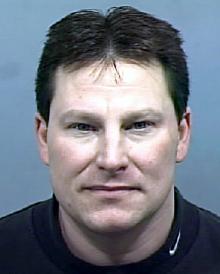 Douglas Tenczar
Comments are no longer available on this story