
Weather poetry
I enjoy reading Tom McLaughlin’s column, “Front Row Seat,” in the Bridgton News. His April 12 column led me to read Robert Frost’s poem, “Two Tramps in Mud Time.” McLaughlin said that he doesn’t read much poetry, but Frost has always spoken to him. He calls this poem especially appropriate to put Spring 2007 into perspective. This is the stanza he quoted:
“The sun was warm but the wind was chill
You know how it is with an April day
When the sun is out and the wind is still
You’re one month on in the middle of May,
But if you so much as dare to speak,
A cloud comes over the sunlit arch,
A wind comes off a frozen peak,
And you’re two months back in the middle of March.”
Robert Lee Frost was born in San Francisco on March 26, 1874. His father, a newspaper reporter, died when Robert was 11. His Scottish-born schoolteacher mother then moved to Lawrence, Mass., where he later worked as a newspaper reporter and, after his marriage in 1895, he and his wife helped his mother in her small private school. In 1897, he entered Harvard College, preparing to teach Greek and Latin at high school level, but after two years he became ill and moved to a farm in Derry, N.H. Many of his best-known poems were written at Derry.
In 1901, he sold the farm and he and his family moved to England. In 1915, he returned to the U.S. and bought a farm in Franconia, N.H. His poetry was being recognized. He served as professor of English at Amherst College. From 1939-1943, he was Emerson fellow of poetry at Harvard; from 1943-1949, he was Ticknor fellow in the humanities at Dartmouth; and from 1949 to his death in 1963, he held a sinecure as Simpson lecturer at Amherst College. He was awarded the Pulitzer Prize for poetry in 1924, 1931, 1937 and 1943. In 1961, he read his poem, “The Gift Outright,” at the inauguration of President John F. Kennedy. He had a great career. He died in Boston Jan. 29, 1963, following a cancer operation.
I also knew the line, “April is the cruelest month,” but who wrote it? I checked in my old Bartlett’s Quotations and found it was by Thomas Stearns Eliot, but I didn’t recognize that name. Ray told me that we know him as T.S. Eliot. The poem is “The Waste Land,” and the first four lines are:
“April is the cruelest month, breeding
Lilacs out of the dead land, mixing
Memory and desire, stirring
Dull roots with spring rain.”
Eliot is a British poet, but born in St. Louis, Mo., and educated at Harvard, Paris and Oxford universities. He came of New England stock. He established himself in London in 1914, and from 1917 to 1919 he was assistant editor of the Egoist. In 1939 he published “The Waste Land,” the poem by which he first became famous. In 1927, the year in which he became a British citizen, he was confirmed in the Church of England.
Besides his poetry, he wrote many plays. His “Murder in the Cathedral,” a modern miracle play on the martyrdom of Thomas Becket, was his most successful.
I have just borrowed Eliot’s “Complete Poems and Plays” and Frost’s “Complete Poems” from the Burbank branch of the Portland Public Library, so I can now keep busy getting caught up with the works of these two famous men.
Unknown word
I read in the April 12 Gorham Police Notes that someone told police on March 21 of being chased by two people armed with numchucks, but that person was picked up by parents. Well, I had no idea what numchucks are, but was informed by Ray that they are pieces of wood (sticks) chained together, to be swung or thrown. That word was not listed in my two dictionaries.
A real treat
Today’s recipe is from “The Garden Club Cookbook,” which includes 2,000 favorite recipes from garden club members all over the U.S.
Scallop Casserole
1/2 onion, cut up fine
4 tablespoons butter or oleo, melted
1 1/2 pounds fresh scallops cut into 3/4- inch cubes
1/4 pound cracker crumbs
1 can cream of mushroom soup, warmed
Salt and pepper
Sauta onion in butter in saucepan until browned. Add scallops. Cook until tender, stirring. Remove from heat. Turn half of them into greased baking dish over layer of crumbs. Add more crumbs; add another layer of scallops. Top with crumbs; pour soup over all. Season layers to taste. Dot with butter. Bake in 350-degree oven for 30 minutes or until browned on top. Makes 4 servings.
Submitted by Mrs. Lloyd E. Fernald, president of the Franklin Garden Club, Franklin, Maine
I know that scallops and most seafood are high right now, but scallops are such a treat.
Ginny Stevens, a friend of mine since we worked at the Portland Public Library, had read the recipe I printed in the March 29 Ramblings column for Zucchini Puff, my sister Sal’s recipe. She had tried it and said it is her kind of food. She said, “This gets a red flag in my recipe box.” Thanks, Ginny. That pleased me. (She feels as I do that moving the present location of the Portland Public Library to the Portland Public Market’s location on Cumberland Avenue is a big mistake.)
I also had a telephone call from Tampa, Fla., from Gladys Pratt, who subscribes to the American Journal and had just bought all the ingredients for the April 12 recipe we printed for Tater Tot Casserole. She has had a mean case of shingles since October, but now they are improving. I hope the casserole will help with her recover!
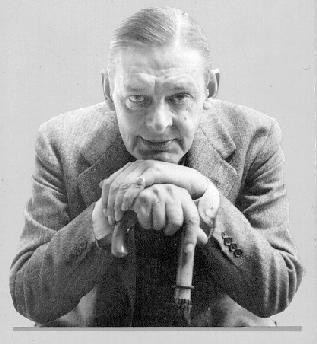 T.S. Eliot, author of “The Waste Land.”
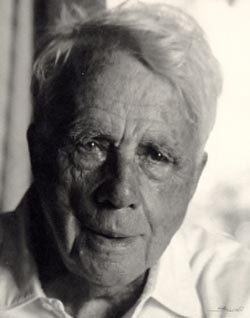 Robert Frost
Comments are no longer available on this story