
There is an ongoing war to claim Scarborough Marsh.
Phragmites, or those tall, beautiful reeds seen in any section of the marsh are the enemy, pushing out native species and threatening the delicate balance of the marsh ecosystem.
To fight back, help is coming from the Department of Inland Fisheries and Wildlife. For the 10 years since the Julie N oil spill in Portland Harbor, the Department of Inland Fisheries and Wildlife has been using $500,000 of the $1 million settlement paid by the owner of the Julie N to plan a large restoration of the marsh.
Though Scarborough Marsh was not affected by the oil spill, half of the settlement money will eventually be spent on it. The restoration is to compensate for the lost Stroudwater Marsh and its valuable bird habitat that was once covered in oil. More marsh in Scarborough would mean a place for waterfowl and wading birds that once landed along the Fore River.
Ten years after the spill, said biologist Richard Dressler of the Department of Inland Fisheries and Wildlife, they are getting close to starting the restoration of the 30 acres of marsh north of Route 1 that would increase the salinity and get rid of phragmites. Until now, said Dressler, they’ve been planning and working to find grant money to add to the settlement.
The $500,000, said Dressler, can’t pay to restore the entire 30 acres, which could cost over $1 million. They’ve also spent about $100,000 of the original money on engineering costs, allowing them even less for the actual restoration. In November he will find out if they will receive a federal matching grant that would provide the money needed to do the entire job.
However, said Dressler, with or without the extra money, they will restore what they can with the money they have.
The restoration project began 10 years ago after attempts to clean the Stroudwater Marsh failed, said Deborah Garrett, the deputy commissioner of the Department of Environmental Protection.
As the work began to clean the Stroudwater Marsh, said Garrett, it soon became clear that it was doing much more harm than good. “The minute you stepped on the marsh the oil would just go down deeper,” said Garrett. After trying to spray soap and cut back damaged grass from boats to avoid walking on the marsh, it was decided to let nature take care of the recovery and compensate for lost habitat in Scarborough.
“From a public eye – the people who aren’t the biologists – it didn’t make much sense,” said Garrett. “People wanted to know why we weren’t cleaning it up.”
“One of the most difficult decisions we made during the spill was to not clean up those marshes,” said Dressler. “But it was a good decision, Mother Nature has done her job.”
Now, agreed Garrett and Dressler, it’s apparent they made the right choice. In 10 years the Stroudwater Marsh is recovering naturally, though the compensation project is still needed.
At the time of the spill, Dressler was responsible for the birds affected by the oil. The South Portland Armory was the head quarters for dealing with the coated birds and their lost habitat. Since then, Dressler has been planning and looking for more money to begin the Scarborough restoration project. Even though it’s taken years of work behind the scenes, said Dressler, the marsh project has been a priority.
“It has been a work in progress, and it’s one people don’t see all the time,” said Dressler. “But we want to do the right thing with the money.”
The idea, said Dressler, is to dig ditches that will help carry out freshwater and increase the salinity of the marsh. Overtime, the freshwater phragmites have taken over the marsh, spreading both by seed and by their roots underground.
“It’s scary,” said Paul Austin, a Scarborough Land Conservation Trust board member. Austin lives next to the Nonesuch River and a large portion of the marsh. Over the years, he said, he’s seen phragmites increase.
Austin’s wife, Susan Wilder, is a member of the Friends of Scarborough Marsh, a group dedicated to returning the marsh to its natural state. With their home next to the marsh, they have watched and helped other restoration projects help reclaim the marsh from phragmites and development.
Besides pushing out natural plants and wildlife, they are also partially responsible for the drop in salt water. As the phragmites die, they create a mat on the ground that has raised the level of the marsh slowly each year, disrupting the natural tides and increasing the amount of fresh water.
“Literally just inches can change the ecosystem,” said Austin. As the marsh rises, different plants either thrive or die.
The section of Route 1 that passes through the marsh blocks saltwater from getting to the portion of the marsh north of the road and blocks freshwater from draining back into the marsh south of the road. As freshwater levels rise and salt water decreases, more species that don’t belong in a saltwater marsh can thrive.
Culverts under Route 1 helped the flow of water, said Dressler, but not enough. With the settlement money and perhaps a federal match, they can cut back the phragmites and “skim” the marsh, removing the harmful buildup.
Dressler has also been working closely with the Friends of Scarborough Marsh to design the right plan for the restoration.
“This project is very much in line with our goals for the marsh,” said C.D. Armstrong of the Friends of Scarborough Marsh.
The Friends of Scarborough Marsh is a volunteer group dedicated to both protecting and restoring the marsh. Over the years, they have helped restore different parts of the marsh in various projects. With the money from the Julie N spill, a major part of the group’s work could be completed.
Besides trying to find more money for the 30-acre restoration, said Armstrong, biologists recently discovered a species of phragmites natural to the Scarborough Marsh. Distinguishing between the good and harmful reeds further slows the process.
Still, said Dressler, he is hopeful that they can begin sometime next year. While he wants everything to be done right, after 10 years he is ready to start restoring the marsh.
“It’s taken us a while to get to this point, and I would like to get it wrapped up,” said Dressler. “But I want to get the biggest bang for our buck.”
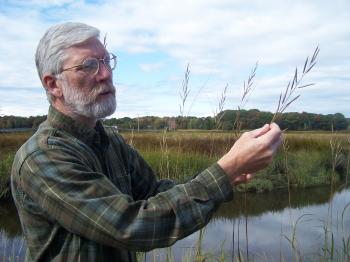 Paul Austin lives next to the Scarborough Marsh near the Nonesuch River. Over the years he has seen the battle between phragmites and the efforts of the Friends of Scarborough Masrsh and others to restore the marsh to its natural state.
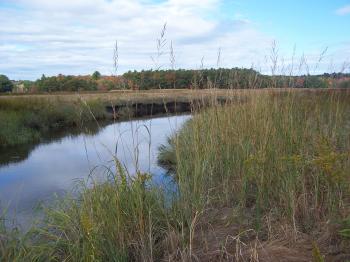 Phragmites look beautiful, but are actually pushing out natural species and harming the marsh.
Comments are no longer available on this story