
When Greg Pomeroy arrives at the little makeshift clinic in the Dominican Republic, he opens the door to a sea of smiling brown faces, some of whom have walked for days from their faraway villages with a baby on each hip. All are eager to see the doctor who can provide them with a free service they cannot get anywhere else.
Pomeroy, an orthopedic surgeon working out of South Portland, was recently given $10,000 from the South Portland-Cape Elizabeth Rotary Club for equipment for what has become his annual mission trip to the Dominican Republic, where he repairs foot deformities.
Many of the deformities he repairs are caused by birth defects or poor nutrition, and they run rampant in the Third World country, which shares an island in the Caribbean with the country of Haiti.
Although Pomeroy, A Cape resident, had dreamed about volunteering his services in a Third World nation for some time, it all gelled when he met a researcher who told him about a clinic in the Dominican Republic.
The researchers grew up in San Juan where his own parents were missionaries. Pomeroy’s new friend told him about a clinic there, with an operating room, where doctors from all over the country temporarily set up shop to help the Dominican people.
Pomeroy describes the experience as “serendipitous.” “I started talking about this dream, and he started talking about this clinic,” said Pomeroy.
Pomeroy had found the place where he could help real people in need by performing his surgeries.
That was five years ago. Since then Pomeroy has flown to the Dominican Republic yearly with a crew of people he collected from local hospitals. Every time he goes, he sees about 50 people and performs about 10 to 12 surgeries during each weeklong trip.
In his first year, there were definitely some surprises, said Pomeroy. He and his crew didn’t know quite what to expect. Loaded down with his surgical equipment, he expected there would at least be a backup source of power. In the midst of a surgery, he discovered he was wrong.
Halfway done sawing through some bone, the nitrogen tank, a gas commonly used for powering surgical tools, ran dry. Pomeroy was stuck without a power source.
There was no refill station nearby, and the generator supplied by the clinic was not working either. So he switched over to the battery backup, but it was corroded and the conducting devices, called leads, had rusted off.
With a bunk generator, an empty tank, an inaccessible battery and a half-finished surgery, Pomeroy and his crew thought fast.
One of his crew whipped some gum from his pocket. He was trying to quit smoking and carried gum around as a substitute for his cravings. He suggested the aluminum wrappers could be used as a conductor on the battery.
So, in true MacGyver style, a little chewing gum foil saved the day.
While he and his crew munched on the gum, the wrappers allowed Pomeroy to finish the surgery. From the electrical outlet, to the generator, to the battery, it was improvisation all the way that first year.
“MacGyver – that’s what we were,” said Pomeroy.
Thanks to the Rotary Club, Pomeroy won’t soon find himself in that predicament again. He’s purchased a portable energy source called a TPS machine, which he can plug into an electrical outlet and power his equipment.
Though Pomeroy will no longer have to worry about his power source, there are some problems in the operating room that cannot be remedied by his tools alone, like hunger.
People in the Dominican Republic often don’t have enough to eat. Despite that, each time he returns, the Dominican people bring him gifts of food in appreciation for his services. He calls them poor, but proud. “They’re not looking for a handout,” he said.
This problem of malnourishment also creates difficulty in the operating room. It is so severe it affects all aspects of the body, including bone density.
Pomeroy discovered the conventional tools used in his own practice in Maine are inappropriate for the population he serves in the Dominican. Screws and metal plates, common for re-fusing bone together in the United States are inadequate tools for Pomeroy’s population.
“Their bones are soft as butter,” said Pomeroy. Rather than screwing the bones together, Pomeroy again improvised by using Teflon coated wire, sewing the bone back together.
Now Pomeroy is hoping to raise enough money to buy a used bone stapling system to bring down with him on his next trip. “That will allow us to do even more than we’re doing,” said Pomeroy.
Pomeroy plans to continue his mission trips and hopes to expand into another country, running two trips a year. By the time he retires, he hopes to be working half-time running mission clinics out of developing countries.
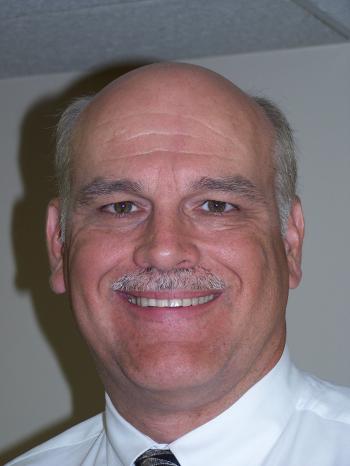 Greg Pomeroy, an orthopedic surgeon living in Cape Elizabeth was recently given $10,000 by the South Portland
Comments are no longer available on this story