
Mary Cox left New York City and her mother when she was 4 years old. Her parents had decided to be a commuter family.
Deciding he didn’t want to raise children in the city, her father moved Mary Cox and her two siblings to Cape Elizabeth, leaving behind their mother, who had an established medical practice in the city. Cox attributes this early separation from her mother with infusing her with an independent spirit.
This sense of independence is prompting her to leave her classmates in the final semester of her high school career to attend a semester-long outward bound program, called the Maine Coast Semester, in Wiscasset.
Founded by the Chewonki Foundation, the program accepts up to 38 high school juniors nationwide each semester. Students live, work, study, and play together bonding through shared goals and learning. While students attend a full class load, much of their learning comes from living and working together on the farm.
Together, students and teachers maintain their living quarters, cook their meals, and learn about living off the land. Cox is prepared to chop wood, milk cows, and mend rooves if necessary. The first two are common chore assignments. Students are assigned daily chores in addition to their schooling, including cooking and cleaning.
“There aren’t janitors,” said Cox.
With two siblings significantly older than herself by seven and 10 years, Cox realizes living in close quarters with seven to eight other girls will pose challenges.
With just herself and her father living in their Cape home, Cox is used to plenty of personal space. “I have (an) entire wing to myself,” she said.
However, that is the challenge she is looking forward to embracing most. She hopes that such close quarters will help her hone her communication skills and be a better community member. For Cox, constant self-improvement is the norm. As a member of multiple school clubs, including mock trial, the math team, science team, yearbook and the student council, Cox is always seeking enriching experiences.
Cox’s appreciation for simple living sprouted at an all-girl summer camp she attended yearly in Hope Maine. It was Alfred Lake Camp that introduced Cox to the Appalachian Trail. In 2003, she spent seven weeks exploring the trail, which runs from Maine to Georgia. During that time, the pressures of modern society disappeared. She no longer worried about tests or money and no longer thought about TV or social discord.
“You get to strip away all that material stuff,” she said. “It’s so basic, you’re thinking about food and water.”
Although Cox will not spend her senior semester with the classmates she’s grown up with, she’s not worried. She is confident that four months away from her friends won’t destabilize their relationships. She’ll be back in time for graduation and the corresponding festivities. If she wasn’t, she said, she wouldn’t have gone.
Cox’s Advanced placement English teacher Joel Shroder described Cox as “very natural.” He recognized her as sincerely curious, a student who cares about her learning and engages in classroom discussions to satiate those curiosities.
Shroder is not surprised that Cox beseeched the Chewonki foundation to accept her as a senior. She is a student who recognizes the value of the experience and not just the recognition it can bring her, he said.
The foundation usually accepts mostly juniors, but Cox applied too late in her junior year for acceptance. She convinced school officials to accept her for the following year, her senior year, but not until spring semester. She was already acting student advisory council president, and her term would run partway through the spring semester.
Although Cox said she doesn’t expect typical homesickness to plague her, she is regretful that she’ll miss the spring semester musical. She said she was a shoo-in to play the lead.
After Cox returns from her semester in Wiscasset, and finishes up her graduation festivities, she’ll know better whether she’ll continue onto one of the 10 schools she’s applied to, including Yale, Stanford and Harvard, or take a year off, possibly hiking the Appalachian trail. Whatever she chooses, she plans to stay productive, continue learning, and pursue self-improvement.
“You can always be better,” she said.
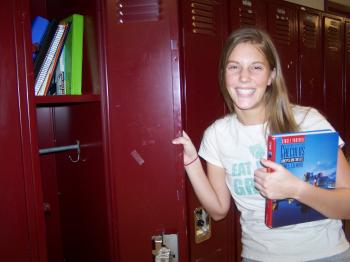 Cape Elizabeth High School senior Mary Cox will spend her final semester, not at Cape, but up in Wiscasset studying with the Chewonki Foundation. The Maine Coast Semester accepts a small group of students each semester to live study and work in a communal farm environment.
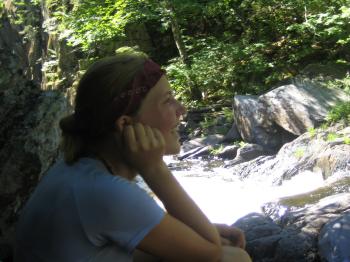 Mary Cox hiked part of the Appalachian trail with a camp group in 2003. This experience increased her appreciation for nature, influencing her to apply for the Maine Coast Semester.
Comments are no longer available on this story