
Karen D’Andrea, helping hurricane victims
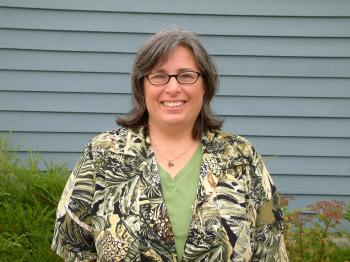
Karen D’Andrea of Scarborough started the Maine Plan for Displaced Americans shortly after the destruction in New Orleans from Hurricane Katrina became clear.
She had hoped to bring three underprivileged families to Maine who received Section 8 portability, which allows them to transfer the housing benefit from state to state.
In addition, she wanted to provide the families a new start in Maine with food, furniture and other necessities initially paid for through the program. She raised $14,000 through numerous fund-raisers.
Unfortunately, D’Andrea was unable to locate a family who was interested in moving to Maine and, while no formal decision has been reached, it looks like the money will be donated to the Louisiana Coalition Against Domestic Violence.
Like everyone else in New Orleans, the coalition suffered huge losses due to the hurricane. According to the Louisiana Coalition Against Domestic Violence’s website, four of its domestic violence shelters and two nonresidential programs are completely closed, and two or three may be completely destroyed.
Yet there remain battered women and children trying to relocate to safety because domestic violence and child victimization are issues that do not stop because of a natural disaster.
“Of course they still have clients; they still have women and children in crisis,” D’Andrea said.
In addition to helping rebuild the lost shelters, the money will be used for some basic services such as assisting people moving back to Louisiana with food, clothing, car repairs and apartment deposits.
“We feel like people really are in dire need of that money now,” D’Andrea said.
The Maine Plan for Displaced Americans had contacted organizations in the affected areas and others not in the damaged areas but were assisting hurricane victims. It contacted organizations in Texas, Georgia and Louisiana, but could not locate a family wanting to make the move. They also had contact with the Red Cross, Catholic Charities and the New Orleans Housing Authority, which is now located in Texas.
“There’s not a whole lot more we could do to find a family,” D’Andrea said. “We sort of came to the conclusion that here we are almost six months out from the hurricane and we have all this money in a bank account waiting.”
Kristi Stanley, fighting ‘Goliath’ business
Scarborough business owner Kristi Stanley of Chamberlain Road finds herself in the unenviable position of being David in a battle with Gerber Foods over her company’s name.
Stanley’s home-based company “Giggles And Grins” has been told by the baby food giant that it must stop using the name since it infringes on a trademark for Gerber’s bathtime and skincare product line for babies called Grins & Giggles.
Gerber, which is owned by Novartis, a Switzerland-based company that in 2004 had sales totaling $28.2 billion, notified Stanley of their claim in August. The company also ordered Stanley to eliminate her Web site www.giggles-and-grins.com.
Stanley did not relent and today continues to use the Giggles And Grins name while she negotiates with Gerber in hopes of finding an amicable solution.
“My lawyer is working with Gerber’s lawyer now to come up with an agreement,” she said. “I’m hoping we’ll be able to negotiate an agreement.”
At this point the only change that Stanley has made is removing a link from her Web site to numerous news stories about her fight. However, she said that if things do not go well, the link would be added.
Stanley, with the help of her friend Lori Crowly, started Giggles And Grins shortly after her son, Logan, was born about two years ago. The income helps supplement the income she earns while working seasonally at the Pleasant Hill Golf Course.
Stanley does not wish to go to court to fight for her company’s name, which she developed based on her son’s personality. But if she is forced to, she will, she said. On principal, she does not want to let an organization with more power and money wrongly force her to change the company’s name, mainly it would not be a good lesson for her son.
“I’m doing the best I can with what I got,” she said.
Stanley produces more than 40 products for infants and children like bibs, burp cloths and blankets from her Chamberlain Road home. Her biggest sellers are changing mats called “Roll and Go.” Each product is stamped with the company’s name along with “Mom Made in Maine.” She is now working on adding some new products to her line.
“All the ideas come from being a mom,” she said. “Hands-on experience is always best.”
Meserve Farm, saving the history
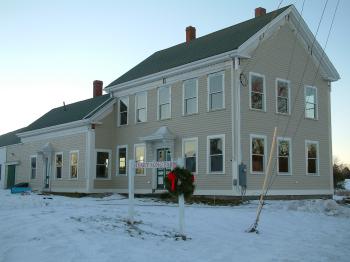
About a year ago, the Scarborough Conservation Land Trust announced it has reached a lease agreement with Valerie Davies and George Carpenter to operate the Meserve Farm at the intersection of Broad Turn and Hanson roads.
Davies is a goat farmer and produces high-end cheese using her goats’ milk at her Gilmanton, N.H. farm named Heart Song Farm. Carpenter operates Kismet Produce Traders, which is a distribution network that sells fresh, locally produced vegetables and meat to restaurants in Maine and New Hampshire.
The pair signed a three-year lease on the property last winter and had hoped to have an operation running there in the spring. But before anything can get started on the property some major renovations must be done and are now slowly moving along.
Scarborough Land Conservation Trust Executive Director Laurene Swaney said there is about $30,000 worth of repairs needed to finish work on the farmhouse, and while no one has moved into the house the land trust is regularly performing maintenance on the building and keeping an eye on the property.
The Scarborough Land Trust purchased the historic farm and its 434 acres for $2.5 million about a year ago with the purpose of preserving the land and its farming tradition.
In addition to repairing the farmhouse, the land trust also is trying to develop cost estimates on the renovation of the outlying barns on the property and various barn structures, some of which date back to the 1700s.
The land trust is also investigating other agricultural uses of the property in order to provide a community-based farming operation.
One model that the land trust is investigating is allowing neighbors to purchase a share of the farm and receive produce from it. Another option is having community members perform labor on the farm.
Swaney said the farm is large enough to have timber, livestock and community-based agriculture and it is a matter of planning for its various functions.
“The opportunity really exists there to be something like it was 50 years ago when they were actively working the farm,” Swaney said.
Scarborough Comp. Plan, designing future growth
The Scarborough Comprehensive Plan Update Committee is nearing the conclusion of its work and members hope to have a report approved by the Town Council by the early summer, 2006.
The committee has been meeting for more than a year and has reviewed the entire comprehensive plan and updated necessary areas. A Comprehensive Plan is a state-required document that provides an outline for a municipality’s future growth.
Drafts of the plan are expected to be available in April when the committee and the Town Council will provide opportunities for public comment before the plan is submitted for state approval.
According to Chairman Rick Shinay, one of the most important aspects of the plan is the future land-use plan, which is now in draft form and will be refined by the committee in January when it restarts its work. The plan will be discussed at a public meeting in late January.
The plan outlines all of the proposed zone changes in town and is considered the heart of the entire comprehensive plan, said Sylvia Most, the Town Council liaison on the committee.
The biggest recommendations contained in the report include bringing water and sewer west of the turnpike to encourage business development in the Running Hill Road area, a decision that represents a shift in town planning, Most said.
Another big proposal in the plan is encouraging more mixed-use development in town that will allow for a variety of housing – including affordable housing – as well as commercial and residential buildings.
Overall, there has not been a major disagreement during the update, Shinay said, adding the plan is more focused on growth and non-growth and where the town will be in the upcoming decade.
Shinay expects the committee to recommend that the growth cap in town continue, which is an issue that must be justified to the state.
One thing the committee is doing differently this time is discussing an implementation strategy and whether its recommendations will be enacted either through its own committee or one through the Town Council.
 The Meserve Farm
  Karen D
 Kristi Stanley
Comments are no longer available on this story