
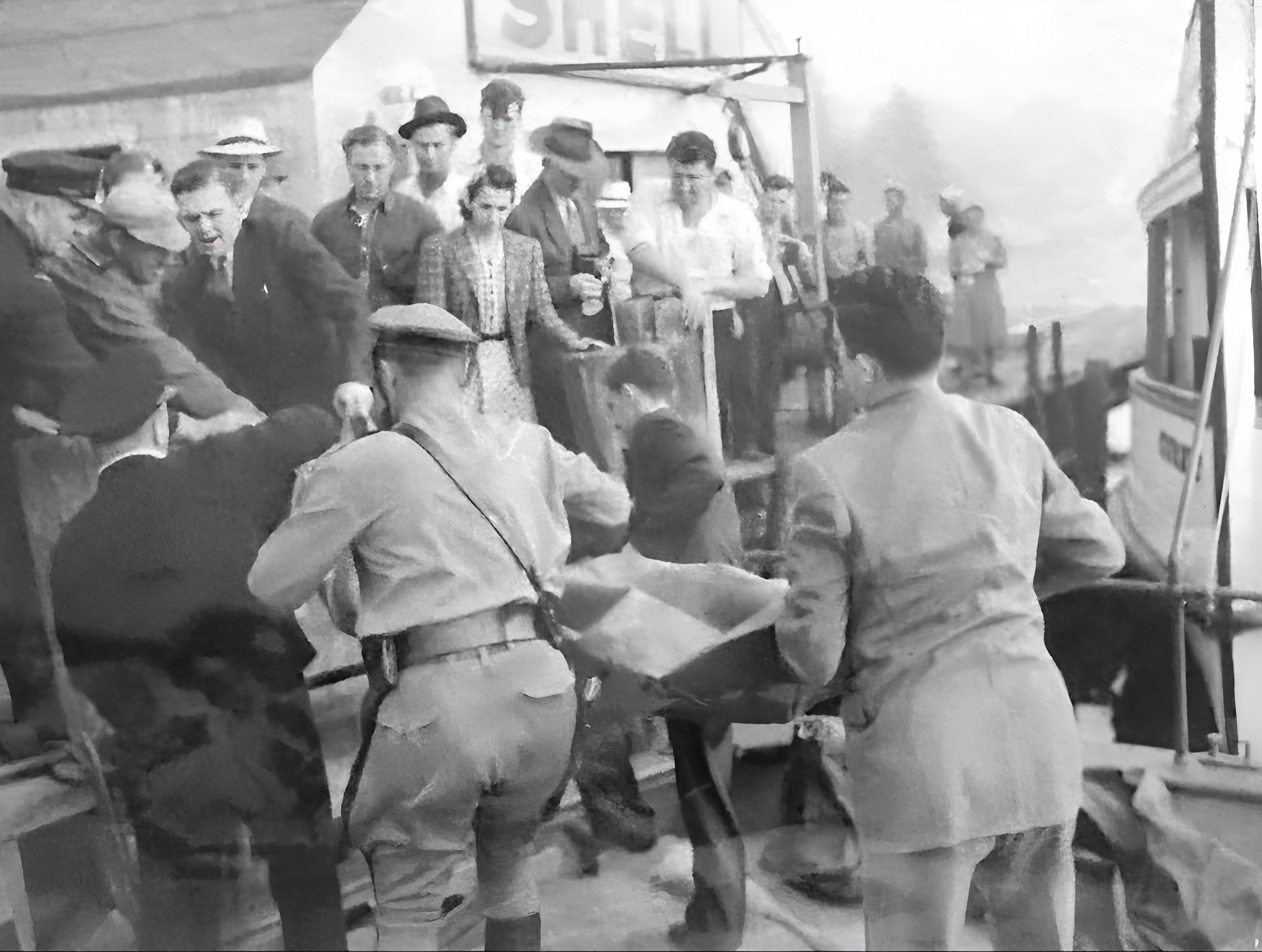
One of the deadliest maritime disasters in Maine history saw a day of fun and pleasure turned into a catastrophe claiming the lives of 34 persons, launched a mammoth rescue effort and began an enduring controversy lasting nearly 85 years. And this historic tragedy all began at Bailey Island.
On June 29, 1941, a group of 34 persons from Rumford, Mexico, Auburn, Harpswell, Livermore Falls and Canada all gathered for a summer boat excursion and picnic on Monhegan Island. Captain Paul Johnson with his 44-foot cabin cruiser, The Don — a former “rum runner” during prohibition — was chartered by the group.
The “party arrived at the wharf at Dyer’s Cove in East Harpswell” and were underway at 9:30 a.m. It was “a clear day with good visibility,” and “Captain Johnson intended to make clam chowder on the boat.”
“The Don reached West Point … to take on provisions,” and many in the party “mailed postcards to friends and family.” By 11 a.m. “the boat left West Point … on a course to Monhegan Island … as Captain Johnson began to prepare the chowder.”
When Maxwell Deshon, “the second Assistant Keeper of the Sequin Island Light,” looked out into Casco Bay, he witnessed The Don underway towards Monhegan, and he noted the boat “was top heavy with passengers” lounging on the top deck of the cabin cruiser. Deshon also noted “a heavy swell and a thick haze.” It was the last time The Don was seen.
By Monday morning, The Don “was overdue to return” to Dyer’s Cove and a body had been discovered “near Taylor’s Round Rock off Bailey Island … [and] small bits of charred wreckage … were discovered.”
“Coast Guard station crews from Popham Beach and Damariscove Island … Cape Elizabeth, South Portland, Burnt Island, White Head and Harpswell … [and] more than ten coast guard boats … two coast guard hydroplanes from Boston … the Portland Police boat … the State Police … and hundreds of citizens and fishermen” all joined in the search, and “Governor Sumner Sewall arrived by plane.”
“The State Police reported The Don’s party did not reach Monhegan Island,” and watches on “two of the dead were stopped at 11:40.” Officials quickly placed “the scene of the disaster … 4 miles … off Sequin Island.”
Rescue and recovery efforts “were hampered by … impenetrable fog … and thunderstorms … for four days,” while the currents of Casco Bay dispersed the remains of The Don and its complement “of 34 persons.”
“The majority of bodies recovered [were] found off the tip of Bailey’s Island … west of Ragged Island … [and] off the coast of Cape Elizabeth.” The body of “The Don’s skipper was found … lashed to a barrel … off of Pond Island Ledge. And, the Portland Police boat had recovered one body.”
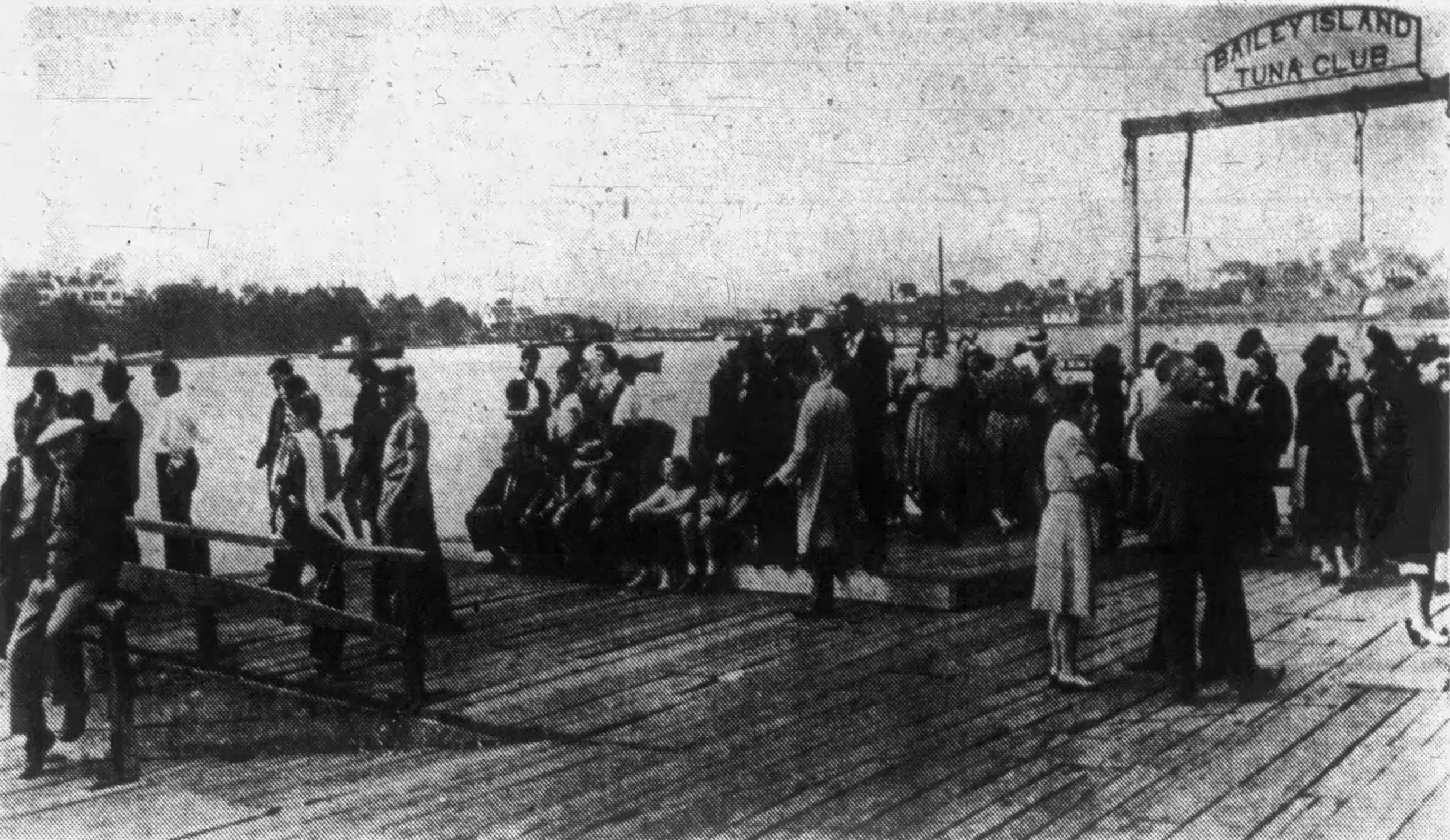
Many of the “relatives and friends of the victims gathered at Mackerel Cove Wharf [where] many of the bodies were placed in ambulances … and taken to Laws and Demers Funeral Parlor in Brunswick.”
“The Melanson family of Rumford” had suffered the triple-loss of “a father and two sons” in the Casco Bay catastrophe.
While “authorities believed that fire, followed by an explosion… and drowning” likely caused the great loss of life, many local fishermen believed the boat “was overcrowded and top heavy … and likely capsized.”
Of the 34 souls aboard The Don, only 14 of the dead were recovered, and while funerals were held at Rumford and Mexico, “a huge memorial service, attended by 5,000 persons, was held on the Steamboat Wharf at Mackerel Cove.”
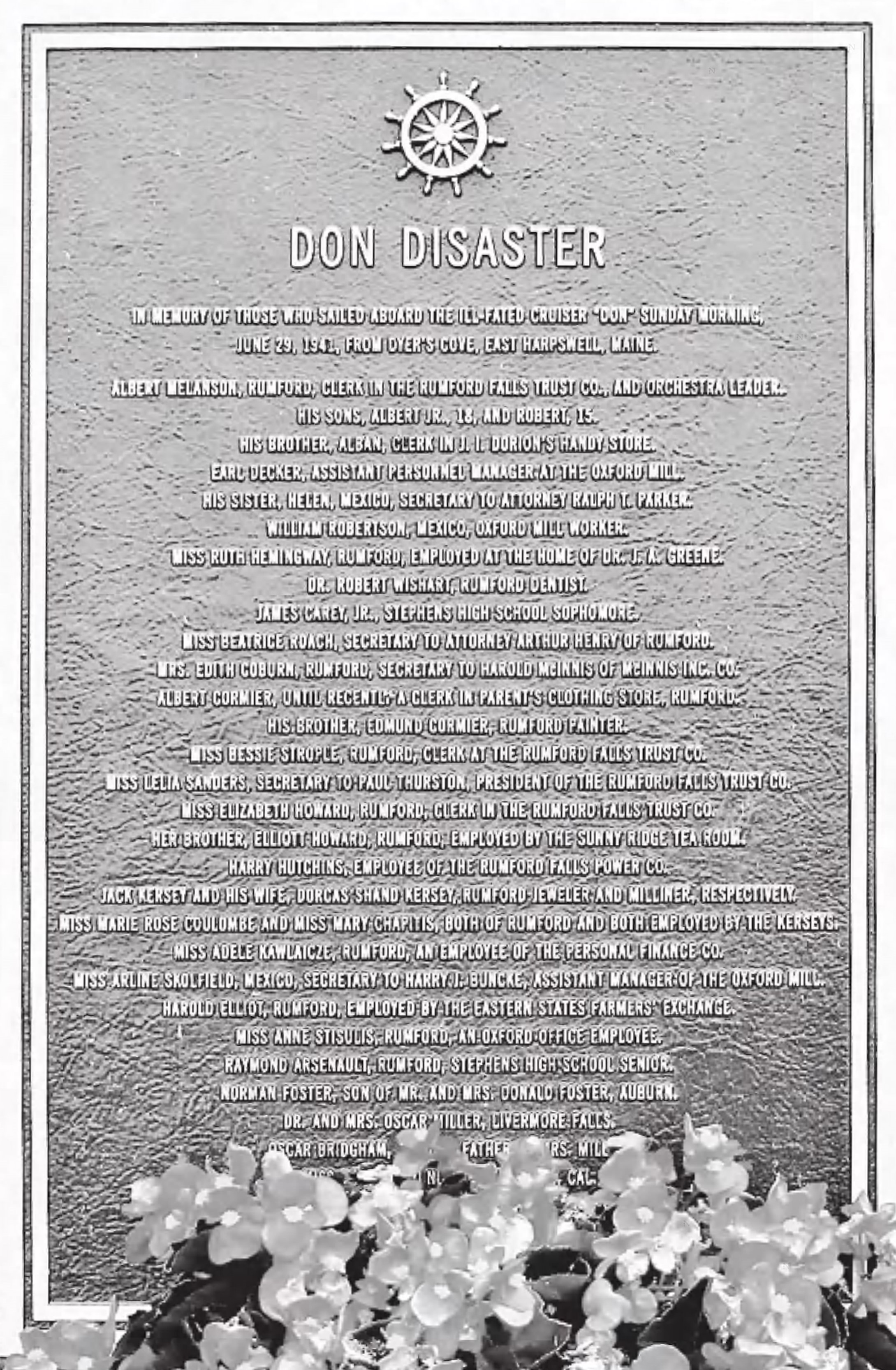
Meanwhile, Gov. Sumner Sewall “appointed a four-man board to probe the disaster.” Bailey Island Lobsterman “Elroy Johnson … who was a leader in the search for victims” — and whose statue is placed at Lands End — “was named to the board.”
By Sept. 20, just over four months after the tragedy in Casco Bay, Gov. Sewall’s committee released its report on the likely cause of The Don Disaster.
The report noted “a laxity in party-boat inspections … [and] that Captain Paul Johnson was without license and illegal,” and “that the top heaviness of The Don [was] notorious,” promoting an official “conclusion that The Don probably capsized.”
The report also made a scathing statement that “had regulations been rigidly enforced Maine would have been spared The Don disaster.”
In 2006, the book “Tragedy In Casco Bay” was published by author Stacy Welner, helping to reignite interest in the disaster, and because different conclusions for the cause of the catastrophe still exist, “shipwreck divers [have] conducted a needle-in-a-haystack search to find The Don and determine why it sank.”
This historic tragedy off the coast of Harpswell remains as one of the worst maritime accidents in Maine history, and remains as one of the saddest and deadliest of our Stories from Maine.
Historian Lori-Suzanne Dell has authored five books on Maine history and administers the popular “Stories From Maine” page on Facebook, YouTube and Instagram.
You must be logged in to post a comment.