
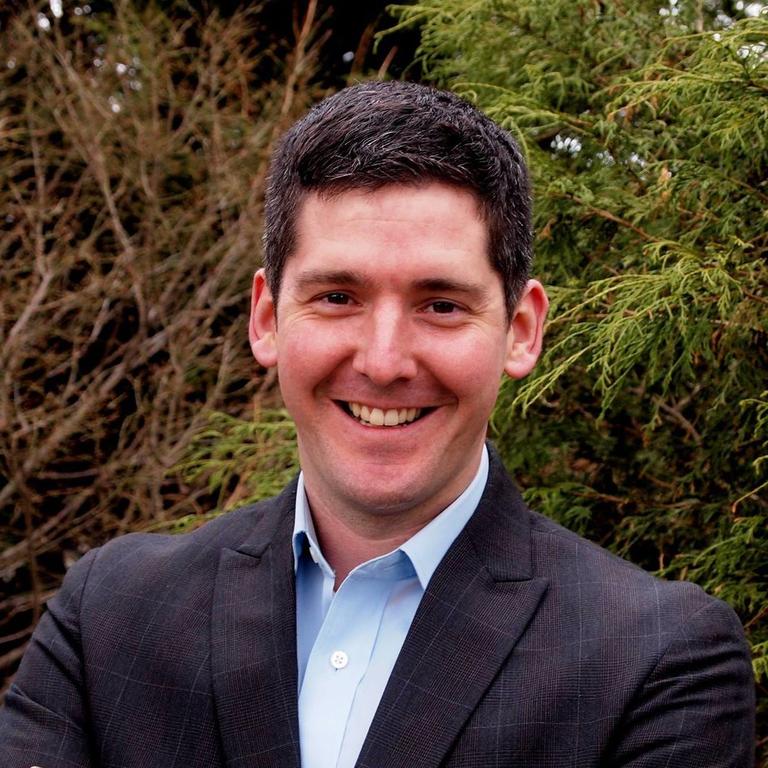
Rep. Andrew McLean, D-GOR.

James Means, a Republican.
In the race for Maine House District 27, Democrat Andrew McLean, the incumbent, is being challenged for the seat by Republican James Means. Both are from Gorham.
The district represents part of Gorham and part of Scarborough.
McLean, 31, is seeking a third term. He was first elected to represent then-House District 129 in 2012 and successfully ran for representative for House District 27 in 2014. He handily defeated Republican candidates in both races.
He has served as chairman of the Legislature’s Transportation Committee and as chairman of Bills in Second Reading. McLean is the coordinator of student conduct at the University of Southern Maine.
Means, 66, is chairman of Gorham’s Republican Town Committee and making his first bid for state office. He made a strong run for Gorham Town Council in 2013. In a five-way contest for three seats, Means narrowly missed by 30 votes.
Means, a retired businessman, has been active in the community. He formerly served on the Gorham Economic Development Corp. and has held several key posts at St. Anne’s Church and Cheverus High School.
McLean and Means are each backing their party’s nominee for president.
“I’m supporting Hillary Clinton,” McLean said.
Means believes Donald Trump would make a better president. Means felt Trump would surround himself with quality experts.
In the gubernatorial issues involving the outspoken Gov. Paul LePage, McLean said he’d support some type of legislative action against LePage.
“The type of action remains to be determined,” McLean said.
McLean said he grew up in church and in a family that taught him to disagree respectfully.
“I don’t think that type of language has any place in our civil society,” McLean said.
Means would not support Legislature taking action against LePage.
“It’s not appropriate for the Legislature to continue partisan gamesmanship,” Means said. “It’s in the best interest of Maine for the governor and Legislature to work together to solve problems.”
Each candidate had an opinion on how to deal with the opioid problem in the state. “First of all,” McLean said, it takes understanding. “The first step is to destigmatize addiction,” he said, who added its a complicated issue.
McLean said it affects successful people in addition to the poor, and a multi-pronged approach is needed – including both treatment and enforcement.
“We need to make sure people have access to treatment,” he said.
Means said the problem is multi-faceted and complex. He said the Gorham police chief said drugs is the No. 1 problem. Means see a need for education, more access to rehab and an increase in job training.
“I think we can do more in schools,” Means said, and advocated providing a change in environments for those addicted.
The top problem facing the Legislature, McLean said, is property taxes, according to what he’s hearing on the campaign trail.
“We need to rework the tax system,” McLean said.
McLean said people on fixed incomes and younger citizens alike are feeling the property tax burden. He wants property owners to receive more relief through the income tax process.
Means sees partisan politics as the No. 1 issue facing the Legislature.
“What doesn’t work is people rowing the boat in different directions,” Means said.
Both candidates are opposed to the marijuana question on the state’s referendum ballot.
“I do not support legazation,” McLean said.
Means said marijuana could be a pathway drug to more addictive drugs and he’s voting no. He said there’s a need for better jobs and people to fill them.
“Those people need to be sharp and energetic,” Means said.
McLean will support the other five state referendum questions, including Question 3 about guns.
“Yes, I do support background checks,” McLean said.
But Means opposes the gun background checks.
“I don’t believe it will stop criminals,” Means said. “Bad people are always going to get guns.”
Means opposes all the state referendum questions with the exception of the bond issue, which McLean also favors.
Comments are no longer available on this story