
If the Windham Town Council adopts a proposed ordinance change, upgrades to any grandfathered private roads to today’s standards would be required if there is new development on the road.
Discussion at a June 21 meeting was the first time the issue of private roads resurfaced in the council chambers since mid-February, when town councilors gave Town Planner Ben Smith six points of research into ways to improve the condition of private roads.
The proposed ordinance change is being considered as a way to make improvements to existing private roads, which make up nearly half the roads in town. Residents on private roads said in February their roads are in bad shape in part due to development, directly due to damage from home construction and indirectly because of increased traffic from new residents.
Although safety regulations were adopted in 2009 for all new private roads in town, the roads built prior were grandfathered, so that they didn’t have to be brought up to current standards, according to Smith. Since the new standards were put in place, the town has not required upgrades to a grandfathered road, even after developments are built on roadside land.
When the decision to exclude grandfathered roads was made in 2009, the council had no standards for private roads, and “the step we took forward was substantial,” said Councilor Dave Nadeau, who sat on the council at the time. “Now, after seven years we see how the misuse of the grandfather ruling is the one thing killing us,” he said.
The five councilors at the meeting (Councilor Roy Moore was absent) directed Smith to continue developing the ordinance language. Smith said it would be at least a month before the ordinances are ready for review, at which point they will be added to the council agenda for more discussion.
The ordinance change would mean that when the Planning Board approves a proposal for a new home or subdivision on a private road – even if it was previously grandfatherd – a condition of the approval would be re-constructing the road to private road standards. To do so, the permit holder would negotiate with homeowners and abutters of the private road for access to needed land.
Town Manager Tony Plante gave the example that if a developer needed to widen a private road to bring it to standard, but could not come to agreement for purchasing abutting land from a homeowner, “the development doesn’t happen,” he said.
When discussing whether this would overly restrict development on private roads, Council Chairwoman Donna Chapman pointed out that “people might want to work with the developer to improve a private road that’s a mess.”
One question, bridged by Smith to the council, is the extent of development that would be necessary to trigger upgrades to the roads. The council discussed requiring all roads to be brought up to the current private road standards, regardless of whether the development is one home or a 40-house subdivision. There are two standards for private roads, one governing roads with between three and 10 houses, and another governing roads with more than 10 houses.
The council will also consider a classification system for assessing separately the condition of private roads as they stand, which would guide the amount of construction “proportional to the proposed development for improvements to the private ways affected,” Smith wrote in a memo to the council.
The ordinance changes would not affect development on pre-existing lots. Anything permitted today (i.e., constructing an addition onto a house) would follow today’s standards for construction and permitting.
The council also discussed whether a developer would need to upgrade only the private way abutting the new development, or, in the case that the new development is on a private extension off a private way, whether the developer would be required to upgrade the entirety of the private network to the closest access to a public road.
Town attorney Stephen Langsdorf, who contributed to the conversation over speaker phone during the 75-minute discussion, said it’s likely that a developer would have to develop all of the private ways in a road network that provide the closest access to a public way.
The changes to the grandfather clause in the ordinance language would bring private roads more in line with other grandfathered structures, according to Smith. A grandfathered building, for example, is allowed so long as there are no significant changes to the structure. However, if a significant addition is constructed or the building changes use, the grandfathered status may be revoked and the building would at that point need to be brought up to the current code.
While the February discussions of private road standards brought out members of the public both for and against the proposed standards, Tuesday’s meeting was quiet, with little public input.
In February, the council also discussed requiring a bond connected to the building permit, conditional on damage done to the road during construction, and requiring homeowners to form road associations. Smith told the council that in discussions with legal counsel, both were considered problematic.
The town is going to move forward in the process of adopting two changes to private road standards, which will appear before the Planning Board at an upcoming meeting, according to Smith. One is that new private roads and extensions of private roads will be approved by the Planning Board, rather than the Code Enforcement Office. A second is changes to the definitions in the ordinances. Both of the changes will affect the development of new private roads, but will not address issues faced with the maintenance of grandfathered private roads.
Earlier in the meeting, the council also reviewed changes to the shoreland zoning ordinances, handed down to the municipality from the Department of Environmental Protection. The ordinance changes will alter how expansions to waterfront property are determined.
In accordance with the current ordinances, residents with shoreland properties cannot expand more than 30 percent of the floor area or the volume of their property. The new requirements look at the building’s footprint and height, not its volume, according to Code Enforcement Officer Heather McNally
Plante said the change may allow some property owners to do more with their properties, while others would find the changes restrictive.
The town of Raymond enacted the same ordinance changes, as required of all municipalities, earlier this month.
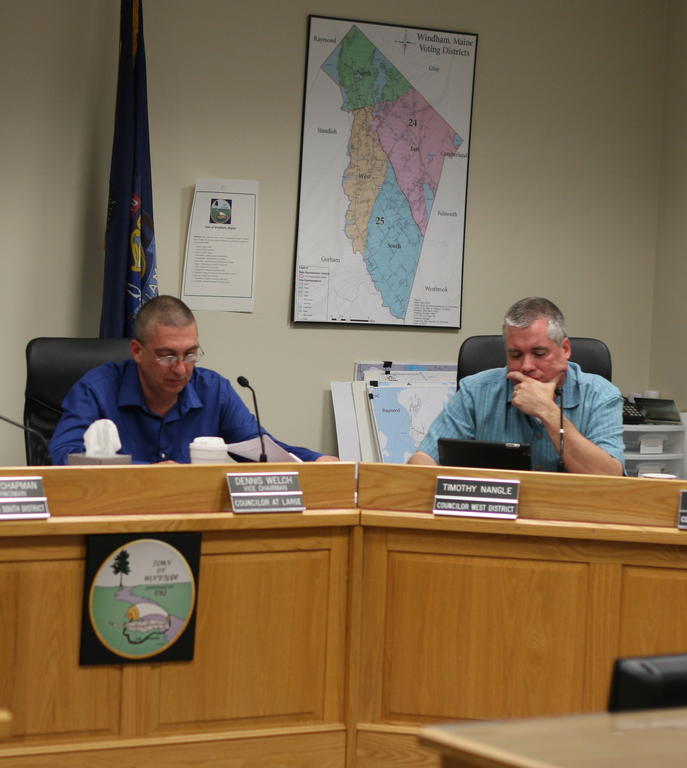
Councilor Dennis Welsh, left, and Tim Nangle at Tuesday’s council meeting, where private road standards dominated the discussion.
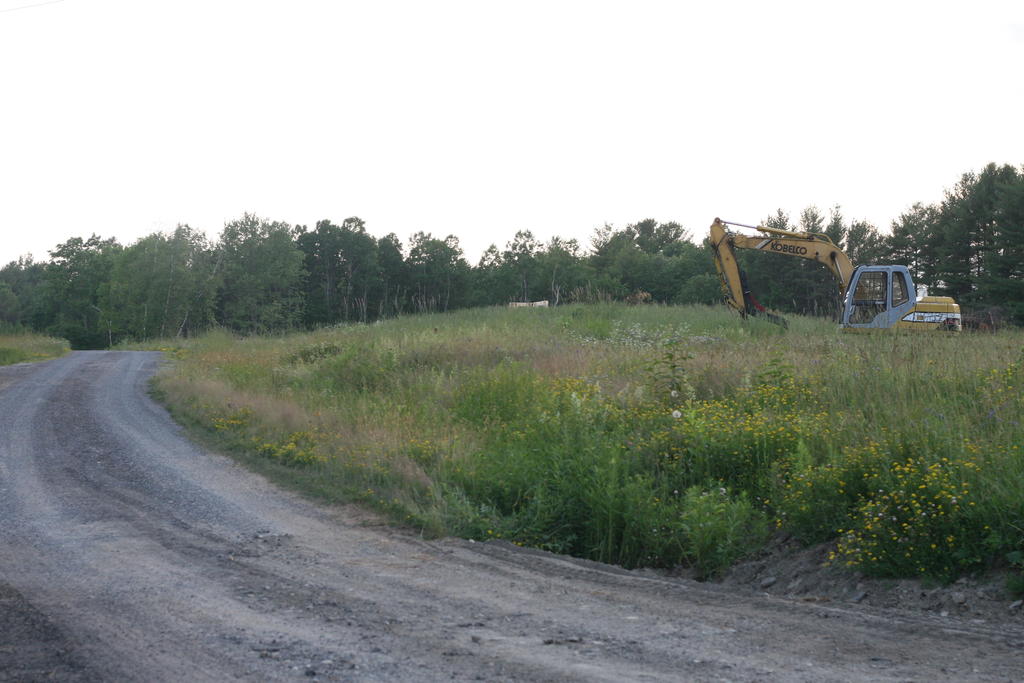
Lazy Acres Lane, a private road off of River Road, is among the private roads facing damage from development, residents say.
Comments are no longer available on this story