
FREEPORT – While Yarmouth councilors have passed a resolution supporting a Portland Metro pilot bus program, and Cumberland was to vote on Aug. 11, the Freeport Town Council decided Aug. 5 that it wants more time to receive public input.
“There were significant enough questions expressed about scope of service and costs that it was felt we should have the full council present, in our chambers, not at a district meeting, which may be hard for residents to get to,” said Councilor Melanie Sachs.
The council’s meeting, for District 3 residents, was held at South Freeport Congregational Church.
The Portland Metro pilot program would provide bus services from Portland to Freeport and in between. If Cumberland and Freeport come on board, Portland Metro will begin seeking grants, determining routes and doing cost estimates. The company would come back later to the three towns for financial commitment.
While the fare from Portland to Freeport would only be $4, taxpayers in the three towns would have to pick up some of the tab for the Metro pilot program. Town Manager Peter Joseph said that the first year would cost the town $20,000; the second year $30,000; and the third year $40,000. The pilot program would end following the third year. After that, the cost to Freeport would jump sharply to more than $77,000 the fourth year and more than $80,000 for the fifth.
Prior to the Town Council meeting, Sachs pointed out that Freeport already is paying $100,000 a year to maintain the Amtrak Downeaster rail passenger station.
Council support or no, some business owners in town favor the bus service. Karen Minott, owner of Casco Bay Fibers, 15 Main St. – at the southern tip of the busy Freeport shopping hub – is one of them.
“It would help,” said Minott, who sells fiber and offers crafting sessions at her shop. “Traffic in town isn’t stopping here. Even if it’s for commuters, people can still take it to go shopping. The more people you can get into crafting, the happier everybody is.”
Minott, who has owned Casco Bay Fibers for a year, says she asks customers where they are coming from, or headed.
“Many say Portland, and Portland’s definitely hopping,” she said. “I always wondered why bus service didn’t come here in the first place.”
The idea for Freeport merchants, Minott said, is to get people from Portland shopping in Freeport. The Town Hall, within sight of her shop and other stores, would be a great drop-off point, she said.
“I think a lot of people don’t have two cars,” Minott said.
Karen McElhaney, a regular at Casco Bay Fibers, agrees that shoppers need to explore other parts of town.
“It’s a good idea to get more people from that end down there to up here,” McElhaney said, pointing to the village center. “That’s the main thing. From down there to up here.”
Donna Larson, Freeport town planner, said she has heard that some people who work in the downtown have transportation issues and would benefit from the bus.
“I would work with businesses to come up with incentive programs to get people on the bus and stay on the bus,” Larson said. “There’s a lot of untapped ideas out there, I think.”
The cost of gas is only one expense that makes it difficult for people to own vehicles, Larson said.
“You also have to buy, maintain and insure a car,” she said.
Larson added that Portland Metro buses are equipped with WiFi, so that people could use the Internet for work purposes.
“I have heard from people who have said, ‘I will be on the bus every chance I get,’” she said. “It is geared more toward commuters more than service, but the schedule is not fixed at this point.”
Sande Updegraph, executive director of the Greater Freeport Chamber of Commerce, said the chamber is not taking a position on the Portland Metro proposal. But the chamber sent notices to its members, encouraging them to attend the Town Council meeting, she said.
Councilor Scott Gleeson, who was absent from the Aug. 5 council meeting, emailed his concerns about the bus pilot program to his fellow councilors. Gleeson wrote:
“I have strong reservations about supporting a program that partially duplicates what can be done already on the Downeaster. While the subsidized version of this pilot program seems attractive, we need to keep in mind that the estimated cost after the subsidies are gone will be approximately $80,000 per year.
“It should be noted,” he added, “that I absolutely appreciate Metro researching and offering this to us as a town. … However, … this doesn’t seem like something we should rush into.”
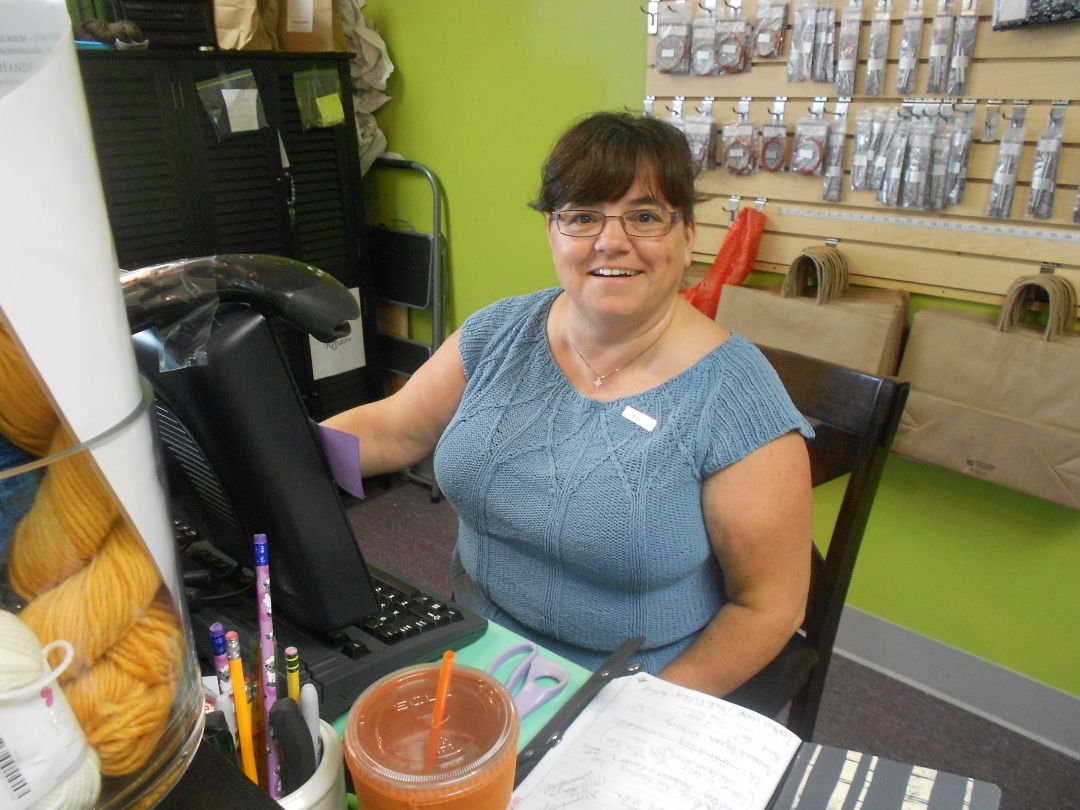 Karen Minott, owner of Casco Bay Fibers, 15 Main St. in Freeport, says bus service from Portland Metro would help people who own businesses on the south side of the main village.
Comments are no longer available on this story