
There are some typical venues one might expect to host an open house – a new business, an art gallery, or a car dealership, perhaps. Now, you can add a sewer district to that list.
The Freeport Sewer District, located at 43 South Freeport Road, will have its open house on Saturday, June 20, from 9 a.m.-noon. Everyone is welcome to tour the plant with a member of the staff. Leland Arris, general manager of the Freeport Sewer District, said he wants customers to know how the sewer district operates, and how it works in their best interest.
Arris is a lifelong Freeport resident, the eldest of eight children, all of whom attended Freeport schools. He graduated from Freeport High School and Bowdoin College. Arris raised a family of four children who attended Freeport schools. The eldest son, John, is in his third term as an elected Freeport Sewer District trustee. Leland Arris was appointed general manager in 2010 after serving as the elected chairman of the board in the prior year.
Arris answered questions regarding the open house at the sewer district, and his thoughts of how the sewer district works.
Q: Who came up with the idea to have an open house at a sewer district, and why?
A: The Board of Trustees has made significant and substantial changes in the operations and infrastructure at the sewer plant in the last five years. Trustees, led by Sally Leland, decided that an open house for the townspeople would offer a nice opportunity for the public to see some of these changes, as well as get a first-hand experience on what the sewer treatment process looks like.
Q: What do you hope people will find out about the sewer district that they might not know?
A: How advanced technologically the entire process of wastewater treatment is at a modern treatment facility.
Q: What will most surprise them?
A: How clean the water going into the Harraseeket really is, particularly as it is compared to the raw sewage coming into the plant from the sinks and bathrooms all over town.
Q: Who owns the Freeport Sewer District, and how is it run?
A: The sewer district is a semi-municipal entity that is directed by a seven-member board made up of community members who have been chosen in town-wide elections. They, in turn, appoint the general manager and employees (four) who operate and maintain the system. The board sets policy and sewer rates to assure that the terms of our state discharge license are met. People who use the sewer system are ratepayers. No tax dollars from Freeport taxpayers are used by, or allocated to, the sewer district.
Q: How much sewage do you take in a day, how is it treated and where does it go?
A: Our yearly daily average is about 300,000 gallons per day of wastewater, but rain events and dry weather create conditions where we can temporarily average over 2 million gallons per day or less than 150,000 gpd. Both of these conditions represent unique difficulties during the treatment process. Our treatment process is called “extended aeration.” It is a speeded-up version of the natural decomposition process whereby we add large volumes of air to assist natural biological breakdown and then disinfect the effluent. Biosolids, spun off at the end of the treatment process, total 24,000-36,000 pounds weekly. They are trucked to Unity, to a Casella Organics facility where recycling takes place. Water, the other result of the process, is discharged as disinfected effluent into the Harraseeket River.
Q: What parts of town get service?
A: All of Route 1 from Yarmouth to Dennison’s Seafood. The L.L. Bean factory on the Desert Road and the Hawthorne House on Old County Road. The center of downtown Freeport and most of the streets in the downtown area. Also serviced by the district are South Street, South Freeport Road and the village of South Freeport.
Q: Since you’re close to clam flats, have there been any problems with clammers?
A: Actually, seven years ago, the clamming industry in Freeport rose up against the sewer district because they perceived a board that was out of touch with townspeople and was not responsive to the concerns and needs of those Freeporters who worked and recreated on the Harraseeket River. Frequent violations of the state discharge permit by the district led to unlawful discharges into the Harraseeket River, which resulted in clam flat closures and stricter oversight by the Maine Department of Environmental Protection. Today, the board has one full-time clammer and three other members who hold commercial clam licenses as elected members. Additionally, today’s trustees are sensitive and responsive to the environmental impact that the plant has on the river and in the neighborhood. It is not a stretch to classify the present board as a group of environmentalists who take pride in overseeing an efficient, modern and well-operating sewer treatment plant while being highly sensitive to the economic impact their actions have upon the ratepayers.
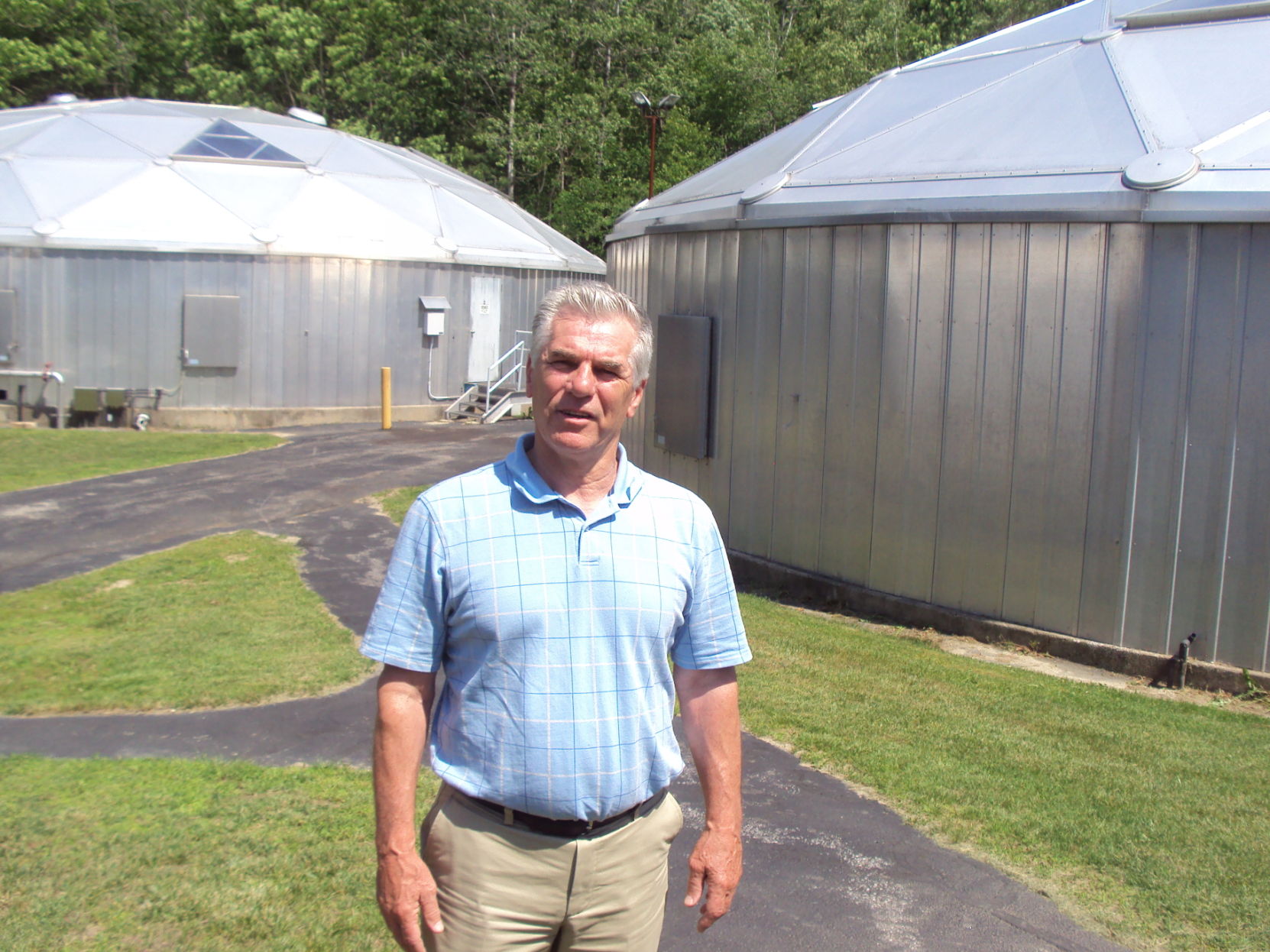 At the Freeport Sewer District, located on South Freeport Road, Leland Arris, general manager, is ready to welcome visitors Saturday so they can see the advanced technology.Staff photo by Larry Grard
Comments are no longer available on this story