
WESTBROOK – October is a month of changing leaves, crisp air and apple picking. Season changes can be therapeutic and welcoming, but for Rosemary Driggers and daughter Jamie Driggers, autumn evokes a harsh memory of a gruesome, unsolved murder that happened 25 years ago this month.
Alice Ann Hawkes, Rosemary Driggers’ sister, was found dead on Oct. 4, 1987, in the Westbrook apartment she shared with boyfriend Stephen Bouchard. Her throat had been slit, according to her death certificate. Her murderer was never apprehended.
“When, if ever, will I feel truly happy again in the fall?” Jamie Driggers said about her aunt, whom she described as more of a sister. “It was hard to grow up normal.”
Hawkes was only eight years older than Jamie.
“Alice would let me tag along with her friends. She had a passion for music and literature. She was someone I aspired to be like. I felt like I lost my guide,” she said. “I was 15, now I’m 40. She was only 23. That’s a little difficult to grasp.”
According to Rosemary Driggers, who lives in Bangor, “Alice and I were friends. We could share. The family would laugh at her stories. Alice was the youngest, but she appreciated that her mom and dad were older. She loved her mom and dad deeply. My mom and I were able to forget about the evil that entered the apartment that day and remember the good times. Her killer did not take that away.”
In 2008 Mark Swett, an independent researcher and Westbrook native, launched a website with the hope of regenerating interest in this case. Swett had no connection to the family, yet he immersed himself into the case.
“Alice cannot speak for herself, so the website speaks for her, through her family, friends and my work,” he said this week. “What happened to Alice in 1987 is a tragedy that should never have happened. We are doing all that we can to see that the murderer of Alice Hawkes is brought to justice. And we are not going away.”
“Mark is like our angel,” Rosemary said. “Because of the website people do love and remember Alice. It’s good stuff. It’s truly heartfelt feelings people have for Alice.”
Although the website helps to keep Hawkes’ name alive, an arrest and trial is the closure the Driggers are seeking.
“Within weeks of the website launch in 2008, we got a call from state police Detective William Ross,” Rosemary said. “He told the family the case would be reopened and actively investigated. He met with my brothers and me. Things looked positive. Then Detective Bill Ross wrote us an email, wished us well and informed us that Detective Ethel Ross would be taking over the case and would contact us. She has not. We would just like a little peace of mind.”
“My father is a police officer,” said Jamie, who lives in Gorham. “I understand there are limitations. Then there’s the side of me that is the 15-year-old girl who lost her aunt. I would think now after 25 years, the longer it takes the more chance there is for evidence to degrade. Nothing ventured, nothing gained. Time is running out for caution.”
According to Ron Allanach, the former Westbrook police chief who worked the Hawkes case in 1987, Westbrook and state police did try everything possible to flush out the facts.
“There had been so many mistakes over the years,” Allanach said. “You can’t take the chance of arresting someone until you are certain. The defense attorneys can raise reasonable doubt, trials are expensive and it victimizes the families.”
Allanach did add that evidence supported the crime as an impulse kill, and that typically in Maine, most homicide victims are killed by people they love and know.
“The state police did look at several people,” Swett said, “a Westbrook Cablevision tech who was working in the area, a person who was laying carpet in the area and even someone who was seen hanging around the area who had recently been released from jail. They even looked at the landlord. All comes back to motive and opportunity. There was nothing stolen from the apartment and no sexual assault. It was a very violent and personal crime.”
According to the Maine State Police website on cold case files, Hawkes was found dead in the Spring Street apartment she shared with Bouchard at 10:55 a.m.
Bouchard told police that he played golf on Saturday afternoon and returned later in the day to find the apartment locked and Hawkes’ car in the parking lot. Bouchard said he was unable to get into the apartment because the deadbolt was in place. He said he did not have a key to it.
Bouchard went to a friend’s house to spend the night and then on Sunday morning returned to the apartment. When he still could not get in, he contacted the landlord, Bob Margiloff, who met him there and let him in.
The two men found Hawkes’ body on the bathroom floor.
There was no sign of forced entry, and investigators have long said they believe Hawkes’ killer came and went through the door of the second-floor apartment. Therefore, the deadbolt would had to have been locked from the outside using a key.
Bouchard broke off contact with the Hawkes family just days after Alice died, according to Rosemary and Jamie Driggers. He also hired an attorney, according to Allanach. Other than initial interviews with police, Bouchard refused to cooperate with the investigation, according to Swett’s website and numerous articles.
“I have nothing to say,” said Bouchard, reached this week at his home in Belgrade. “I’ve given my statement to the police department and that’s all I have to say.”
No one from the Maine State Police would comment, but in 2009, Lt. Brian McDonough said the Hawkes case was still considered an open, active homicide. He said police had a good idea of how Hawkes was murdered and who was involved, and that it was just a matter of proving it. He said applying the latest technology to the evidence collected more than two decades ago could provide police with the proof they’re looking for.
“The person who killed Alice Hawkes had better keep looking over the shoulder,” said Swett, “because we are never going away. Justice will be done.”
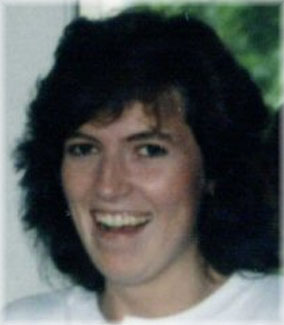 May 26, 1964-Oct. 4, 1987
Comments are no longer available on this story