
SCARBOROUGH – Harold Snow built his father’s canning company to
national prominence, and became a part ?of local history.
As Harold Snow lay in a hospital bed dying of leukemia, the doctors gave him some morphine to help control the pain, after which his daughter, Dr. Susan Snow, suggested he close his eyes and try to get some sleep.
“But I’m not tired,” said Snow.
Those were the last words Snow ever spoke. He died Nov. 29. And with all he did in his long life, it’s a wonder the 94-year-old wasn’t utterly exhausted. But that’s the kind of person Snow was, says his daughter, a man of quiet strength and infinite curiosity who never tired of tinkering, whether it was the machinery of his father’s Pine Point cannery, which he perfected to patent-winning precision, or simply a wobbly wheel on the undercarriage of his great-granddaughter’s stroller.
But the problem with trying to recount the life of a near-centenarian is that he has so few contemporaries. Snow built his father’s business, the F. H. Snow Canning Co. to national prominence, employing literally thousands of local residents at the family’s Pine Point plant, which, at its peak, churned out 150,000 cans of clam chowder per day. Still, despite his importance to the local economy, Snow’s memory might have easily faded into history, but for his daughter, who has worked for many years to preserve both his story and that of the town he loved, spearheading efforts that led to the 2007 books that documented Scarborough’s first 350 years.
“It’s just really important, I think, that my father not be forgotten,” said Dr. Snow.
This is his story, in the words of his daughter.
***
Harold Forest Snow was born on Aug. 22, 1917 in Blue Point, Maine, on the Snow Road. Growing up, he worked in the family fish and clam business that his mother and father, Cora M. (Tarbox) and Fred H. Snow, ran out of their home.
From the age of 10, Harold worked all summer in his father’s Central Fish Market seven days a week from morning to night cleaning and filleting mackerel, swordfish and halibut. He was one of many Pine Point children who attended Thornton Academy on a scholarship from Augustus Moulton. He graduated from Thornton in 1935 and received his degree chemistry from MIT in 1939. There he was recognized for his work in the purification of cellulose with the first ever-Wiley Award in chemistry. His research attracted the attention of Dupont, which awarded him a coveted research chemist position near Buffalo, N.Y.
He returned to Scarborough in 1941 to join his father in the F.H. Snow Canning Co. when it had just a small local distribution. He worked in the company at every level. He shoveled coal for the boilers, lugged truckloads of potatoes up two stories, and sawed wood for construction. A perpetual food chemist and engineer, he was constantly inventing new products and the machinery to produce them. He streamlined the canning process to accommodate a national market volume; and the company gained national prominence with his help.
Over the years, there were thousands of people from the Scarborough, Saco, and Old Orchard Beach area employed in the F.H. Snow Canning Co. Clam diggers and lobstermen worked there off-season. Hundreds of people in the community worked out of their homes shucking out the huge volumes of clams for the canning and wholesale clam business. The Pine Point area fire whistle was at the factory, and many working there volunteered their time during work hours for community emergencies.
Snow’s opened three shucking and canning plants in New Jersey and a fish and sardine cannery in South Gouldsboro. Harold designed and built the machinery and equipment for those factories in the Pine Point machine shop. Their heavy production during World War II helped supply the troops. Harold expanded the Snow’s line of products that reached beyond their famous clam chowder to include a wide array of canned products.
Snow’s became the first company to promote a movie in 1956 when Twentieth Century Fox released the Rogers and Hammerstein film, ‘’Carousel,” based on Capt. Enoch Snow, Harold’s great-grandfather. Harold and his father had a clambake on the beach in Old Orchard for the cast, including Gordon MacRae and Shirley Jones, as they headed to the filming in Boothbay Harbor. Snow’s promoted their chowder by serving it to those attending the premiere in every major theater across the country.
Harold was Snow’s president and a vice president of Borden’s when they merged with the Borden Co. in 1959. He continued on as the inventor and engineer that he always was. Although he had a desk in the office, when anybody came unannounced, they would find him among the machinery with Spike or Joe Snow, Harry Pearson or Mike Silvera with his shirtsleeves rolled up as he worked intently on one problem or another.
Harold’s technical background and energy were forever at the service of the community. When the Blue Point church had outgrown its little white-steepled structure in 1953, Harold designed and drafted the plans for the beautiful new Gothic brick church. As architect of the church, he oversaw every detail of its construction from the groundbreaking to the final landscaping.
Harold built the Snowberry Lobster House and Park, which was a prominent site of the 1958 Scarborough 300th anniversary celebration, as well as the site of many ham and fried clam dinners to benefit the church building fund. To further help with the fundraising, he established a clambake under a giant tent just outside the canning company in Pine Point. When the necessary funds were raised, the tent and equipment were moved across the street by the Thurlows to spark the now very famous and prosperous Clambake Restaurant in Pine Point.
Harold and his father donated the land to build the St. Jude’s Catholic Church that towered just below the site of the old Snow’s Canning Co., and Harold personally installed their pews. He also donated the marshland surrounding the Snow’s factory to the town of Scarborough.
Harold always quietly promoted his community, church, and Pine Point’s canning company. He volunteered his time as the organist and choir director for the Blue Point church for over 40 years. He served as president of the Organ Guild and he oversaw the installation of the hundreds of pipes of the renowed Austin organ in the Blue Point church and maintained and tuned the organ all those years.
After retirement, he continued to design and build things. His garden fed a community of 18 grandchildren and 26 great-grandchildren. He had a walk-in freezer filled with hundreds of packages of food he prepared to give to visitors, friends and family. He was forever cleaning fish and cutting clams. He regularly made up as much as 30-gallon batches of tomato and clam spaghetti sauce, smoked finnan haddie, applesauce, Indian pudding, chicken and beef broths and soup, New England boiled dinner and clam, oyster, corn, lobster and fish chowders and stews and many others. Besides cooking the turkeys, chickens and hams for many families’ Easter, Thanksgiving and Christmas dinners, he made his own gravy, cranberry sauce, and oyster and chestnut stuffing. He put on family clambakes each year. At the age of 85, he hosted his granddaughter’s wedding with a clambake for a hundred guests, which he himself cooked and served to many people “from away,” including reporters and photographers from the New York Times that showed up to cover the wedding. In 2004, he was named Thornton Academy Alumni of the Year and addressed the graduating class.
He lived quietly, as he always lived since returning to Scarborough nearly 70 years ago, in the same building in which he first attended school 90 years ago and his father attended before him. In his living room, there was a photo of Marjorie, the girl next door whom he married and who passed 30 years ago, leaving an empty place he could never fill.
Many of the kindnesses and services he provided in the community will never be known except to those who were the beneficiaries. Yet there is little around his community that does not have something of his life’s work upon it, and few people who do not know him. He could cook, fix and design and build anything. If you asked him what he did in his life, he would simply say that he worked with his father and raised his family because he was ever modest and enjoyed celebrating and recounting the accomplishments of others.
He is survived by four daughters, Dr. Susan R. Snow, Beverly J. Franklin, and Linda C. Moulton of Scarborough and Cora Jean Snow of Lexington, Mass,; a brother, Kenneth Snow of Scarborough; as well as 18 grandchildren and 26 great-grandchildren.
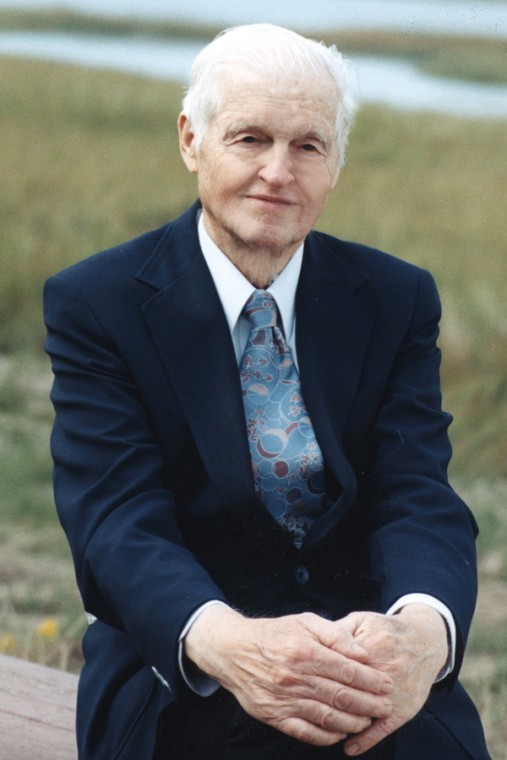 Harold Snow, in his mid 80s.
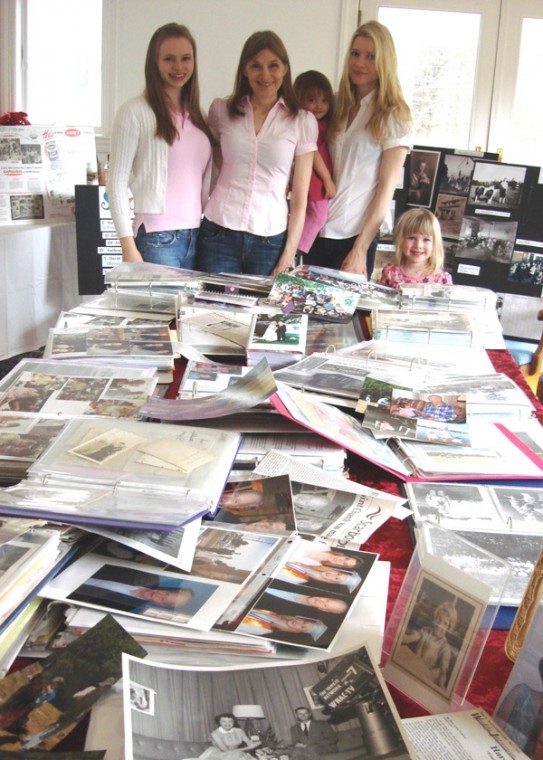 The long life of Harold Snow is kept in the many memories
collected in the Scarborough home of his daughter, Dr. Susan Snow,
standing center, shown with her daughters Ariana Bratt, left, and
Heidi Snow, right, and Heidi’s daughters, Sadie and Sophia. (Photos
contributed by the Snow family)
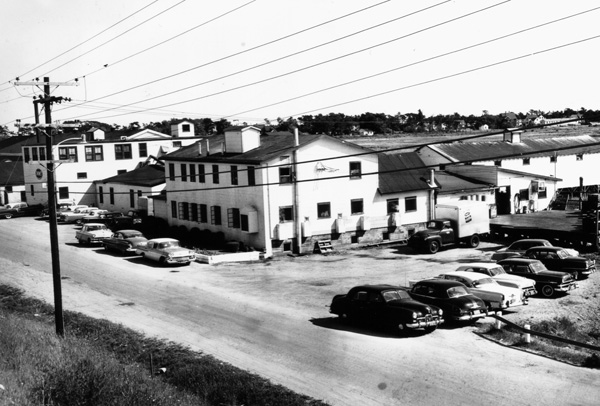 The Snow Canning plant on Pine Point Road, as it looked in
1955.
Comments are no longer available on this story