
Willy, one of two goats on Shady Oak farm in Cape Elizabeth, approached a fence with curiosity and pushed his nose between the metal bars of the swinging gate. He leaned in, neck cocked, inviting a scratch behind the ears.
More skittish than Willy, the dozen or so sheep and lambs on the other side of the pen don’t seek out human contact, they shy away from humans.
Kelly Strout, co-owner of Shady Oak farm, said it’s an innate reaction because sheep are prey animals. “They’re afraid you’re going to eat them,” she said
In the past month, five lambs have been born at the farm with at least two more on the way. Five students will adopt the lambs and groom them for competition in the fall. The students compete in the Cumberland County Fair as members of the 4-H Club.
Similar to a dog show, a sheep show focuses on showmanship -measuring a person’s command of the animal. This includes the animal’s poise and stance, its ability to follow direction and its success navigating through an obstacle course.
Because sheep are skittish around humans, it can be difficult to train them for competition. Fortunately for Kelly Strout’s daughter, Becca, her adopted sheep, Laurel, is a docile pet and has proven relatively easy to handle.
Becca has raised sheep since she was 7. At 13, raising sheep is old hat for Becca and her expertise shows as she explains the weaning process, the different kinds of sheep breeds: wool and meat, and areas of sheep showing.
Training has already begun for September’s competition. Strout, her friend Sonja Barker, 13, of South Portland and three other youths will teach their sheep to stand correctly, walk on leads and maneuver through an obstacle course. But the training begins with simply familiarizing the lambs with their handlers.
Getting acquainted begins immediately after birth. Sheep don’t require much assistance during birthing. However, once the baby is born, Becca, or another family member, is there clearing its nose of birth muck and making sure the lamb is breathing. This immediate interaction helps begin the bonding process.
Soon after birth, the sheep trainers start working with their charges. They leash them with thick rope called halters and start walking them around the grounds. Sometimes, the sheep don’t cooperate. “They refuse to get on the halter,” said Becca.
Strout said she believed the value in 4-H’s program is immeasurable, kids learn responsibility and goal setting, they practice letting go and they gain a deeper understanding of the food chain.
“They have to spend a lot of time with the animals,” said Strout, adding the work teaches the kids discipline, work ethic and commitment. Barker said that she logged about 100 hours training sheep last year.
Because they do spend so much time with the sheep, the kids grow attached, said Strout. But after the competition, Strout and her husband Andy Strout, have three options: keep the sheep on the farm, sell them to breeders or send them to market for meat.
“We can’t keep them all,” said Andy Strout, though he admits they have kept quite a few.
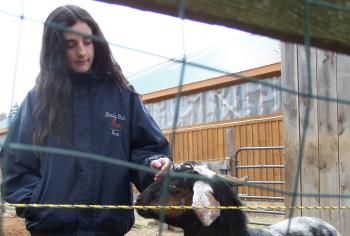 Becca Strout and Willy the Goat on Shady Oak Farm in Cape Elizabeth.
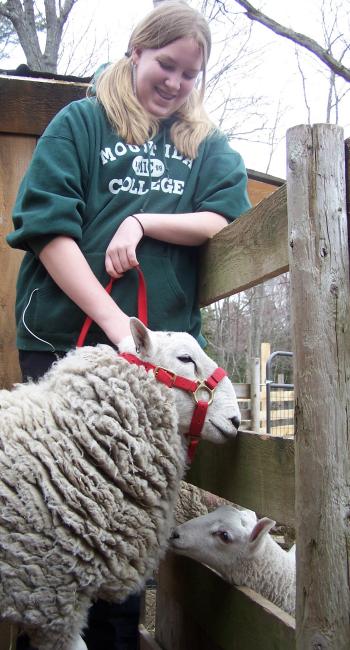 Sonja Barker, 13, with her sheep Kona. Barker raises sheep at Shady Oak Farm in Cape Elizabeth for competition with the 4-H Club.
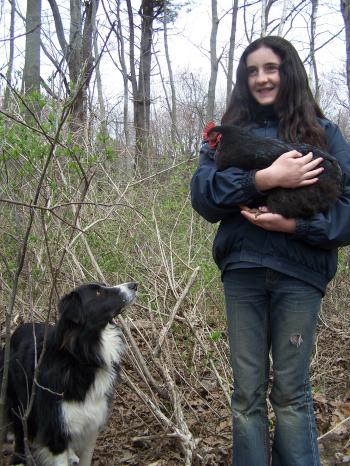 On her family’s farm in Cape Elizabeth Becca Strout raises sheep, chickens and horses. Pet dog Ricochet fancies himself a chicken herder.
Comments are no longer available on this story