
CAPE ELIZABETH – Just weeks after the Cape Elizabeth Town Council decided people have a constitutional right to sell artwork and other “expressive matter” in Fort Williams Park free of licensing fees, the site’s advisory commission is taking a decidedly different strategy on tobacco.
At its Sept. 19 meeting, the Fort Williams Advisory Commission held a “preliminary discussion” on enacting a smoking ban within the historic 80-acre park, which includes the iconic Portland Head Light. However, support for the proposal was sufficient enough for Commission Chairman Bill Brownell to announce that a formal vote will take place at the commission’s Oct. 17 meeting.
From there, a recommendation would be sent to the Town Council, which would likely refer it to the ordinance committee, putting a council vote on the ban into the new year.
According to Public Works Director Bob Malley, the idea for a smoking ban in Fort Williams Park was first presented “five or six years ago” by two former town councilors. The advisory commission voted not to pursue a no-smoking policy, Malley said, because “there wasn’t enough energy to move it forward at the time.”
In a Sept. 23, 2008, memo to the Town Council, the advisory commission noted that it has voted unanimously “to recommend that we deal with this issue under our current ‘carry-in, carry-out’ litter policy by placing some additional signage in the problem areas and monitor the results.”
“If this does not improve the situation, we will look at some other steps before looking at the need for an ordinance,” the memo read.
Ultimately, the Town Council moved ahead on a proposal to ban smoking in the park, but deadlocked 3-3 in an Oct. 15, 2008, vote, killing the idea at the time.
But, as Brownell noted, times have changed.
“I think it’s something that deserves our attention now,” he said, pointing to Portland’s no-smoking policy for all of its public parks. “We have a leash policy. We have a no-alcohol policy. We have a carry-in, carry-out policy. All of them have been very well followed. I can’t imagine this would create much of an issue.”
“Really, this is a no-brainer,” said commission member Gregg Frame. “I’m 100 percent in favor. I don’t even know what the debate is here.”
“We have the Fort Williams Foundation injecting all this wonderful stuff into the park,” said Frame, referring to the ongoing arboretum project. “The mere smell of a cigarette 50 yards away can just ruin someone’s experience in there.”
Any smoking ban would be park-wide, including rental properties on Officers’ Row, commission members agreed, while the policy would be one more message to give drivers, to prevent tourists from lighting up when deboarding buses at the lighthouse.
According to Malley, park rangers at Fort Williams “do not have enforcement authority” and wouldn’t be able to cite anyone who violates the policy, if adopted.
Instead, commissioners said, they would largely depend on the ban to be “self-policing,” with park patrons pointing out the rules to violators.
“It this were to come to fruition, would we be going up and pulling cigarettes out of people’s mouths,” asked Malley, rhetorically. “No. But you’d have to have some signage to send a message, and do it tastefully and appropriately. There would be an educational learning curve.”
Smoking already is prohibited at state parks and beaches, including Crescent Beach State Park.
In July 2011, South Portland enacted a ban on use of tobacco products within 25 feet of all 21 parks, beaches and outdoor recreation facilities owned or operated by the city, including the municipal golf course on Wescott Road. The move came after members of the South Portland High School Interact Club collected more than 1,000 cigarette butts during a one-hour excursion to Willard Beach.
Malley has said the problem is not quite so serious at Fort Williams, referring only to “some butts” found on beaches, paths and parking lots.
The South Portland ordinance carries a fine of $100 for the first public use of smoking or chewing tobacco, $250 for the second offense and $500 for each subsequent violation.
However, an amendment added at the request of Police Chief Edward Googins proclaims that, “Nothing in this ordinance shall prevent the enforcement agent from obtaining voluntary compliance by way of warning, notice or education.”
That mirrors the approach in Scarborough, which also enacted a ban on smoking within 25 feet of public beaches in 2011. Scarborough Police Chief Robert Moulton has said enforcement of his town’s ban amounts to “mainly relying on peer pressure to help convince people to obey the restriction.”
Scarborough fines start at $100 for each offense, up to a maximum of $500.
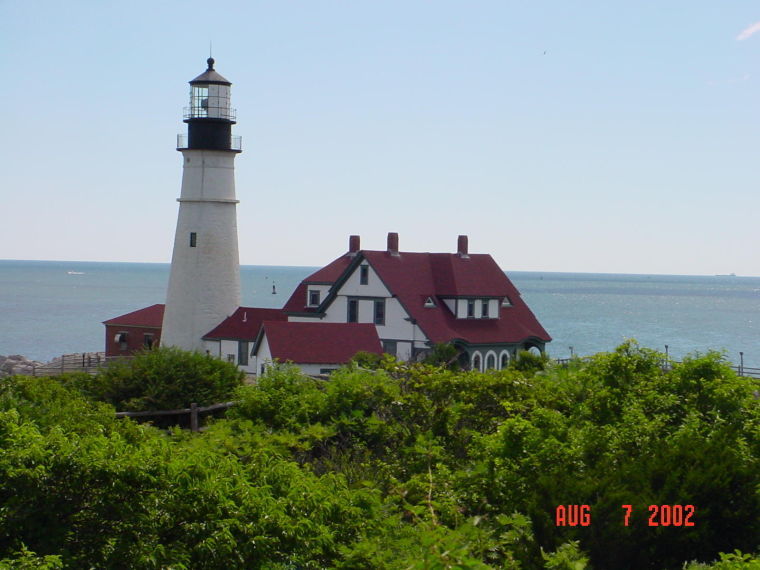 Cape Elizabeth officials are revisiting a proposal that could ban smoking at Fort Williams.
Comments are no longer available on this story