
WINDHAM – In the second of a three-part series, Windham Town
Manager Tony Plante and Scott Hayman, chairman of the Town Council,
discuss how the town should deal with growth, among other
issues.
Editor’s Note: This is the second of a three-part series probing Windham politics and ongoing issues. This week’s article focuses on the growth in Windham, the town’s new communication policy and municipal land speculation.
Windham is a small town to some, especially those who live along its more rural roads. For others who daily travel North Windham’s commercial center, Windham seems more like a city with big-city issues.
It’s been said that the contingent comprising “Old Windham,” which is said to view Windham with rural blinders on, and “New Windham,” mostly people who have moved here and expect more in the way of services, have been colliding for a generation now, especially since the rise of the regional commercial hub along Route 302.
With this rise in population and business growth come other challenges, such as governing a diversified community. Some have wondered whether Windham has outgrown its current form of government. They say Windham should perhaps move to a mayoral form of government, such as the ones that govern the larger towns further south along Route 302.
The Lakes Region Weekly recently sat down with Windham Town Council Chairman Scott Hayman and Town Manager Tony Plante to discuss these and other issues.
Q: Windham is becoming a big town with big issues. Is the town manager form of government still adequate or should we move to another form of government?
Plante: The council-manager form of government is used in cities and towns vastly larger than Windham and many smaller than Windham. It’s about bringing professional management to government regardless of size, and the issue of city versus town, people tend to think of cities as being bigger than towns. That’s not necessarily the case. I think particularly since Maine enabled the adoption of home-rule charters by towns in the 1960s, early ’70s, whenever it was, that the distinction is a lot smaller. It’s about a name and it used to be about how they were chartered and their form of government. There’s very little distinction now.
I think the council-manager form of government is effective in communities that are far larger than Windham that deal with issues that are as and more complicated and sophisticated than we are dealing with. I think Windham has been going through a sustained period of change and that often leads to controversy.
Hayman: I think the town manager form of government is effective. It’s been effective in the past. It’s still effective. As a town that’s growing as fast as it’s been growing in the past 10-15 years, we obviously are going to go through some growing pains and some adjustments that need to be made. I think we’re in the process of dealing with those growing pains. I don’t think that the growing pains were foreseen earlier.
Q: What growing pains specifically?
Hayman: Monetary issues, how to pay for infrastructure. Fortunately, and a lot of people won’t agree with this, the Windham tax rate has been pretty low when you look at surrounding communities, and we’ve been fortunate to keep it that way. But at some point that’s going to come back and bite you, if you don’t plan ahead and look down the road and foresee the growth that you’re going to have and not be able to accommodate that growth effectively.
Q: Tony, you were recently criticized for your role in lack of action on River Road and the look of North Windham. What do you say to these charges?
Plante: I think for most managers, this is not about me. In fact I remember when I sat through the interview process, one of the questions I was asked by the selection committee was something to the effect of, what are your goals for Windham. And I sat there and said, well, this isn’t about my goals, it’s about what the community’s goals are for Windham. And it’s my job to help define what those are, to help implement those, to work with the council.
So it’s not about my goals or my agenda, it’s about Windham’s agenda. What is Windham going to be when it grows up? So, that’s part of it. The other part is, regardless of who the town manager was, regardless of who’s sitting in that chair, that person is going to be a convenient outlet for people’s frustrations, and that doesn’t mean I do everything right, but I don’t do everything wrong, either.
To look at North Windham as an example, depending on who you talk to, you get different reactions to North Windham. As a community we seem to have a sort of love-hate relationship with it. People complain about it, but we’ve got a lot of businesses up there, businesses that provide jobs, that contribute and support the community in many, many different ways. You go down to Gambo Fields on a Saturday in the fall and you go to a Little League game in the spring, who are all those teams sponsored by? Where do other community and civic organizations get their support from? Businesses.
It doesn’t mean there aren’t some challenges. And North Windham, frankly, has been in the process of developing into what it is since I came here and visited my cousins when my aunt and uncle lived on Pettengill Pond and I was maybe 6 years old, so it’s a little hard to tag me for what North Windham looks like since it’s been going through a pretty consistent degree of change for the last 40 years.
Q: Do you find your role different now from when you came to town in 1996?
Plante: It changes every time the council changes. One of the things in my view that the manager has to do is be able to adapt to the needs of the people that are elected by the voters. If you can’t adapt to serve the different people, the different personalities, the different perspectives and agendas, then I don’t think you’re going to last very long.
At any given moment, there are going to be people who think the manager isn’t leading enough and others who say the manager is leading too much. I’ve been criticized both ways. Regardless of what the issue tends to be, if we’re not accomplishing something they want then one answer is the manager isn’t leading enough. If it’s going in a direction they don’t like, then maybe the manager is leading too much.
Q: Speaking of leadership, last summer and fall, the council adopted a new communication policy between town staff and the council members. The upshot seems to be that councilors can’t talk directly with town employees; they have to go through the town manager. Is that the policy in a nutshell?
Hayman: I don’t see it as that. I don’t have a problem talking to town employees. I don’t necessarily talk about town business.
Plante: It’s about establishing appropriate boundaries. Over the years, there have been some practices that have been allowed to evolve, which can be unhealthy if they’re abused. And that can be either from the perspective of a councilor of the perspective of the employee. You’ve got an employee who’s unhappy about something, some work assignment. It could be a legitimate complaint about something going on in their office or department or not. But instead of going through the system, they go to a member of the council. The council does not have management control of the department. Their management control extends to one employee, the manager.
Now, they also appoint the town assessor and the attorney, and that’s fine, but with respect to the operation of town departments, if there’s an issue, employees need to work through the system. There are policies and procedures in place that if something is wrong, they can let someone know. This isn’t about preventing people from being whistleblowers. This isn’t about them being deprived of their Constitutional rights. We were very mindful of people’s First Amendment rights when we looked at this policy. This is a policy that was reviewed by the town attorney. What this does is establish boundaries.
There’s absolutely nothing wrong with an employee having a conversation with a councilor, but they each need to recognize and respect their roles and their function in the organization. This isn’t about employees making an end run around management or the town manager for that matter, and going to the council with a complaint. Nor should this be a way for councilors to cultivate moles in a department to undermine what’s going on in a department. There’s a real potential for abuse. Have we really seen that in Windham? I don’t think so, but I think we certainly became more aware of the potential that people might not understand the boundaries?
Q: Why was the policy necessary?
Plante: It became apparent that some people didn’t know where the boundaries were or that there were even legitimate boundaries, and there are. When you’re elected as a member of the council, and I’ve heard people say this, “Well I’m not saying this as a member of the council, I’m saying this as a citizen.” As long as you sit on the council, you are a member of the council. You can’t separate yourself from that. As long as you’re a town employee, yes, you may be a town resident, you may be a citizen and yes you do have rights and I absolutely defend those, you go to the podium like any other citizen, you can take part in the process. There’s a legitimate way of doing that. But you don’t use your position as an employee to say, “I don’t like what my supervisor told me to do. I don’t like what my department head’s doing, and I’ve got a buddy on the town council that I’m going to go talk to and I’ll get them to fix this.” That’s not how it works, and it can’t work that way.
Q: Sounds like that would be chaos.
Plante: Chaos. Anarchy. Absolutely. The council/manager role of government has its roots in the progressive reform era of the late 19th and early 20th century. When you look at corrupt machine politics in America’s largest cities following Reconstruction and leading up to World War I, that’s where the council/manager form of government came from, to professionalize local government, to get away from the abuses and corruption that were rampant especially in the larger cities, but I’m sure not only there. The idea is to establish fairly clear boundaries between management and policy.
Q: People have said the communications policy doesn’t allow employees to put election signs on their lawns. Is that true?
Plante: No.
Q: Tony, you wrote a note to staff on election night clarifying the policy. What was the purpose of doing that?
Plante: It had nothing to do with election night. It was coincidence. It was a Tuesday night I had off. So I had time and I owed the employees a communication on the policy. It’s a coincidence.
Q: What do mean you, “owed?” Were employees confused?
Plante: I knew there were some questions about and I had it on my to-do list for several days to write an e-mail about this. And I kid you not, it’s election night, it’s a Tuesday night, I have more time. So I’m going to finish this e-mail and I’m going to send it. Did I think about it being 10 minutes before the polls closed? No. I mean, I’m sorry, but Prince Machiavelli I am not. I don’t have time to think up all these schemes. I wish I was that clever.
Hayman: Somebody does.
Q: There has been talk lately that no one is serving on the ethics panel. The ethics panel, however, can only be utilized at the direction of the Town Council. If a case ever arose that involved a majority of the council, that majority could block a review. Isn’t the charge as written similar to putting the fox in charge of the henhouse?
Plante: Well, it’s not just the Town Council. There are four boards that the ethics board has jurisdiction over: Town Council, Planning Board, Zoning Board, Board of Assessment Review. The complaint first has to go to the respective board. They decide whether it gets referred to the ethics board, and that all happens in public. So, I don’t know if that addresses the question about the fox raiding the henhouse, but last I knew foxes raided henhouses under the cover of darkness, not in the middle of a public meeting with the lights and cameras on.
Q: Late last year, after a particularly contentious meeting, a pamphlet appeared at the next meeting with the agenda dealing with “Negativitis.” Who was responsible for that?
Plante: I have no idea.
Hayman: No idea.
Q: It smacked of town councilors not being able to take the heat that some of their decisions engender. If people are criticizing the council, is it appropriate to label those people as suffering from negativitis?
Hayman: I take criticism. Criticism is a part of life. It’s a part of everyday interactions with human beings. I can take any type of criticism that’s directed my way. I feel that I’m doing the best that I can and what I feel is the best for the town when I vote. At some point, if the majority of the townspeople and citizens don’t think that we as a council are going in the right direction or making the right decisions, they’ll let us know by voting us out.
There is a group of people that are unhappy with recent decisions that the council has been making. Do I think that group of people reflects the majority of the 17,000 people in Windham? No. But they do need to be acknowledged and listened to. But at the same time, what they view as right for the town of Windham may not be what the rest of the town of Windham views as right. So, you have to be able to take that criticism, but you also have to take that criticism and do what you feel is right. And at the end of the day, you need to be able to look at yourself in the mirror and say I’m doing what I feel is right. Is it right? Maybe not, but that’s what I feel is right.
Q: This council, maybe more so than any others in recent memory, says they’re pro-business. Previous councils had a goal of getting to a 70/30 split between commercial and residential taxes. We don’t hear that mantra anymore, but in general, is economic development going to save residential taxpayers’ money?
Plante: Ah, the 70/30 by 2010. Short answer, at least for me, is no. There are many reasons why we want to pursue economic development and attracting business to the community in some degree of balance, and we’d have to figure that out as a community, but commercial and industrial development will not lower your taxes. It will add jobs, it will add opportunity. It will create more economic diversity in the community, but it will not lower property taxes. At a large-enough scale, it would help spread the tax burden around a little differently, but our tax base right now is $1.9 billion. In order to move the needle on the tax rate it would involve in any one year a project worth $100 million to $200 million to be even noticeable. So how likely is that to happen? It isn’t.
Hayman: I just think economic development is good for opportunity. It’s good for jobs. If we can bring jobs to Windham, it’ll save people from traveling to Portland. It’ll save them from traveling. There’s no reason why we can’t have professional jobs in Windham. Suit-and-tie jobs, manufacturing jobs, and that will support, again, the mom-and-pop businesses that are already here and the shops that are already here. Do I think that it’ll lower property taxes? Probably not. Do I think that they will help keep residential property taxes from going up? I think they will, but that’s my own view. Taxes are never going down, but we can slow the pace that they rise.
Q: People are always critical of how government spends their hard-earned tax money. In Windham, some people question the town’s purchase of land at Anglers Road intersection with Route 302. Why did the town purchase that property?
Plante: Let’s straighten a few things out first. The town didn’t purchase the property. The Windham Economic Development Corp. purchased the property. Now some people will say, yeah, the WEDC is the town. But the WEDC is a private, nonprofit corporation that was formed to undertake economic development projects. A majority of its directors are appointed by the Town Council but it is not synonymous with the town. Functionally, it’s a subsidiary of the town with its own board of directors. It exists to serve the economic development needs of the community, but it has its own board of directors and its own mission.
We were looking at the Whites Bridge Road/Anglers Road intersection as a barrier to economic development in that area and that it was a safety problem first. But as long as that intersection remained as it was, it was going to be problematic. And we’ve seen over the past 10 years people try to develop that corner and not be successful. So, that’s ultimately why the WEDC and the town in providing a mortgage stepped in.
Hayman: And that was the only way we were going to be able to fix that intersection was to become owners or have some of control over that land. The WEDC owns it, but with the stipulation of the loan that we’ve got, we’ve got an easement to create and align that intersection when and if the money becomes available.
Q: Should the town be speculating on land? Do you regret purchasing the property now knowing it may be a while before the realignment project gets state funding and that the lots might not sell due to the economy. Was that a good decision looking back?
Hayman: Jury’s still out. I don’t think it was bad. I think (it was something) we needed to do. We needed to get that intersection aligned. I think the opportunity was there for us to purchase it, or the WEDC to purchase it, and I think that over time that it will be viewed as a good choice.
Plante: Well, the opportunity was there and the longer you wait the more likely that opportunity would go away and you’d lose the opportunity to do the realignment forever. So, do we wait for MDOT funding? I don’t think that’s an absolute necessity. We’ve been talking about new TIF districts, new impact fees. I think it’s pretty clear that unless things change dramatically the way the state funds its transportation needs that we’re not going to be able to rely on MDOT. To the extent we can influence the process and get that part of the plan and get some funding, then sure. Do I think that’s a guarantee? No, I don’t. But I don’t think it has to be either.
Q: By buying and promoting available land for a business park, isn’t the local government essentially competing with the private broker or private landowner because there are already so many open sites in town?
Plante: Let’s be real. If you look around at other cities and towns, people who practice economic development on a far larger scale than we do, what are some of the things they do? They buy real estate. They develop business incubators, they buy property and create business parks, and they sell property. I’m not suggesting we do economic development on this scale, but that’s part of what economic development does. You try to go in and create conditions for businesses to come in. It’s not about competing with local developers or property owners, but if it’s about creating an opportunity for businesses to locate when they might not have been able to otherwise, I think that is what economic development is about. We had two property owners prior to WEDC who were not able to make anything happen on that property.
Q: Right, Peter Busque and Tony Vance.
Plante: To say that WEDC is now competing, well you had two people for whatever reason, and I’m not throwing stones at Peter Busque and Tony Vance, but whatever was going on there they weren’t able to make it happen. By WEDC partnering up with the town to create conditions where we can align the intersection and make it more attractive from a business development perspective, if that’s a win, then everybody wins.
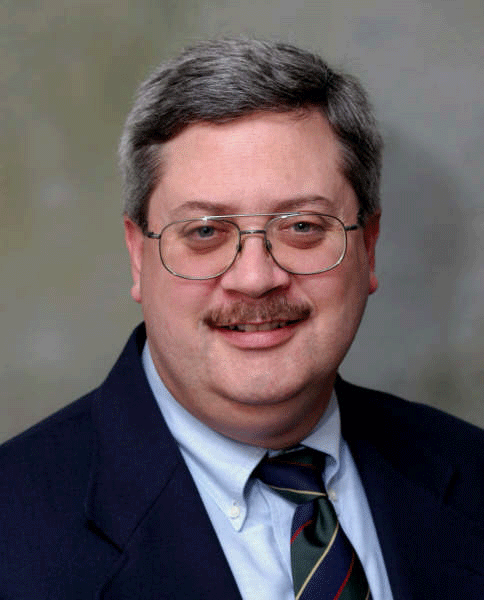 Tony Plante, Windham town manager
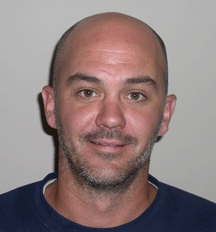 Scott Hayman, Windham Town Council chairman
Comments are no longer available on this story