
A report urging South Portland leaders to protect some of the last large tracts of open land left in the city is drawing attention from conservationists seven years after it was developed and quietly shelved by the City Council.
Since the 2001 report was released identifying 23 parcels for possible easement or purchase, more than half the sites were developed and only two preserved.
Many of the developed parcels were the remaining green spaces in densely built neighborhoods.
“I think it would be very safe to say that we had a strong pro-development Council during those times,” said City Manager James Gailey.
Now, the South Portland Land Trust and the city’s Conservation Commission hope to update the Open Space Strategic Plan and give its preservation goals an urgency they previously lacked.
But the groups will need the support of the City Council and city manager to do it.
“Simply put, the pace of development has been so fast in South Portland that this plan has become outdated in seven years,” said Bethany Woodworth, board member with the private, nonprofit South Portland Land Trust.
Woodworth said the rapid loss of open space that was identified for protection in the original report shows the need for a new plan that has support from the City Council, Planning Board and neighborhood groups.
Although no formal proposal has been made to the City Council, members seem to be open to the idea of evaluating and creating an inventory of undeveloped lands left in the city.
“I’m a firm believer in keeping our knowledge up to date on city land use,” said City Councilor Maxine Beecher.
“Updating the open space plan would fit well with our current efforts to establish rules and processes for wetlands and shore land development,” said Beecher, who chairs a city committee establishing rules for wetlands development.
“I support updating the plan,” Gailey said. “But at the same time, I’m interested in the strategy… I would not be in favor of any consultants being brought on to do the work.”
The 2001 open space plan was developed by a committee of city officials and residents. It created a priority list of large undeveloped tracts, environmentally sensitive areas and remaining neighborhood green spaces that might be protected through purchase or easement.
Parcels were scattered throughout the city, in the hands of private landowners, businesses, the state and municipalities.
But there was no attempt by the City Council to adopt the recommendations or preserve the parcels, though two identified wetlands – Sawyer Marsh and land next to Trout Brook – were conserved in 2007.
“The list of undeveloped parcels in South Portland is relatively short and is growing shorter with each passing year,” the report stated. “This is the case in South Portland even more than in most of the other communities in the region that have already addressed open space issues.”
In February 2007, the South Portland Land Trust sent an initial letter to city planners and former City Manager Ted Jankowski requesting that the Open Space Plan be reviewed and updated. But the group did not get a response.
Woodworth said the land trust plans to try again to initiate talks. She noted that there seems to be a greater effort by the city to recognize and preserve fragile parcels than there was a year ago.
Those efforts by the city include developing a new wetland ordinance, increasing membership on the Conservation Commission, and working with businesses and the state Department of Environmental Protection to clean up the Long Creek watershed near the Maine Mall.
The land trust is meeting with the City Council-appointed Conservation Commission Thursday to discuss how to organize a revision of the 2001 Open Space Strategic Plan.
Barbara Dee, who chairs the Conservation Commission, said there is new energy and interest in the city to “balance environmental concerns with development pressures.”
“Our priority is to update the open-space plan,” said Dee about the city’s volunteer conservation board. “We need to start to protect more open space in South Portland and save what is left.”
Planning Director Tex Haeuser, who helped develop the original open space plan, said an updated inventory of undeveloped parcels would help the city, after it implements the new wetlands ordinance.
Wetlands are considered vital to the ecology, because they absorb storm water runoff, protect groundwater, provide flood control and help keep nearby bodies of water healthy.
The ordinance, in part, would require developers to compensate the city when projects are built on wetlands. Developers would put money in a reserve account that could be used by the Conservation Commission to protect other marshy areas in the city.
Haeuser said an inventory of environmentally sensitive parcels would be a tool for the commission, as it invested dollars in wetlands conservation.
Gailey said if the city participated in updating the plan, it would need “to include a new inventory of parcels that haven’t been built on. Many parcels in the open space plan have fallen to development.”
Councilor Tom Blake said he believes that “10 to 15 parcels easily could be added to the list of sites to consider for protection to replace the ones that are gone.”
As example, he mentioned Spit Falls, the city’s only cascading waterfall, as a prime parcel for possible protection that was not identified in the 2001 report.
The waterfall previously was in an undeveloped area that could not be accessed easily by the public. But the surrounding land has undergone development. Now it is located on a undeveloped, single-family house lot off outer Highland Avenue.
Blake also noted that the city could seek an easement on property owned by Central Maine Power that runs parallel to Highland Avenue, from Hinckley Park to Scarborough.
The land runs underneath tall power lines. It already is used recreationally by snowmobilers, ATV riders and hikers. A conservation easement would allow improvements to the trail and guarantee public access.
The original list of 23 parcels was developed after a careful evaluation.
The parcels were reviewed on how well they supported wildlife, protected groundwater, provided flood control, offered natural beauty, allowed for recreation, added to quality of life, buffered neighborhoods and linked trails.
Some of the key pieces remain hidden in congested areas of South Portland and are undeveloped today.
An example is Barberry Woods, behind the former Irving gas station off Broadway. The 23-acres parcel has a rare stand of locust trees, a large pond and a brook where alewives once spawned. The parcel is owned by the city of Portland.
Blake hopes a conservation easement could be obtained to keep the land preserved and develop trails for recreational use.
Another site is the former Petrlik property, 37 acres near Highland Avenue, not far from Hinckley Park. In 2005, ownership was transferred to Pilgrim Road LLC of Massachusetts.
Blake, a founder of the South Portland Land Trust, said it will be vital to gain the full Council’s support for a new inventory to take place.
He said the city is requiring developers to put money in reserve accounts – for wetlands development and for development near the Long Creek watershed – that could be tapped for land protection.
“If the city endorsed an updated open space plan, it’s more apt to become a reality,” Blake said.
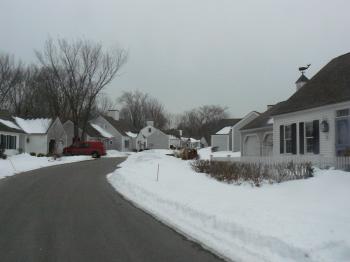 A 10-unit subdivision of one-story town homes was built about six years ago at Cobb’s field, a wooded site next the Willard Beach parking lot. The site was on a list of 23 parcels that a city committee targeted in 2001 for possible land protection.
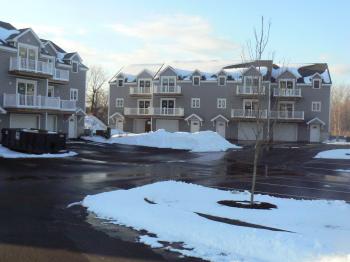 The new condominiums off of Stanford and Henley street were built in 2006-07 in an open field behind the Betsy Ross House. The site was placed on the open space list in 2001, because it was one of the few remaining green spaces in a densely developed neighborhood off Broadway, near Southern Maine Community College.
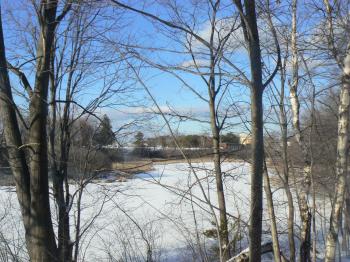 The Barberry Creek land is 23 acres behind the former Irving gas station. The property, owned by city of the Portland, has a large pond and views of Forest City Cemetery and Global Oil Co.
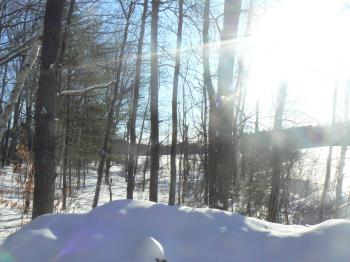 The former Petrlik property is 37 acres that includes woodlands and open fields off Highland Avenue and Stillman Road, near the Cape Elizabeth border.
Comments are no longer available on this story