
YardScape, a statewide effort through the Cumberland County Soil and Water Conservation District to reduce the use of fertilizers, insecticides and herbicides, has been particularly beneficial for one Westbrook resident. Margaret Brown’s lawn at her home on Park Road was chosen as a test site for the program. For about two months, Courtney O’Neill, the education and outreach coordinator for the program, has been working with Brown to make her lawn healthier and more beautiful. On Monday, O’Neill spoke with the American Journal about how YardScape works, why she’s treating Brown’s lawn and what others can do to improve their own yards.
Q: What do you do for the Cumberland County Soil and Water Conservation District?
A: I’m the AmeriCorps volunteer and my title is stormwater educator and outreach coordinator. I’ve been here since January and my service is ending in October. I had worked for a conservation district in Pennsylvania, and then I moved out here and got this job.
Q: What is YardScaping?
A: It’s a holistic approach to lawn care, looking at every lawn as a different environment. We look at improving the soil and working from the ground up. The reason this all started was that there was an increase in lawn-care companies hired in Maine and there’s a correlation between that and water quality issues.
Q: How do you determine the problems a lawn has?
A: We look at things like the kind of weeds that are growing, which usually indicate what the larger problem is. We’ll go out to a site, take a soil test, send it the University of Maine Cooperative Extension Service, and it’ll come back with some recommendations – if the pH is off or there’s compacting. It’s a combination of the soil test and looking at the lawn.
Q: How did you chose Margaret Brown’s lawn as a test site?
A: We do adult education classes in 14 communities in southern Maine. She took the class last year and got a soil test. This is the second year the program has been going on, and we realized we didn’t have a lot of test lawns.
Q: What have you done to treat her lawn?
A: We aerated the entire lawn to get more air and nutrients in. We top dressed an inch and a half with compost because it was lacking in organic material. We overseeded with grass seed to choke out the weeds. It’s been a lawn on drugs for somewhere between 35 and 40 years. We’re trying to invigorate it and put a little life back into it and grow some healthy grass.
Q: How long will it be before her lawn is healthy?
A: We’re looking to do some things in the fall. I think by next spring her lawn is going to be at least 90 percent better. The best time to take care of your lawn is really in the fall.
Q: Other than through adult education classes, how do you teach people about YardScaping?
A: We do a point-of-sale program at 16 hardware stores and provide them with educational materials. We’ve done door hangers in South Portland and some in Biddeford so people know there are alternatives out there and you can get a nice lawn without pesticides.
Q: What are some indicators that a lawn is unhealthy?
A: Compacting is a big one – if you can’t drive a shovel into the lawn. Also if you’re having a lot of dandelions or if you’re getting brown patches in the grass.
Q: What steps can people take if they think their lawn is unhealthy?
A: Take a soil test and figure out what’s going on there. Give our office a call or take an adult education class. They are starting in September and going through October. It’s a two-hour class. We give you a packet and answer any questions.
Q: How much work does it take to get a lawn back to normal?
A: It all depends on where your lawn is. Simple things like mowing high are a good start. You mow it 3 inches higher than normal and leave the clippings, which are a natural fertilizer. It makes it less susceptible to weeds. That kind of thing isn’t time consuming, it’s just a shift in your regular practice – just a different way of looking at it.
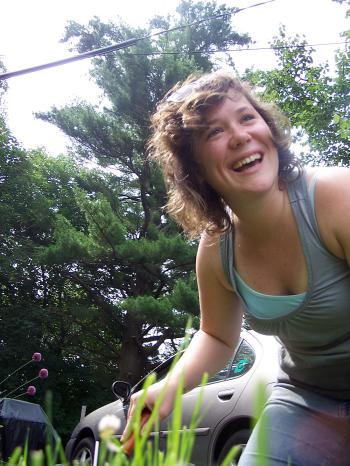 Q&A with Courtney O’Neill – Looking at lawns, from the ground up
Comments are no longer available on this story