
FREEPORT – Freeport is the site of the Feb. 27 premiere of “Maine at Work,” a play and presentation written and performed by David Greenham and sponsored by the Maine Humanities Council.
There will be an opening reception, and the 30-minute performance is free. Greenham bases the program on historical documents about the state’s work history, but also adds some humor and little-known facts and anecdotes to keep audiences interested.
Greenham spent 14 years as the producing artistic director for the Theater At Monmouth, and has been a theater artist and arts administrator for more than 25 years. He works as the program director for the Holocaust and Human Rights Center of Maine on the campus of the University of Maine at Augusta, where he is also an adjunct professor of drama, and teaches at the Senior College.
This summer, Greenham will tour “Maine At Work,” and also will play Duke Frederick and Duke Senior in Bath Shakespeare’s production of “As You Like It.” He also makes an appearance in Mike Miclon’s upcoming film, “Richard 3,” which will have its premiere at the Lewiston Auburn Film Festival.
He serves as the chairman of the Regional School Unit 38 Board of Directors, and is a member of the boards of the Celebration Barn Theatre and the Augusta Symphony.
Greenham, 53, lives in Readfield with his wife, Jeri Pitcher. He also has resided in West Kennebunk and in Dexter. Their son, Zach, is in his first year of school at the University of King’s College in Halifax, N.S.
He took a few minutes last week to answer questions about “Maine at Work.”
Q: Would you call yourself an actor, a teacher, an artist, an administrator or some combination? What would you say about your capacity during the “Maine at Work” presentation in Freeport?
A: I truly don’t think of it that way. I researched, wrote and perform the piece but don’t think it breaks down to one “role” or another. When I research and especially when I talk to people, I try to listen with an eye (ear?) toward what kinds of issues or ideas might resonate with an audience. I approach these kinds of projects with some ideas, but mostly with an open mind. I’m usually inspired by an old Ray Bradbury quote, “You’ve got to jump off cliffs and build your wings on the way down.” So I dive in as an artist, researcher and interested goober and see what happens. One thing that’s new for “Maine at Work” is a plan to include some locally specific information in each performance. So I’ll be looking at Freeport and Cumberland County statistics and will include some of that in the show.
Q: Tell us how you happened to develop “Maine at Work” – why and what was involved?
A: I’m incredibly lucky to have the Maine Humanities Council approach me every once in a while to create a touring project. The original one, “A Civil War Veteran Returns,” was created in 1988 and was based on the style of a program called Rhode Island History Theater of Ideas, which was something that former humanities council Executive Director DeeDee Schwartz learned about. Somehow they contacted me about it, and it’s turned into a pretty wonderful friendship over the years. “Maine at Work” is the third of the more recent shows. “Taxing Maine” was the first and “As Maine Grows” was the second. In this particular show, I’ve become very interested in the idea of what we saw about ourselves. By the fall of this past year, I decided one piece that would be interesting was to look at speeches by Maine governors. It turns out that I read just about every public speech (mostly inaugural speeches and state of the state speeches) by every Maine governor. It was a very interesting process. As the “play” started to come together, I mostly took the issues that I heard over and over again, and then filled in the blanks. Now, in these final weeks of tinkering, I’m taking some things out to make more room for some of the interesting anecdotal stuff that’s going on that doesn’t necessarily correspond to the rather bland outlook on jobs that the government has. The play ends up with the basic question of whether we’ll follow the path that’s likely for us, or the path that’s less likely. What’s clear is that it won’t all stay the same in Maine with regard to jobs and our population. So change is coming. How will we affect that change?
Q: You traveled the state as you developed “Maine at Work,” and spoke with many people. Talk about that experience.
A: Well, if you haven’t traveled around the state, get in your car and go. Maine’s a pretty wonderful place. I’m constantly shocked when I hear that people who live here have never been north of, say, Brunswick. Venture out to Topsham or Bowdoinham at least. Come on. I love traveling in Maine, and since the first theater company I was involved in here was a touring theater, I’ve always had a fondness for the unique character of Maine’s communities. All the people I’ve talked to over the year and a half or so of planning this project, no one once said, “I’m here in Maine against my will.” There’s excitement about what’s going on in Portland, Bangor, Lewiston/Auburn and Augusta. But they’re also excited in Eastport, Belfast, Rangeley, Farmington, Houlton, Ellsworth, Lille, Biddeford, Hollis, Kittery, Dover-Foxcroft, Jackman, and Gardiner, too. Mainers are willing to talk and share stories. So talking to people about their jobs was very easy and interesting.
Q: What’s the goal of “Maine At Work?” How many shows are you planning, and have many have you already presented?
A: The goal is to get people thinking and talking about work and jobs in Maine. That’s the core of the humanities. So while the performance is important, the discussion after the performance is just as critical. I suspect that there will be issues and ideas that come up during the discussion that will be incorporated into the performance. I’m treating this show as more of a living and breathing creature than the previous shows.
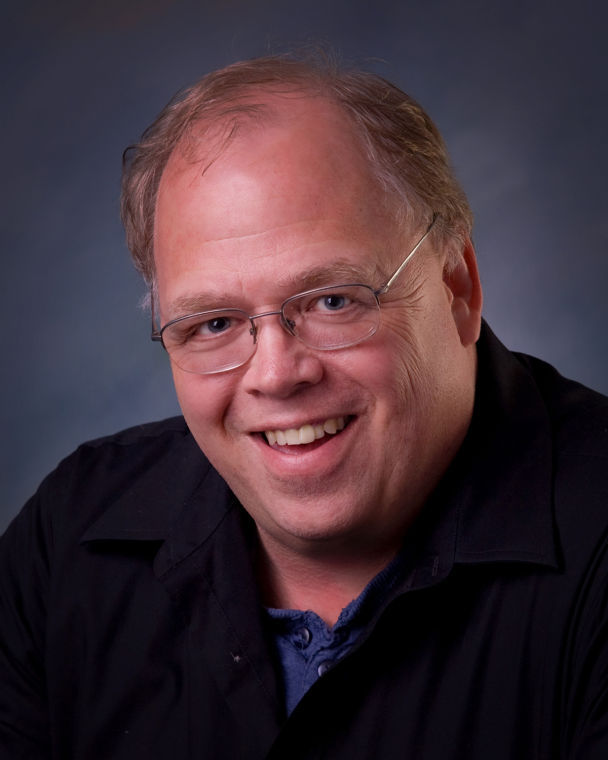 David Greenham says the goal of “Maine at Work,” which he wrote and will present in Freeport this week, “is to get people thinking and talking about work and jobs in Maine.”
Comments are no longer available on this story