
A story in this month’s Maine Women explores sexism in the workplace in the 21st century.
When Mary Kahl became an attorney more than 30 years ago, male colleagues often acted dismissively or underestimated her abilities.
Instead of worrying about their views, Kahl said, she tried to use it to her advantage.
“Often, the male lawyer I faced in court would not work or try as hard, thinking that a younger, female lawyer was not up to his skills,” recalled Kahl, who is in private practice in South Portland. “I actually found it amusing and would not try to dispel their notions. If they did not want to work that hard, it was fine with me.”
Kahl, 57, said she never tried to act like “the helpless female,” but made sure she demonstrated in court that she was just as capable as her male peers.
There’s no question women have made strides in the work force from decades ago, moving into fields long dominated by men. But veteran female workers who bridged the gender gap in the 1970s and 1980s say that sexism still exists. It’s just different.
It’s no longer unusual to see women attorneys practicing law. Women now outnumber men in law schools. But, Kahl said, a gender gap exists in the legal profession at its highest levels, where there are few senior partners. Men control the legal profession, and there is a higher attrition rate among young female lawyers than there is for men, she said.
“People no longer question my abilities because I’m a female,” said Kahl, the former staff counsel for the city of South Portland. “But women in my field continue to struggle to reach positions of power.”
Sarah Standiford, executive director of the Maine Women’s Lobby, said that barriers at the top are common.
“There is good news and bad news for women in the labor force,” Standiford said. “Women almost equal men in terms of numbers employed. We are changing the rules and changing the landscape. The workplace does not look the same as it did 40 years ago.
But Standiford sees patterns of discrimination in the modern workplace.
Women are concentrated more in lower paying jobs, and do not have adequate support systems to meet personal caretaking duties at home while working full time in careers.
“There continue to be major challenges for women to balance work and family responsibilities,” she said.
She noted that “occupational segregation” has led women to work in lower-paying jobs in health care and education. At the same time, there are not enough women pursuing jobs in high-growth fields, such as engineering, technology and science.
“More workplaces need to understand that women need the ability and flexibility to leave and pick up their children or take care of them when they are sick,” she said. “They need to understand that women can be good and responsible family members and good workers, too.”
Molly MacAuslan, a mid-career health care consultant with two daughters, said she has faced those conflicting demands.
“I tend to think of this as a societal, rather than a workplace, issue, because women are still primary caregivers to the generations on either side and therefore have competing commitments,” said MacAuslan, of Cape Elizabeth. “So many educated and competent women I know, who can afford to, choose to work part time or don’t work at all but contribute their time to the community.
MacAuslan noted that while many white-collar professions seem to have the mindset?of supporting women in the workplace, they are bottom heavy with women up to the managerial positions? Executive positions are filled almost exclusively with men.”
MacAuslan said she has chosen to work as a consultant and run her own business. She said it gives her the flexibility she needs to be successful.
Elizabeth Sawyer, who is in her early 50s, believes that many people just assume that men are in charge at businesses. There is a societal perception that women support the men who make decisions.
Sawyer said she no longer gets the same odd looks she did when starting out in her career as a municipal tax assessor.
She said that years ago she often would get “funny looks” checking into hotels by herself or face questions from the public who expected that the person appraising their property would be a man.
That no longer happens. But, Sawyer said, the public often will still seek out male workers in her office at the city of South Portland, even though she is running the show.
“When the public comes in and there’s a chance to talk to me or one of my subordinates who happens to male, every time people think he is charge, whether he is younger of older than me.”
Standiford said that change in perceptions and business practices are essential to keep Maine economically strong in the future.
The Maine’s Women Lobby is working to show the state’s leaders that women workers are critical to the state’s growth and stability.
Standiford noted that women are primary caregivers at home and a driving force in the Maine economy, making up the majority of owners of new business startups.
“Our leaders need to understand that in order to be economically viable in the 21st century, discrimination against women in the workplace needs to end and we need to invest in women’s education and training.”
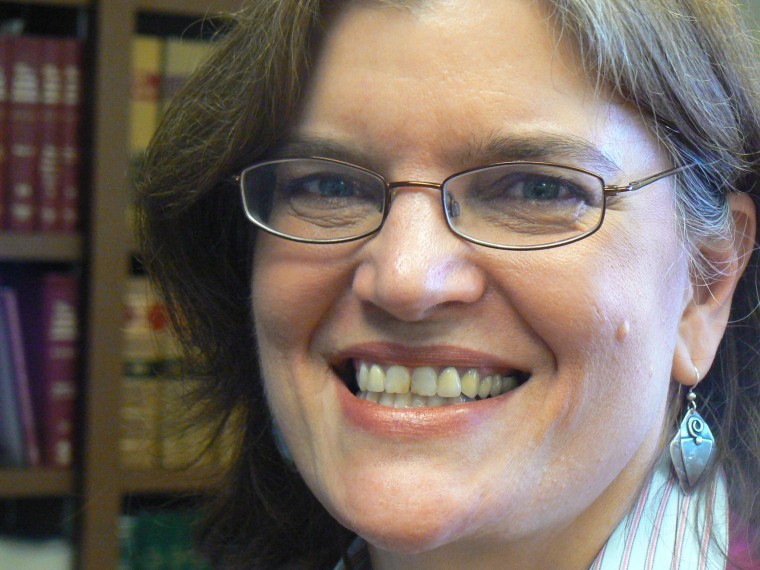 “Women in my field continue to struggle to reach positions of power,” says South Porland lawyer Mary Kahl.
Filel photo
Comments are no longer available on this story