
CAPE ELIZABETH – Abutters to a decommissioned water tower in Cape Elizabeth recently asked to join forces with the town defending against a lawsuit filed in July by Verizon Wireless, after the company was denied a permit to install antennas and other equipment on the tower in March.
In their effort to join the lawsuit, Avon Road residents Priscilla Armstrong, Pavel Darling and Brad Kauffman, are arguing that the cell tower plan is not permitted under current zoning rules.
On the other side of the issue, more than 100 people, including cell phone users complaining of spotty coverage in the area, have signed an online petition in hopes the town will allow Verizon to add antennas to the tower.
On Oct. 17, Verizon filed an opposition to the residents’ motion to intervene, stating, “The neighbors do not have a demonstrated interest in the subject matter of this litigation” and “even if they do, the (town of) Cape Elizabeth adequately represents those interests.”
The neighbors, represented by attorney Daniel Nuzzi of Brann & Isaacson in Lewiston, were scheduled to respond to Verizon’s opposition on Nov. 4, after the Current’s deadline.
According to Armstrong and Kauffman, the proposed construction of an antenna on the water tower is not permitted in the Residence A zoning district where the tower is located. Representatives of Verizon Wireless assured residents that it would pursue a rezoning process for the facility. Instead, Verizon applied for a building permit, which the town denied. That decision is now being challenged by Verizon.
On Monday, Armstrong said, “our request is to be interveners in the lawsuit, so our voices as neighbors – affected by how the lawsuit is ultimately resolved – will be heard.”
On behalf of the abutters, who are focusing on zoning rather than health or aesthetic issues, Armstrong said, “We are not trying to thwart cell phone coverage in Cape Elizabeth.”
The residents’ main concern is that Verizon did not go through a rezoning process, which would have given the community, as a whole, a chance “to weigh in” on the proposal, which Armstrong said includes negative visual impacts, decreased property values and increased noise and traffic.
“The other big issue for us is that there are federal regulations about towns and municipalities and their obligation to ensure cell phone coverage,” said Armstrong. “I don’t think anybody on Avon Road feels this is a ‘not in my back yard’ issue. It is about how a company can come in and try to do something and not go through appropriate town processes.”
Kauffman agrees.
“If we have a rezoning process, then the Town Council and the Planning Board will have the opportunity to fully vet the proposal, to consider all points of view and weigh all of the relevant considerations,” Kauffman said.
“My position is that the town has been quite clear and decisive about the fact the proposal does not comply with the zoning ordinance, and the federal law does not require the town to approve the application,” he added. “The rezoning process is the right way to do this. I am hopeful the federal court will agree.”
Verizon filed its lawsuit in U.S. District Court in July alleging that the zoning board violated the local zoning ordinance and a federal law when it upheld the code enforcement officer’s decision to deny the permit application.
According to Verizon’s attorney, Scott Anderson, of Verrill Dana law firm in Portland, the federal Spectrum Act requires municipalities to approve requests for installing equipment on existing structures, such as the 80-foot-tall water tower, provided that the proposal does not substantially change its physical dimensions.
On Oct. 14, the town filed a motion in court asking a judge to partially dismiss the lawsuit because Verizon has run out of time to pursue an appeal in Maine Superior Court, as required by state law.
The residents say the likelihood of additional cell phone carriers wanting to install equipment on the water tank would increase if the court does not uphold the town’s zoning board decision.
On Sept. 30, Verizon asked a judge to deny the town’s request for dismissal of Count 2 of the lawsuit. The legal issue before the court, said Anderson, “is whether this facility may be installed under the provisions of the federal Spectrum Act (Count 1) or the town’s wireless telecommunications ordinance (Count 2).”
He claims that the lawsuit can be addressed in one federal court proceeding because cell tower placement is “a blend of local and federal law” and “not simply a local issue.”
The proposal is to repaint the existing structure and to add antennas, HVAC equipment and a generator to the existing site. The tank will not be expanded or extended, according to Anderson.
In addition, the new cell tower should be permitted under the town’s zoning ordinance because it fits the ordinance’s definition of an “Alternate Tower Structure,” he said.
“We always try to (build) on these existing structures because usually it’s already supported by the town and the neighbors,” said Anderson. “It’s quicker to permit, it’s sometimes less expensive to build, and we can get the service up and running more quickly.”
Meanwhile, the code enforcement officer, the zoning board, and residents, claim that the cell company’s proposal does not meet the local ordinance and is not allowed in the Residence A zoning district.
While the neighbors have requested to be parties to the case, Anderson said, “We’ve suggested that the town adequately represents their interests. I don’t think any additional parties are necessary.”
Nuzzi wrote in the motion to intervene that “the current litigation is in its infancy and the granting of the interveners’ motion will not result in prejudice to any party, nor will it impose any delay” to the case.
According to Nuzzi, “If Verizon is successful in this action, the tank will be converted into a wireless facility, and will remain standing indefinitely. If Verizon is not successful, there remains the possibility that the tank will be removed,” thus improving the aesthetics of the Avon Road neighborhood. It would also “likely result in increased property values,” Nuzzi said in his motion.
The 69-year-old water tower owned by the Portland Water District has not been used for water storage since 2007. It does, however, have an existing antenna licensed by the Federal Communication Commission, said Anderson, which the district uses to communicate with the town’s wastewater treatment plant.
“When residents found out the water tank was empty they were angry it hadn’t been taken down,” Anderson said.
Responding to the residents’ motion, Anderson claims that the abutters are less concerned about the proposed cell phone facility and more concerned about the fact the water tank still exists in their neighborhood.
Armstrong said, “Not only did we feel Verizon tried to circumvent proper town procedures, we are concerned about the fact the water district has not maintained the tower.”
According to Anderson, “The neighbors have been more vocal than I have seen in 150 Planning Board proceedings over the last 10 years.”
Regarding the lawsuit, he said there are essentially three issues that will be heard by a judge within the next couple of months.
“The first and most important one is whether or not the federal law required the town to give us a permit,” said Anderson. “Then there are two other issues – whether the court is ever going to look at the state claim, and whether the court is going to allow the neighbors to come in (to the case) as well.”
Verizon plans to file another brief in December, said Anderson. The judge is expected to make a final decision on the lawsuit sometime next spring, he said.
Meanwhile, supporters of a cell tower on Avon Road have been circulating an online petition saying that having poor cell phone coverage in Cape Elizabeth is a nuisance and is unsafe. The petition is also the first time that the Town Council will be hearing from those in favor of the tower, according to creators of the petition.
“While the people opposed to the addition of cell transmitters to the water tower stand by their reasons, it is our belief that a vast majority of Cape Elizabeth residents see the need as more than a matter of aesthetics or a convenience,” according to the petition. “It is a matter of safety.”
As of Tuesday afternoon, 138 people had signed the online petition.
For Chris Munz, a Cape Elizabeth resident who works from home, without reliable cell coverage in the southeastern portion of town, “It’s tough to do business. It’s possible calls can be cut in and out, and that could be millions of dollars of business out the window.”
He said there are people like him in Cape Elizabeth trying to earn a living who would be personally affected if Verizon’s lawsuit were unsuccessful.
“It’s detrimental to the economy,” said Munz about the lack of adequate cell phone coverage, and the town’s denial of Verizon’s permit.
“It’s unfortunate that they are putting up a fight about this, to be honest,” he said.
A CLOSER
Supporters of a proposed cell tower facility on Avon Road in Cape Elizabeth have been circulating an online petition, which can be found at: www.ipetitions.com/petition/cape-elizabeth-cell-tower-petition/.
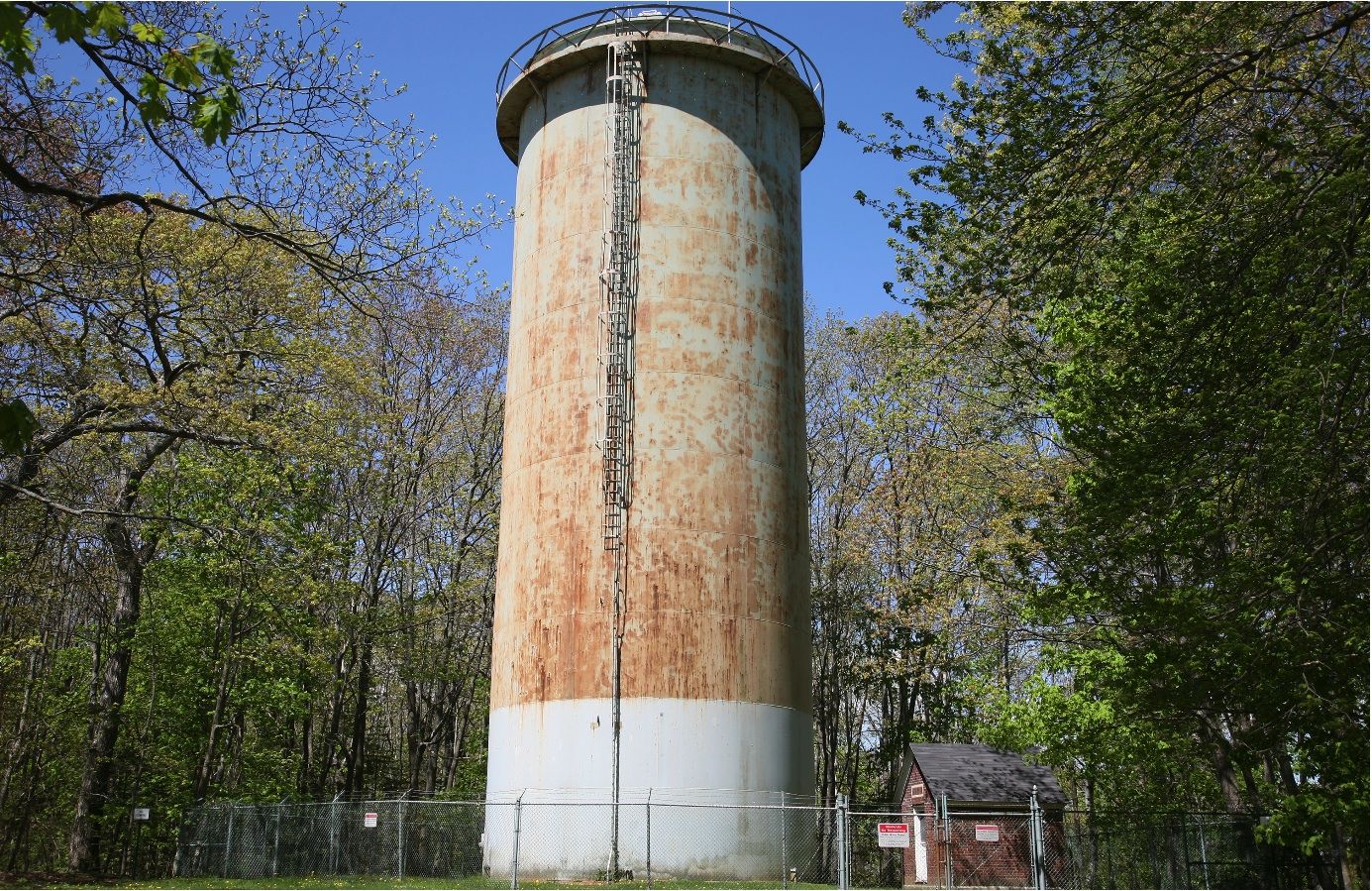 A decommissioned water tower on Avon Road in Cape Elizabeth is the focus of a lawsuit filed by Verizon Wireless in July after the town denied the company a permit to install telecommunications equipment on the tower. The tower is owned by the Portland Water District and houses antennas that the district uses to communicate with its wastewater treatment plant.
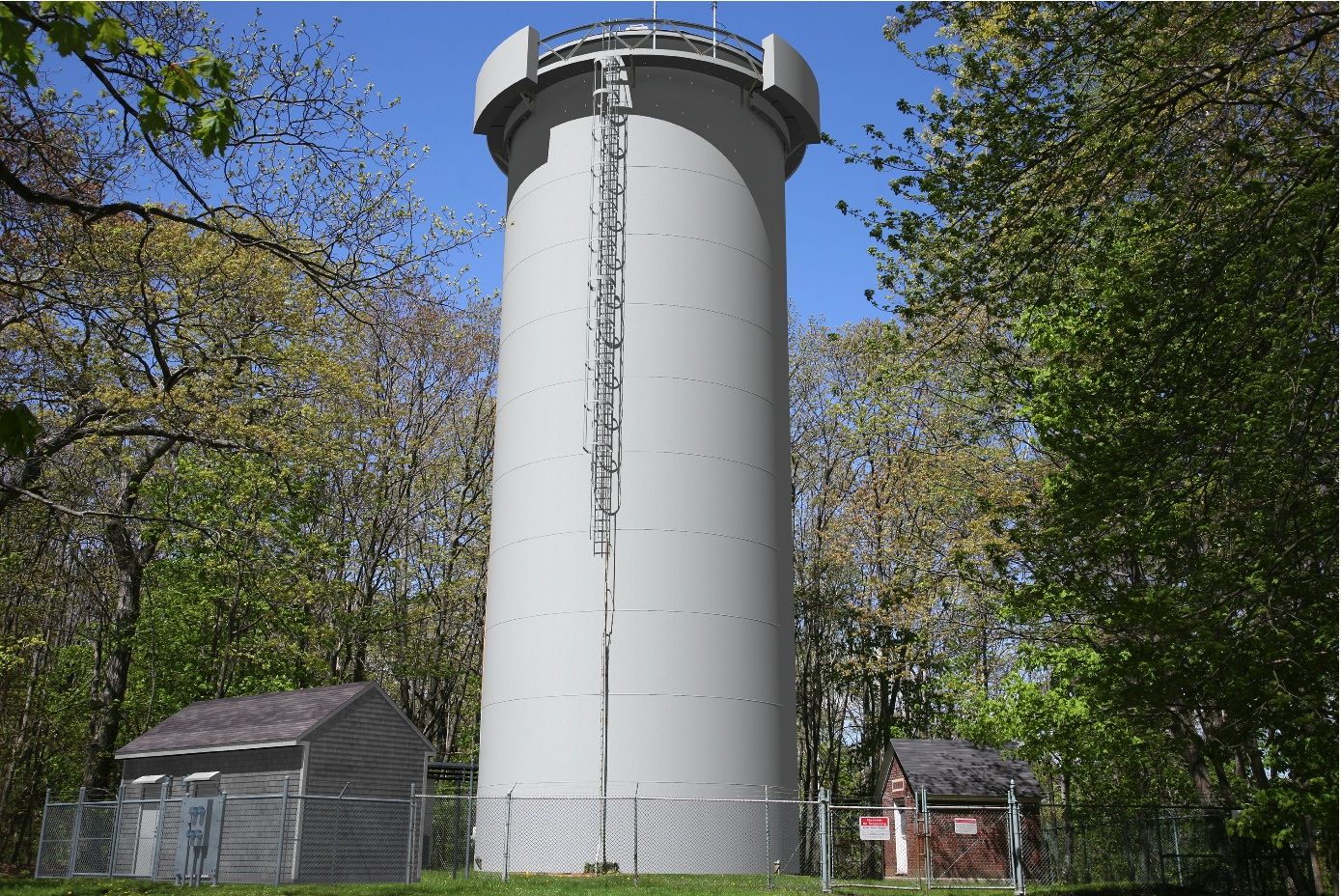 This image illustrates what the water tower on Avon Road would look like if Verizon Wireless’ proposal to install equipment on it is approved.
Comments are no longer available on this story