
Last Thursday, Cape Elizabeth hosted a public meeting for residents to share their ideas and opinions about the town’s new comprehensive plan, which is updated every 15 years.
About 35 to 40 people attended what was the second of three public meetings to discuss the plan. The Comprehensive Plan Committee, the group responsible for revising the plan and identifying new goals presented seven of 13 “chapters” in the revised plan. The topics discussed included the economy, housing, transportation, marine water and natural resources.
The last comprehensive plan update began in 1990, and was approved and implemented in 1993.
Economy
Some of the goals for the town’s economy included further developing the town center as well as developing areas of town identified as business districts, keeping business confined to those areas. However, some residents spoke out against these plans at the meeting.
Peter Potter, who lives near the Maxwell Farm on Waterhouse Road suggested the council identify his own area of town as a business district. With Maxwell’s farm and the Walnut Hill Stables in the area, it is already a solid business district, said Potter. Potter also wanted new businesses allowed into his area of town.
Michael Constantine, of Ocean House Road, also requested that the group consider adding his area of town to the list of “business districts.” Constantine also lives near Maxwell’s Farm and said he believed that area of town could accommodate more businesses. “There are other areas in town where business could go…at least keep that door open to us.”
Affordable Housing
Some goals for housing included decreasing the lot size for multi-unit buildings allowing for more units in less space. This would ultimately allow for more affordable housing, said presenter Mary Ann Lynch.
Potter said so far, the town’s plan to offer affordable housing has failed. Senior citizens and young people can’t afford a home in Cape and it’s unfortunate and unfair, he said. “We’re telling our kids and grandparents you can’t live here…When our kids graduate from college, we basically tell them don’t come home.”
Holly Hofmann, of Columbus Road, disagreed with the group’s goal to increase building density for multi-unit housing. “What I hear is beautiful theory, what I see doesn’t really match,” she said.
Helping farmers
Constantine asked the group to reconsider the rule that mandates anyone with a farm stand to have at least 10 acres of land. With the advent of greenhouse growing, there is not as much of a necessity to secure so much land for agriculture, he said.
Cape resident Becky Fernald also beseeched the committee to find a way to preserve the tradition of family farming that permeates Cape’s history. “There are a lot of pressures to sell farm land because it’s at such a premium…I wish there was something we could do to help the family farm continue that longstanding tradition,” she said.
Connectivity
Richard Bryant, of Spurwink Avenue, the lawyer who spearheaded the fight against the Spurwink Woods development asked the group to reconsider the town’s policy on connecting neighborhoods. “Does it enhance the common values we’re trying to protect?” he asked.
Open space
Though residents appreciated the town’s attempts to secure open space through development, they also felt that the rules could be more specific for requiring a certain amount of useable open space for recreation, trails and parks.
Fernald said that though she agreed with the town’s ordinance requiring developers to provide a certain amount of open space when building, often times the space set aside doesn’t benefit residents because its not usable.
Bryant also echoed Fernald’s sentiment that the open space provision may be ineffective because while it requires setting aside open space, it doesn’t require that space be useable.
Pedestrian friendly paths
A triathlete, Tom Egan, of Hannaford Cove Road, said he would like the town to convince the state to widen the shoulder on Route 77 for bikers. “If you’re on a bike, you know what I mean. It’s unsafe,” he said.
Other residents echoed Egan’s complaints, saying there aren’t enough foot friendly travel paths for walkers or bikers.
Several speakers touted the importance of the proposed Gull Crest ski trail, a 6.6-kilometer trail for a wide variety of recreational purposes. Kim Moody, of Roberts Lane, said it would benefit her as a runner because there are so few traffic-free places for runners in town.
Ray Shevenell, of Fowler Road, backed Moody on her point. Shevenell, 65, and also a runner, said a trail on Gull Crest’s soft earth is safer for runners. “It’s easier on the joints and less pain over time,” said Shevenell.
Stephen Simonds, of Brentwood Road, had just returned from 10 days of biking in Europe and said though Cape has gained some ground for bikers, the town still has “a long way to go” compared to Europe.
Gary Beckwith, of Oakwood Road, pointed out to the group that there are alternatives to vehicle transportation. “Walking and biking can be transportation,” he said. He implored the group to consider these other options and expand the potential for alternative transportation.
Peter Rich, 74, of Smuggler’s Cove, piggybacked on Beckwith’s point. Older people enjoy walking, not just for recreation, but as a mode of transportation. Cape does not have enough sidewalks on major roads, he said.
Rich described his walk from Shore Road to the town center as “playing dodge car.” He encouraged the group to find ways to remedy the less than friendly pedestrian roadways by adding more sidewalks and bike lanes.
Dave Roberts, of Trundy Road, agreed with others that biking and walking through Cape Elizabeth can be unsafe, especially for children, he said. He suggested reconsidering building a sidewalk on Shore Road.
Roberts, who is part of a group raising money to build trails at Gull Crest told the committee that he’s felt frustrated as a volunteer wanting to do something positive for the town because he feels like the council has needlessly thrown hurdles up. “If you discourage groups like this you’re going to have less people stepping up to do projects like this,” he said.
The last of three public hearings on the plan is scheduled for January 2007 and a final draft of the plan should be completed by February 2007.
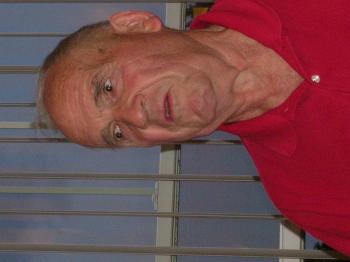 Gary Beckwith
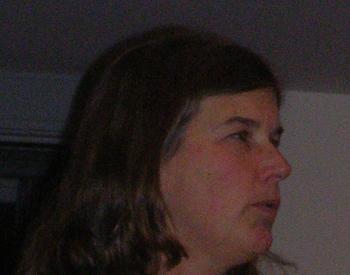 Becky Fernald
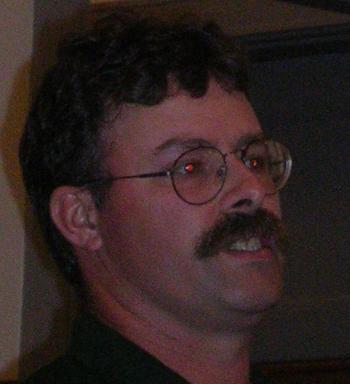 Michael Constantine
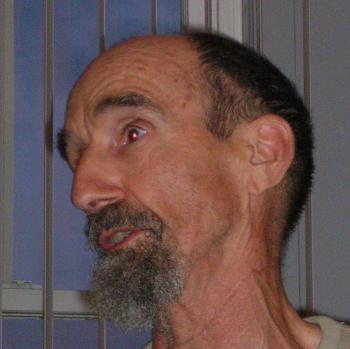 Peter Rich
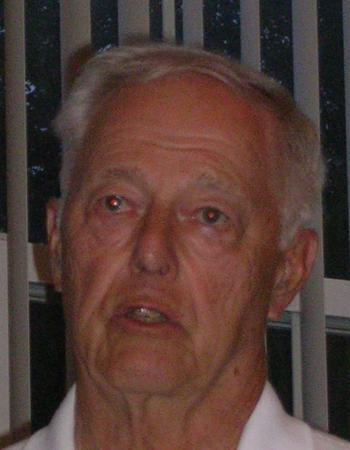 Stephen Simonds
Comments are no longer available on this story