
FREEPORT – Tucked away on Elm Street just a few yards from the downtown retail bustle, the Harraseeket Grange Hall in Freeport is an easy landmark to miss.
Originally a horse stable built in 1874, the barn-red building is well into its second century of hosting wedding celebrations, talent shows, bean suppers and most importantly, the regular business of Grange members. And despite a significant history in the town, even longtime residents have trouble explaining where it’s located.
“It’s hidden in plain sight,’ said Nancy Randall Clark, 75, the master of the Harraseekett Grange. “And so are we.”
One tradition, however, for which the Grange is well known is the bean supper, and Harraseeket’s monthly community offerings of traditional baked beans, ham, biscuits and brown bread, begin again on Saturday and run through September. For the Harraseeket Grange, the bean suppers are a large part of its fundraising efforts, and with a price of $7 per head, it just may be the best deal in town, said Clark.
“Our beans suppers are not as overly solicited as they used to be because people who know what a bean supper is are getting sick, aged, dying or dead and the newer generations don’t have a clue what a bean supper is,” said Clark.
Despite a dwindling membership that has forced the closings of numerous Grange organizations statewide, Clark and the 37 members of the Harraseeket Grange are continuing in the traditions of the organization. The past decade brought significant attrition to the membership ranks, said Clark, as society as a whole is less interested in such organizations and community involvement in general.
“We used to have hundreds of members, it was the social center of the communities across the state,” said Clark, a Grange member since the early 1970s. “Now, and I hate to say it, it’s things like television that people are drawn to. All of the things that are endemic in our society and reflective of older traditions are dying out.”
Two Grange Halls in Durham have closed. The Eureka Grange was converted into a community center, while the other, Solid Rock Grange, is now home to an insurance company, said Clark. The Pownal-based Granite Grange gave up its charter four years ago.
The Grange, founded after the Civil War in 1867, is the oldest American agricultural advocacy group with a national scope to promote, sustain and help farmers, said Clark. Harraseeket Grange No. 9 was established in 1874, and was the ninth branch of the organization in the state, said Vicki Huff, vice president of the Maine State Grange.
The organization is apolitical but Christian based, and supports numerous local charities, including the Freeport Community Services fuel fund and Opportunity Farm in New Gloucester. The Grange also awards an annual college scholarship to a Freeport High School senior.
Clark, a Maine state legislator from 1972 to 1992 and the first female Senate majority leader, said the Grange has a proud history of equality for women. The organization was unusual because women and teens old enough to draw a plow were encouraged to participate. The importance of women was underscored by requiring that four of the elected positions could only be held by women, said Huff.
“This was before women had the right to vote,” said Huff, of Portland. “An entire slate of Grange officers can be made up by women but not by men.”
According to the website nationalgrange.org, when the Grange first began, it borrowed some of its rituals and symbols from Freemasonry, including secret meetings, oaths and special passwords. It also copied ideas from Greek and Roman mythology and the Bible. Small, ceremonial farm tools are often displayed at Grange meetings. Elected officers are in charge of opening and closing each meeting. There are seven degrees of Grange membership; the ceremony of each degree relates to the seasons and various symbols and principles.
During the last few decades, the Grange has moved toward public meetings and no longer meets in secret. Though the secret meetings do not occur, the Grange still acknowledges its rich history and practices some traditions.
With dwindling numbers of members and attendance down at the bean suppers, the Harraseeket Grange barely keeps its head above water and may be forced to wade through water if the roof isn’t fixed, said Clark. As it stands now, the building is closed during the winter because of the cost of heat.
“We have to work hard just to survive,” she said.
Huff acknowledged the great challenge facing Grange organizations statewide and has spearheaded a number of initiatives to improve membership, which typically costs $20 or so a year. There are no qualifications for membership and each member’s vote counts equally, whether you’re “14 or 80,” said Huff.
“I remind members to always ask friends and neighbors to join. Word of mouth is very effective,” said Huff. “The Grange has always been known as the best-kept secret, but it doesn’t have to be.”
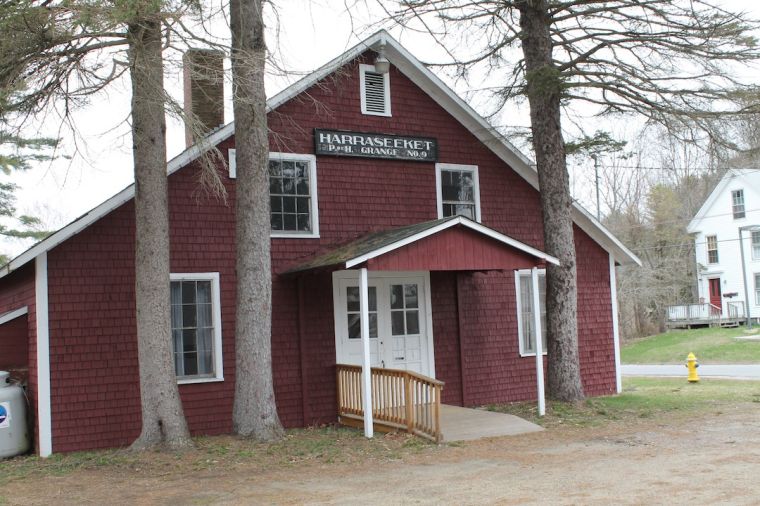 Originally a horse stable built in 1874, the barn-red Harraseeket Grange is well into its second century of hosting wedding celebrations, talent shows, bean suppers and most importantly, the regular business of Grange members. Staff photo by Matthew Stilphen
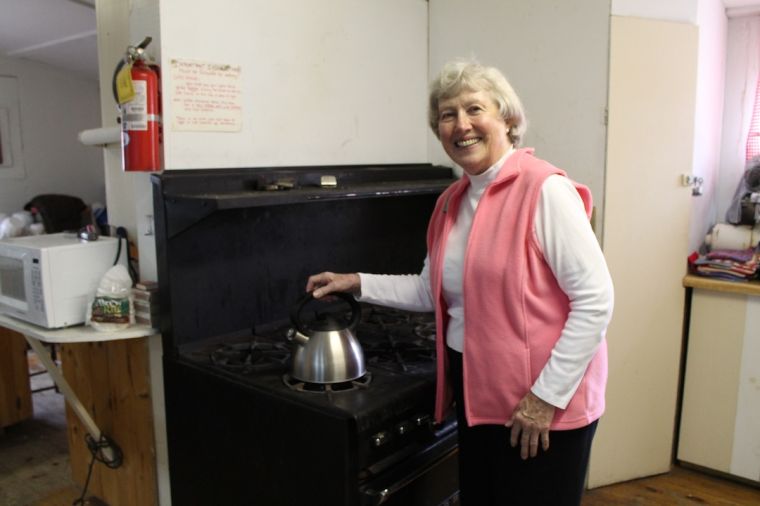 Nancy Randall Clark, master of the Harraseeket Grange, inside the kitchen where beans, hot dogs, brown bread and other staples of a traditional bean supper are cooked up monthly from April through September. With dwindling membership, “we have to work hard just to survive,” she said. Staff photo by Matthew Stilphen
Comments are no longer available on this story