
WESTBROOK – Future development of the Presumpscot River is at stake when meetings that begin next week focus on the recent decision to delay fish passage at Saccarappa Falls for two years in order to study fish-passage options.
The parties involved in the decision, including the Federal Energy Regulatory Commission, Friends of the Presumpscot River, the city of Westbrook and Sappi Fine Paper, will all restate their interest in spending the two years to explore the removal of the dams and nature-like fish-passage options.
However, city officials will also be advocating for another outcome – recreational opportunities.
“The city’s position is clear and we believe supported by industry experts, that fish passage and the recreational use of this river are compatible goals,” said Bill Baker, Westbrook’s assistant city administrator for business and community relations, in an emailed invite to the meeting.
This past spring, Sappi submitted plans to install what is called a Denil fish ladder at Saccarappa Falls, much like the one installed last year at nearby Cumberland Mills, but then negotiated the exploration of the complete removal of the hydroelectric dams.
In 2013, just a few months after the initial announcement concerning Saccarappa Falls, Sappi completed its $4.8 million Cumberland Mills fishway project, which now allows river herring, shad and other types of fish to pass up the Presumpscot River for the first time in more than 150 years.
However, fish cannot move much farther upstream until a Saccarappa Falls project is completed.
After a series of hearings in 2009, state regulations required Sappi to install fish passage at its Cumberland Mills dam. Sappi’s dam licenses through the Federal Energy Regulatory Commission, which will now require passage on the upstream dams, were contingent on fish passage at Cumberland Mills.
Based on the agreement from all parties this spring, the federal agency allowed the fish passage requirement to be postponed from May 2015 to May 2017. The Westbrook Environmental Improvement Corp. provided $50,000 toward the cost of investigating the dam removal.
Since that time, Baker has been advocating for the alternative approach to also explore recreational opportunities that could spark economic development for Westbrook, such as kayaking and fishing.
“It’s incumbent upon us to make sure all the parties know how important recreation is to the city,” he said.
While fish passage is the primary goal of all the stakeholders, he believes the two goals aren’t mutually exclusive.
“We want as much support for our goal as we’ve given to their goal,” he said.
Katelyn Leonowitz, a member of Sappi’s public relations team, said Tuesday that next week’s meeting is the first of several to “provide the opportunity for all stakeholders to be involved in the process of evaluating fish passage alternatives at Saccarappa. The goal of this first meeting is to educate the public on the process and how they can provide ongoing input,” she said.
However, she added that the first meeting would not include a presentation of the alternative fish passage options.
For the last few years, Baker has discussed the possibility for establishing a tourist attraction for kayaking, and more recently, an idea for a “play wave” at the base of the falls. In September, the City Council approved hiring Colorado-based Recreational Engineering and Planning for design of the feature, as well as a $39,200 Community Development Block Grant to cover the majority of the cost.
However, Baker said, any project and its design will depend on which fish passage alternative is used.
“We believe that incorporating recreational enhancements in the river could provide a boost to property values along the river; generate ecotourism in our downtown; and improve our ability to attract and retain employers and a younger work force, which has been a challenge for the state of Maine,” Baker said.
Michael Shaughnessy, the president of Friends of the Presumpscot River, one of the non-governmental organizations that has been closely involved during the entire process, said his members “fully support” public use of the river for recreation.
He said that if a kayaking run or play wave can be created “without hurting or impeding the restoration of the biological health of the river, we are all in favor of it. From our perspective the more people that engage with the river the better.”
Shaughnessy also said the river provides other recreational uses, like fishing, especially if the ecology is restored. He said from discussions with people in the fly-fishing industry, they believe the area can become a destination to catch shad and trout, and can be an economic benefit for two reasons.
“One, fishing is very popular and broadly accessible to a wide range of people to participate in, and two, there is nothing that says a clean and healthy city like rolling fly lines and pulling healthy fish from a river that runs through it,” he said.
A CLOSER LOOK
Sappi Fine Paper is hosting a public meeting on fish passage at Saccarappa Falls on Wednesday, Nov. 19, at 7 p.m. in Room 114 at Westbrook High School, Stroudwater Street.
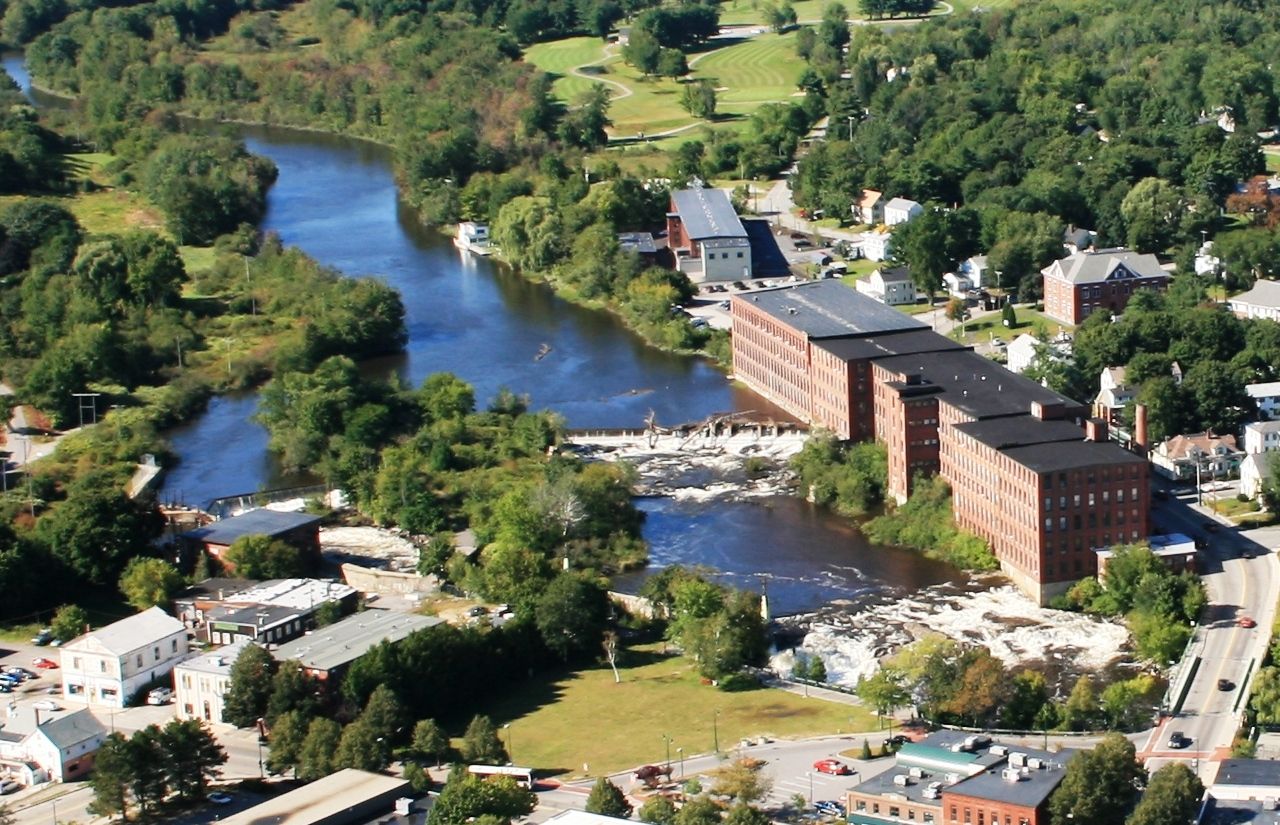 At issue in Westbrook is the future of fish passages at Sappi Fine Paper dams at Saccarappa Falls. Sappi will host public informational sessions starting next week.
Comments are no longer available on this story