
Cutlines:
This home is one of many along Scarborough Beach that fall in the shoreland zone. The town is just beginning to discuss implementing new state mandates on shoreland zoning, but doesn’t expect major changes.
Officials in South Portland, Scarborough and Cape Elizabeth say a Maine Department of Environmental Protection mandate to change shoreland zoning regulations will force only minor changes in local shoreland zones.
“There really aren’t any big changes that would affect the town or property owners,” said Bruce Smith, Cape Elizabeth’s code enforcement officer. “The town is cleaning up some of its definitions, but there aren’t any major changes.”
The shoreland zoning regulations augment Maine’s original shoreland protection law from 1971.
According to DEP documents, the regulations are meant to prevent pollution and conserve and protect natural areas, along with the use and enjoyment of them. The law applies to any property within 250 feet of the ocean, marshes and rivers in a watershed of at least 25 square miles, and ponds and wetlands larger than 10 acres. Areas within 75 feet of certain streams are also affected.
Cities and towns are supposed to adjust their ordinances by July 1 to assign one of six zoning designations to any of these areas within their borders, using criteria set forth by the state agency. Many existing property uses that are nonconforming can stay that way, but rebuilding to repair damage is controlled, and new building requirements can be strict.
Lot sizes, lot coverage, building setbacks, allowable building height, timber harvesting and driveways and parking lots are regulated under the shoreland zoning law. The law covers 37 pages and is published by the DEP.
As South Portland is finishing revisions on its shoreland ordinances, Cape Elizabeth and Scarborough are beginning to review their respective ordinances.
South Portland did change its shoreland zoning and adopted the changes on May 13, said Pat Doucette, that city’s code enforcement director.
South Portland made most of its changes in March as part of several environmental changes regarding other zones, she said. Those changes included storm water, flood plain and shoreland all at once.
“This was all part of the work that was done by the zoning committee that spent about two and a half years working on zoning amendments to Chapter 27 of our ordinance,” she said. “We basically changed some of our language so that it conformed to the state’s language, but it’s not going to really affect people a lot because we didn’t really change our ordinance that much.”
The biggest change for South Portland was deleting its resource protection district and incorporating it into the shoreland zoning, Doucette said. The two zones basically had the same restrictions, she said.
Both Scarborough and Cape Elizabeth will look at amending their shoreland zoning ordinances beginning with ordinance committee meetings on May 26.
“We’re in the same boat as Cape and South Portland,” said Scarborough Town Planner Dan Bacon. “There are a number of technical changes, but there aren’t any major changes that would really affect future development or development to existing property.”
John Thurlow, who owns property on 80 and 82 King St. in Scarborough, which is in the shoreland zoning map, is planning to build cottages on the properties.
He said the new zoning regulations wouldn’t affect him because he believes Scarborough and the state’s zoning laws are similar.
“As far as the state shoreland zoning, it’s restrictive to protect habitat,” he said. “I am a huge supporter of protecting the marsh habitat and the estuary. I know in Scarborough, the law has always been pretty restrictive because they have found a way to develop a balance between land owners, development and the habitat.”
Real estate agent John Herrigel, who represents properties in Scarborough and Cape Elizabeth for Green Tree Realty, said he doesn’t think the shoreland zoning changes would have much of an effect, if any, on properties in South Portland, Scarborough and Cape Elizabeth.
“Most of the people who have properties there aren’t really making a lot of changes to them now,” he said. “I don’t think it will affect the sale of real estate in these towns because their current zoning laws for shore front property are already strict.”
Jim Cassida, a licensing coordinator for the Department of Environmental Protection’s Divison of Land Resource Regulation, said the agency is trying to work with cities and towns before the July 1 deadline.
Municipalities that can’t or won’t adjust their ordinances could face a top-down solution, Cassida said.
“For those towns that do not do that, the state will have to make a decision whether to impose those regulations,” he said. “That has happened in the past.”
Both Bacon and Smith said they anticipate Cape Elizabeth meeting the deadline.
The biggest change that would happen in Cape Elizabeth is the 75-foot setback, Smith said. If there is already a nonconformance of less than 75 feet on the property, future expansion can only be up to 30 percent of the existing building’s volume.
“We’re really just tightening definitions,” Smith said. “There really isn’t anything that is going to make life different.”
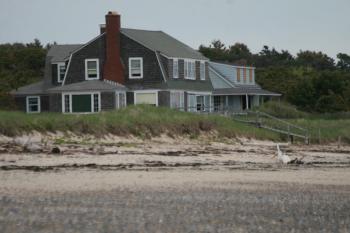 Scarborough and Cape Elizabeth are gearing up to discuss the new state shoreland zoning regulations. South Portland recently adopted the new state mandates.
Comments are no longer available on this story