
State and local officials briefed Windham residents Tuesday night at the high school auditorium regarding the “widespread, low-level” PCB contamination at South Windham’s Keddy Mill.
Led by the town’s environmental consultant, John Cressey of Summit Engineering Consultants, state officials issued their findings from two studies of the former foundry and steel mill located next to the Presumpscot River. In addition to describing their method of documenting the presence of PCBs, officials answered questions posed by residents as well as town leaders.
Officials also issued a stern warning to potential trespassers that the area is contaminated and thereby off limits.
Residents’ reaction to the news that the area is contaminated – and has been since the mid-20th century when lubricating oils containing PCBs (polychlorinated biphenyls) were used to cut metal at the former steel mill – lacked any sense of outrage or surprise at the extent of the problem, with many comments showing more concern for area children who trespass on the property.
Officials said there should be no trespassing since studies of the area conducted during the past year conclude PCBs abound in metal shavings and slag surrounding the building. In some places the tainted metal is buried 54 inches deep. In addition to potential PCB contact, children should stay out of the building due to large holes in the floor that can drop 20 feet, officials said.
The mill property is owned by Village at Little Falls, LLC. A representative of the company, Todd Coffin, was at the meeting Tuesday night and said the firm spent $20,000 in May to erect a fence around much of the building.
“The good news is the police are making routine surveillance,” Coffin said. “There is also a security company working on behalf of Sappi (Fine) Paper that patrols part of the property near the dam. So, there does seem to be a good number of eyes looking over it. But if anyone sees anything, they should call the police.”
The next step for the property is uncertain. Maine Department of Environmental Protection’s brownfields coordinator, Jean Firth, said it may take up to five years and a yet-undetermined amount of money to thoroughly study and dispose of the contaminants at the site. So far, Windham has paid for the testing using $50,000 of a $200,000 federal brownfields assessment grant.
Tom Bartell, Windham’s economic development director who is managing the project for the town, said the mill’s redevelopment may be far off but things “are moving in the right direction.”
“This isn’t the end of the South Windham mill story, it’s really just the beginning of it,” Bartell said to close Tuesday night’s meeting. “And what we have to do and what the owner has to do is, we just have to figure out what the next step is and where to go from here as a town, as a village, and as the owners. DEP is involved. The town is involved. We know the site is a difficult site for a number of reasons and now even more so that we’ve found this more widespread though low-level contamination of PCBs. We’re not giving up on the site, but there’s going to be some time lag before we figure out exactly people want. And a lot of it has to do with the owner and what they can make happen there.”
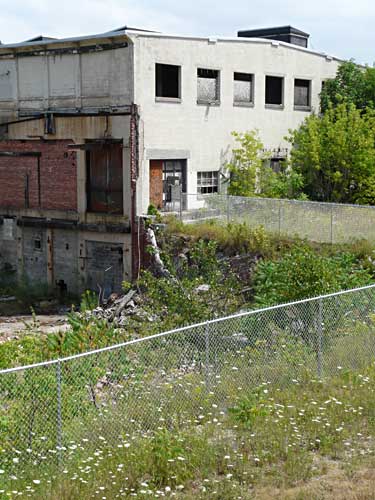 A fence was erected in May to keep people from entering the
Comments are no longer available on this story