
A Cumberland County Sheriff’s deputy acted improperly when he went around to the back deck of a Sebago home last year before police shot a man inside who was armed with a shotgun, a superior court judge has ruled.
Deputy Stephen Welsh violated the Fourth Amendment rights of Douglas Tenczar when Welsh went to the back door of Tenczar’s home while investigating a road-rage incident last October, Justice MaryGay Kennedy wrote in her ruling. Kennedy also ruled in Tenczar’s favor in suppressing a statement he made to police immediately following the shooting.
The rulings were in response to a motion to suppress evidence in Tenczar’s upcoming trial on criminal threatening charges. He is charged with two counts of criminal threatening with a dangerous weapon, a Class C crime. One count is for the road-rage incident and the other is for aiming his gun at the officers. The counts will be tried separately, and one of Tenczar’s trials starts Monday, though it was unclear which count will be tried then.
Justice Kennedy, however, did not throw out evidence obtained by police in two searches of Tenczar’s home. Two other officers, Sgt. David Hall and Deputy Peter Anderson, acted properly in approaching the side and front of the home, Kennedy wrote, and the officers were also justified in using their firearms once they saw Tenczar point a shotgun at Hall. With Tenczar bleeding profusely on the floor inside the home, the officers were then acting within the law when they entered, provided medical attention and searched the home, Kennedy ruled.
Tenczar’s lawyer, Thomas Hallett, said Wednesday he was pleased Kennedy suppressed a statement Tenczar made immediately after the shooting. He also said the judge’s finding that the officers did not say who they were after approaching the home contradicts statements by the officers and will make it difficult for prosecutors to make their case against his client.
“Overall, I think it is a favorable ruling,” said Hallett.
Sheriff Mark Dion could not be reached for comment Wednesday.
The incident began when deputies went to Tenczar’s house Oct. 22 after three teenage girls said a man had waved a handgun at them on Route 114. The teens provided a license plate number to the deputies, who then matched the plates to Tenczar and went to his home, arriving at around 6:30 p.m., just after dark.
The deputies then surrounded the house, with Welsh going out back and Anderson to the side. Hall then knocked on the side door, which deputies said looked like the house’s main entrance.
The deputies watched as Tenczar, who was lying on the floor, stood up. Welsh yelled for Tenczar to come out, but the defendant ran from the room and returned with a shotgun. Moving in a low “military-style” crouch, Tenczar neared the door and raised his shotgun in Hall’s direction. When Tenczar followed Hall with the shotgun as the sergeant moved, Welsh opened fire through the back sliding glass doors. After the first shot, Hall also fired at Tenczar. The officers then moved into the house.
Tenczar was severely wounded in the shooting, and ultimately lost his right, dominant arm.
When the officers approached Tenczar immediately following the shooting, Hall asked him whether he heard the officers yelling “Sheriff’s Department,” to which Tenczar replied, “Yeah, I did.”
Kennedy’s ruling suppresses that statement from evidence. Tenczar was in custody at that point, and Kennedy ruled that he should have been read his Miranda rights before questioning.
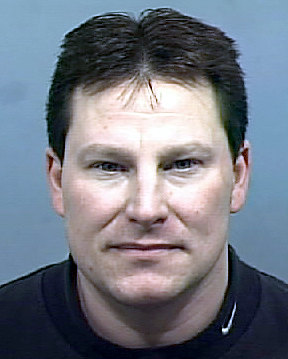 Douglas Tenczar
Comments are no longer available on this story