
South Portland Assessor Elizabeth Sawyer has seen property values rise and fall and rise again in her 30 years of assessing them in South Portland and Westbrook. Sawyer, one of the few female assessors in Maine, agreed to talk to the Current about her job, how she deals with assessments in a market with falling property values, and how she makes decisions on assessments, abatements and other matters that hit property owners in their wallets.
Q: With the fluctuations in the market, how do you keep track and monitor real estate values?
A: Our office gets all of the sales of property in South Portland from the county and state and compares the prices paid to the assessments each month. We also watch online sites such as www.mainelistings.com, www.craigslist.org and other for-sale-by-owner Web sites to keep current with what’s happening in the real estate market.
Q: How unusual is this recent market downturn? Have you seen anything like it before?
A: Because I started doing this in the late ’70s, yes. The real estate market is constantly changing, even when it appears to be stable overall. Certain property types move in and out of favor even then. It seems like when we have a downturn people think it is the only time a decline ever happened in real estate values because they are used to seeing continual appreciation. As South Portland assessor, I remember well the decline of the early ’90’s – that was very difficult for many people, too.
Q: How did you become a tax assessor? Do you pore over numbers all day?
A: I got a job in the late ’70s working in a central Maine assessor’s office as a data collector and really liked the varied aspects of the job – being outside, learning about buildings and land, and interacting with people. I ended up in a degree program at (Central Maine Vocational-Technical Institute) in property tax assessment, which only lasted a few years because nobody graduates from high school and says, “Gee, I want to be a tax assessor when I grow up!” Most of us come to the field from another discipline such as appraisal or building trades. I later worked for a revaluation company, and then came here in 1986 as deputy assessor, then became assessor in 1988.
My daily activities are pretty varied, which is what I really like about the job. It does involve a fair amount of numbers and statistics, but it also means learning about new things all the time because to be a successful tax assessor, you need to be skilled at a varied group of fields: law, appraisal, municipal finance, computer applications – both specialized and mainstream – investigative research, public relations and more. I also get opportunities like walking through clean rooms at National Semi(conductor) or once I climbed around on a helipad on a multimillion-dollar jack-up barge on Portland Harbor where I felt like I was on top of the world. Times like that, I think, “They pay me for this?!”
Q: Do you think South Portland real estate is better off than other Maine municipalities? Why or why not?
A: South Portland is blessed with a fabulous location and a diversified tax base. Because we have a fairly homogeneous residential market, I think we have ridden the storm better than other Maine communities. While we’re not immune to the general declines in the overall market, (with) our relatively stable taxes compared to the high level of services as well as the proximity to Portland and all the region offers, South Portland always seems to fare well comparatively during these difficult times. I think that as baby boomers age, they appreciate conveniences that small cities like South Portland offer.
Q: Do you expect real estate values to start to stabilize? What kind of trends are you seeing right now?
A: Yes. They always do. “When?” is the magic question. Last week, two of our appraisers attended a seminar at our annual Assessor’s School at Colby College (I was in a different seminar) at which a local expert predicted gloom and doom for the commercial real estate market due to loans coming due in the next couple of years. However, I find other credible data refuting that, saying we’ve reached bottom and that the “dam is about to break” in terms of increases in prices. As assessor in both South Portland and Westbrook, I’m very sensitive to this because of the high amount of our tax bases we have in that sector.
Q: Do you field a lot of calls from property owners because of the difficult real estate market? What types of questions do folks have?
A: A fair amount – but probably less than one might expect. The appraisers that work in the office field most of the calls; our first step is to go over the information we have based the assessment on to be sure it is accurate. Sometimes people have had a refinance appraisal that is lower than the assessment and they want us to look it over. We also are a great resource for people who are researching their property lines and other historical information. We maintain a file of deeds and other records that taxpayers need from time to time. We also assist people with exemptions and with the Maine Residents Property Tax Refund Program (“circuit breaker”) applications. Our online information is used constantly and I can’t tell you the difference between our office traffic (phone and visits both) since all of our data went up on the Web and before. People love it. South Portland was one of the first assessor’s offices to put our information online – now it’s rare not to have some form of tax assessment data online. People talk about wanting “transparency” in government; well, I think that this is an excellent example of it. If you think your assessment is wrong, you can make that judgment by reviewing your valuation and making comparisons to similar property to your own. I’m really proud of the job we do. It may not the most popular job in town, but most people accept that someone has to do it and they are very cooperative with us.
Q: If someone objects to the city’s valuation of their home, do you personally take a look at the assessment? Will you change it, if needed?
A: We conduct an onsite review of our valuation and make comparisons to similar properties that may have sold. If we feel our assessment is too high, we either abate the tax or if it is a very minor difference, make a change for the next year. If we don’t agree with the taxpayer, we let them know the process to appeal the decision formally to the local Board of Assessment Review.
Q: Any advice for homeowners nervous about declining property values? Or is that something you leave up to the real estate brokers?
A: Like anything else, it doesn’t pay to dwell on it. If you’re not planning or needing to sell, wait it out and it’ll come back. If you are, get a good broker and listen to their advice. In my view, one of the worst things you can do is to overprice a house – I’ve seen many times where sellers have actually gotten less than they should have if they’d just priced the home right in the first place. I know this because the buyers come to see me next with a low purchase price and want me to lower the assessment!
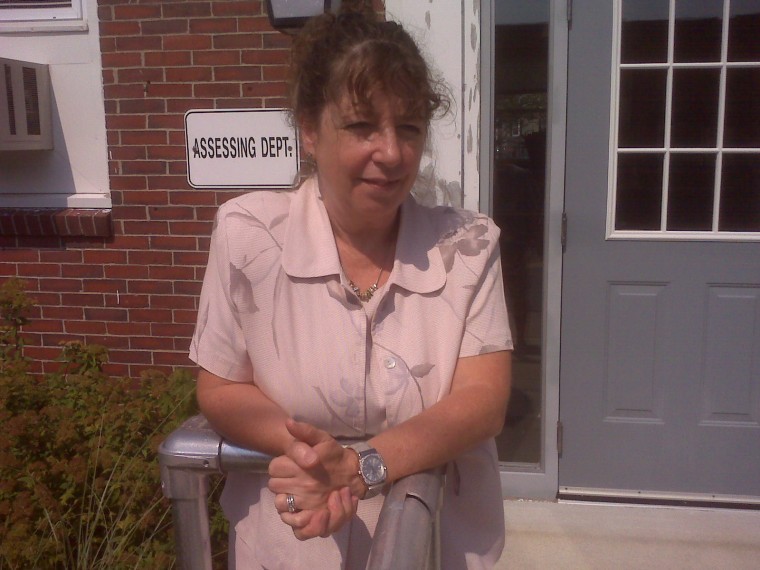 South Portland’s longtime assessor, Elizabeth Sawyer, says it doesn’t pay to overprice a house.
Comments are no longer available on this story