
Hello again, fellow fishermen!
Winter got an early start this year, and is still holding on. The bright side is that this gives many of us time to catch up on our reading. There are some books that you should consider between now and spring fishing.
To improve your trout fishing skills, one of the best books I know of remains “The New American Trout Fishing” by John Merwin. This is a book for initiate and old hand, a book you can read and understand that’s intelligent and comprehensive. It is beginning to become a little dated, but does a better job of combining the hows and whys of fly fishing than anything I’ve seen yet. It taught me most of what I know about “matching the hatch.”
Too much? Then try “Trout Fishing” by Charles Waterman with basic flyfishing tactics and techniques. If improving your cast is of prime interest, then “The LL Bean Fly Casting Handbook” by Macauley Lord is for you. Mac is a longtime L.L. Bean fly casting instructor. I’ve gotten some of his instruction and it really is top notch.
Interested in learning to tie flies? “Fly Tying Made Clear and Simple” by Skip Morris remains the industry standard for the beginning tier. Before you buy the book, you might want to come to one of Sebago Trout Unlimited Chapter’s Gray Ghosts Tying Club sessions, held at First Parish Church in Yarmouth most second and fourth Tuesdays at 6:30 p.m. November through March, and see what’s involved.
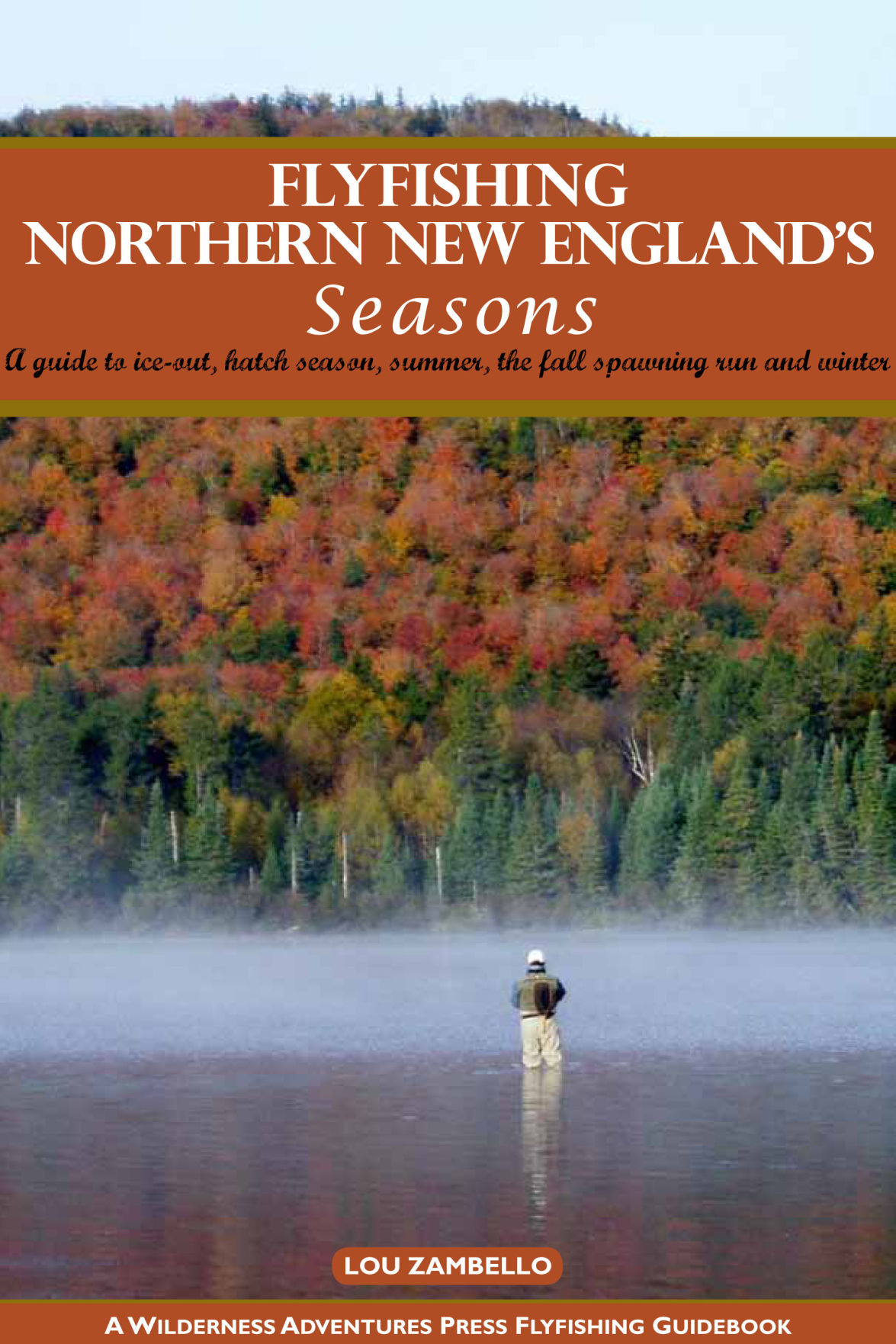
Want to know where and how to fish? Local guide and author Lou Zambello’s book “Flyfishing Northern New England’s Seasons” is hard to beat, and keys that information to something equally important: time of the year. It created a bit of a stir when it came out last year as some folks felt that it revealed too many “secret spots.” Only one way to see what you think about it: read it – then fish it!
Once you’ve become better able to catch fish, you should balance that with information on how to protect and restore our fisheries. If you read anything this winter, read “Running Silver: Restoring Atlantic Rivers and their Great Fish Migrations” by John Waldeman, who sometimes summers in the Camden area. This work of historical ecology describes what has been lost, but gives us hope of regaining it.
If you haven’t read “The Founding Fish” by John McPhee, read it to learn about American shad, a species that is making a comeback in our waters following Maine’s major dam removals on the Kennebec and the Penobscot.
Given the recent closure of our cod fisheries, “Cod: A Biography of the Fish that Changed the World” by Mark Kurlansky would certainly be a timely choice. If you don’t understand what an otter trawl is, it’s high time that you did.
“Four Fish: The Future of the Last Wild Food” by Paul Greenberg deals with fish familiar to us all: Atlantic salmon, blue fin tuna, sea bass (similar to our striped bass) and cod. The cod portion draws heavily on the work of Maine fisheries scientist Ted Ames, and is certainly a matter of local interest, as are the parts that deal with how aquaculture works.
Last, another local author should be in the mix: Doug Watts who played a major role in the removals of Edwards Dam on the Kennebec and the Penobscot River dams and remains active with Friends of Sebago Lake. His book “Alewife” is a documentary history of the alewife in Maine and Massachusetts from 5,000 B.C. to present. While not as elegant a species as the Atlantic salmon and other sport fish, alewives are a key component of fisheries restoration and that makes this a book well worth reading.
These books all hit close to home. L.L. Bean carries some of them, as do some local bookstores. All are available on Amazon.com.
Steve Heinz is an avid fisherman who lives in Cumberland and is Conservation Chair for Sebago Chapter of Trout Unlimited. Comments and questions are welcome at heinz@maine.rr.com.
 New book
Comments are no longer available on this story